Broers Natascha J H, Canaud Bernard, Dekker Marijke J E, van der Sande Frank M, Stuard Stefano, Wabel Peter, Kooman Jeroen P
Department of Internal Medicine, Division of Nephrology, Maastricht University Medical Center+, Maastricht, The Netherlands.
NUTRIM School of Nutrition and Translational Research in Metabolism, Maastricht University, Maastricht, The Netherlands.
Hemodial Int. 2020 Apr;24(2):148-161. doi: 10.1111/hdi.12812. Epub 2020 Jan 22.
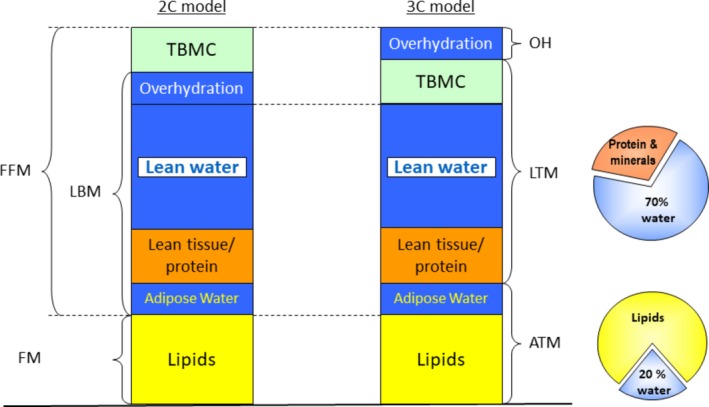
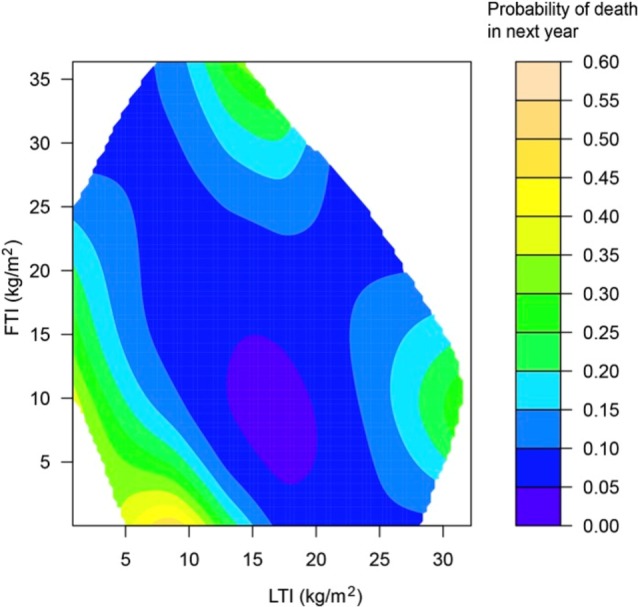
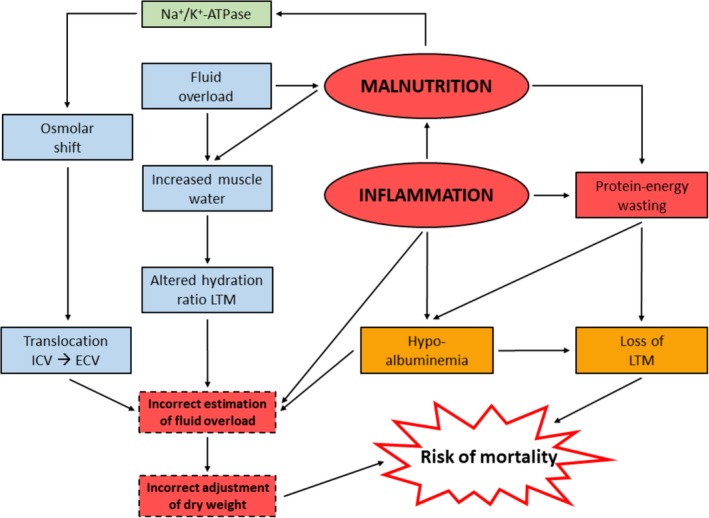
Bioimpedance spectroscopy (BIS) is an easily applicable tool to assess body composition. The three compartment model BIS (3C BIS) conventionally expresses body composition as lean tissue index (LTI) (lean tissue mass [LTM]/height in meters squared) and fat tissue index (FTI) (adipose tissue mass/height in meters squared), and a virtual compartment reflecting fluid overload (FO). It has been studied extensively in relation to diagnosis and treatment guidance of fluid status disorders in patients with advanced-stage or end-stage renal disease. It is the aim of this article to provide a narrative review on the relevance of 3C BIS in the nutritional assessment in this population. At a population level, LTI decreases after the start of hemodialysis, whereas FTI increases. LTI below the 10th percentile is a consistent predictor of outcome whereas a low FTI is predominantly associated with outcome when combined with a low LTI. Recent research also showed the connection between low LTI, inflammation, and FO, which are cumulatively associated with an increased mortality risk. However, studies toward nutritional interventions based on BIS data are still lacking in this population. In conclusion, 3C BIS, by disentangling the components of body mass index, has contributed to our understanding of the relevance of abnormalities in different body compartments in chronic kidney disease patients, and appears to be a valuable prognostic tool, at least at a population level. Studies assessing the effect of BIS guided nutritional intervention could further support its use in the daily clinical care for renal patients.
生物电阻抗光谱法(BIS)是一种易于应用的评估身体成分的工具。三室模型生物电阻抗光谱法(3C BIS)通常将身体成分表示为瘦组织指数(LTI)(瘦组织质量[LTM]/身高的平方米数)、脂肪组织指数(FTI)(脂肪组织质量/身高的平方米数)以及反映液体超负荷(FO)的虚拟室。它已被广泛研究用于晚期或终末期肾病患者液体状态紊乱的诊断和治疗指导。本文旨在对3C BIS在该人群营养评估中的相关性进行叙述性综述。在人群层面,血液透析开始后LTI降低,而FTI升高。LTI低于第10百分位数是结局的一致预测指标,而低FTI主要在与低LTI联合时与结局相关。最近的研究还表明低LTI、炎症和FO之间的联系,它们累积起来与死亡风险增加相关。然而,该人群中基于BIS数据的营养干预研究仍然缺乏。总之,3C BIS通过剖析体重指数的组成部分,有助于我们理解慢性肾病患者不同身体成分异常的相关性,并且似乎是一种有价值的预后工具,至少在人群层面是这样。评估BIS指导的营养干预效果的研究可以进一步支持其在肾病患者日常临床护理中的应用。