a Department of Internal Diseases, Nephrology and Dialysis , Military Institute of Medicine , Warsaw , Poland.
b Department of Laboratory Diagnostics , Military Institute of Medicine , Warsaw , Poland.
Ren Fail. 2018 Nov;40(1):231-237. doi: 10.1080/0886022X.2018.1456451.
Nutritional status has a significant impact on the outcomes in the dialysis population. The aim of this study was to evaluate the association between body composition and a one-year survival of hemodialysis patients.
Forty-eight patients with chronic kidney disease stage V treated with hemodialysis for more than three months were included. Body composition was assessed by bioimpedance spectroscopy (Body Composition Monitor, Fresenius Medical Care). Blood samples for serum creatinine, serum albumin, serum prealbumin, high sensitivity C-reactive protein (hsCRP), interleukin 6 (IL-6), insulin-like growth factor 1(IGF-1) concentrations were taken before the midweek dialysis session.
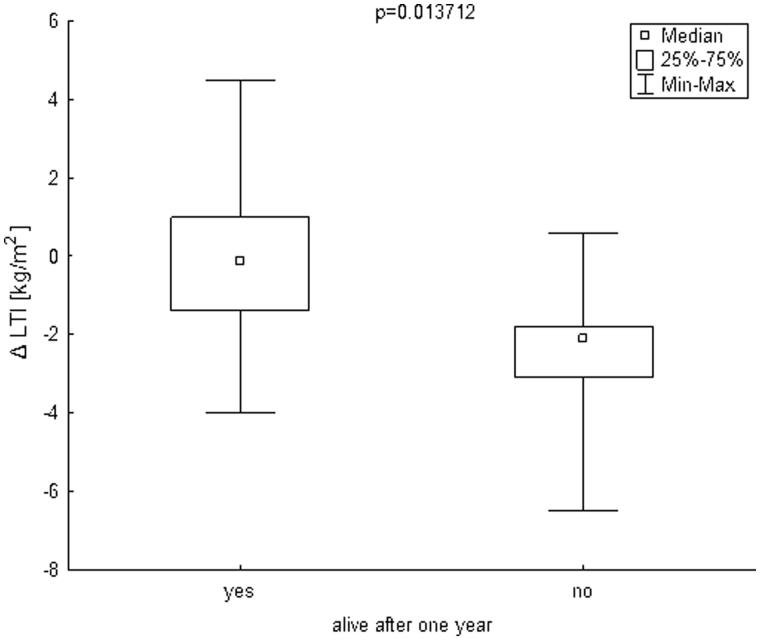
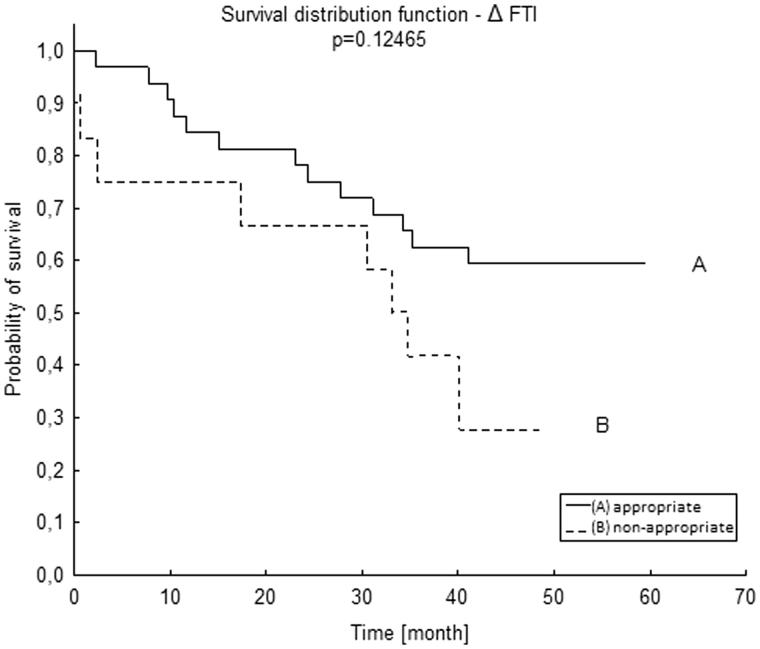
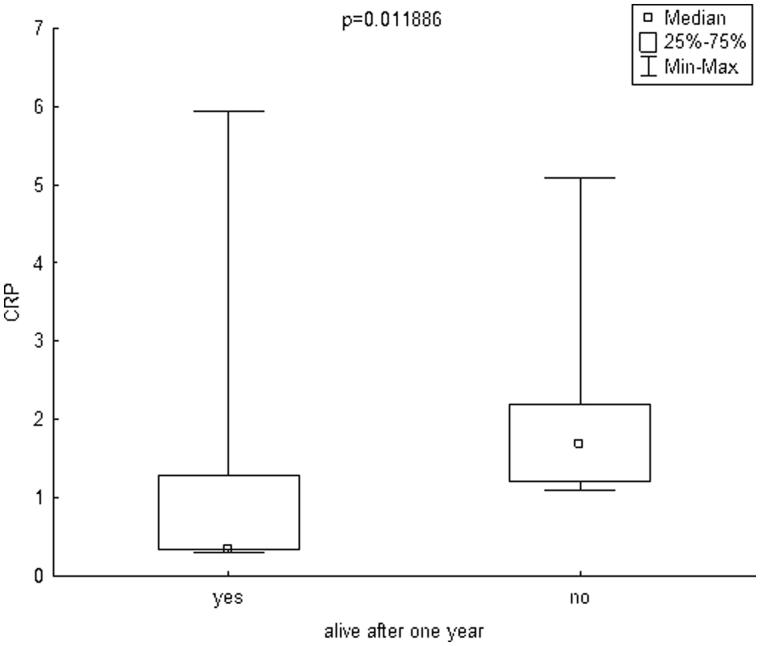
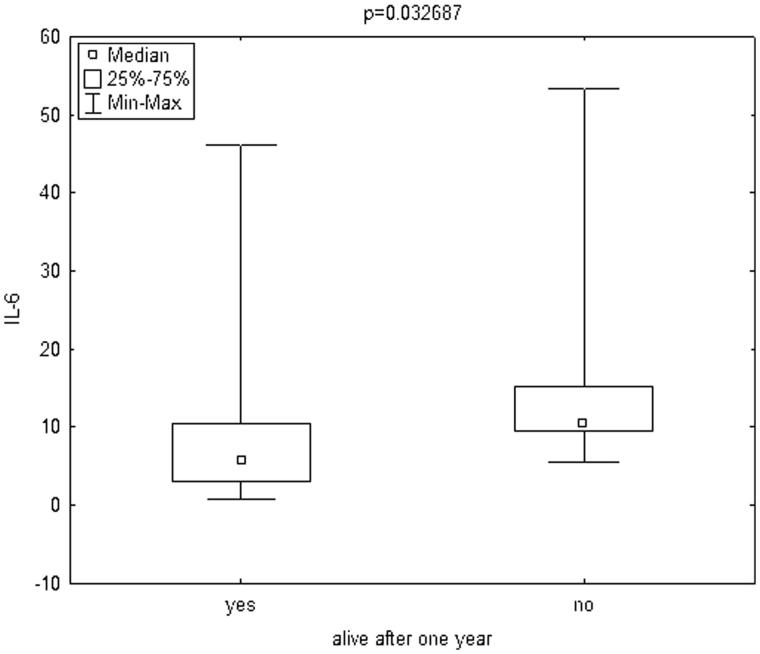
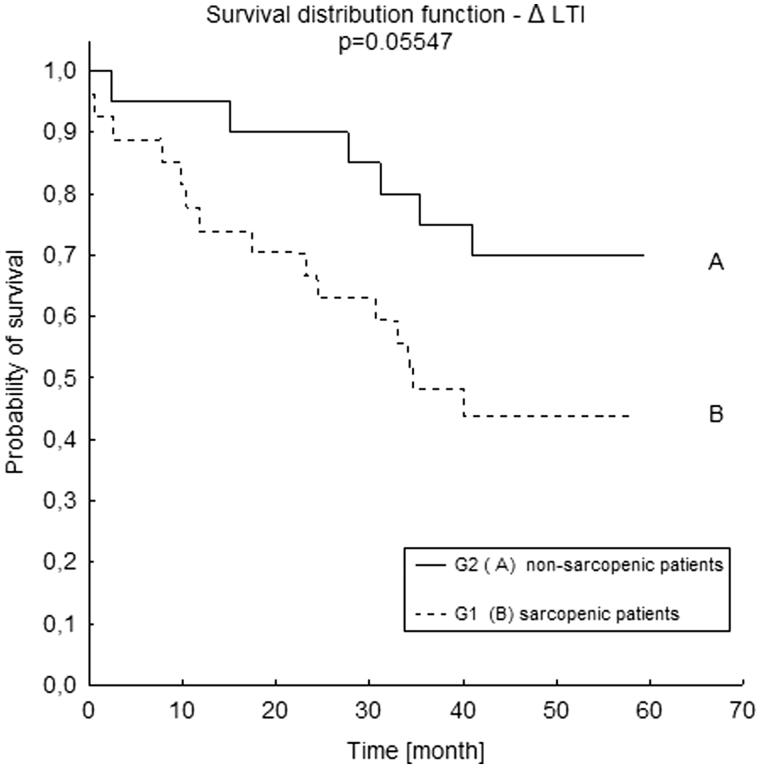
Over the course of a one-year observation, seven patients died. We observed a significantly lower lean tissue index (LTI) (p = .013) and higher IL-6 (p = .032) and hsCRP levels (p = .011) among the patients who died. The remaining biochemical markers did not differ between these two groups. Kapplan-Meier analysis revealed a worse survival rate in patients with sarcopenia (lower than the 10th percentile for their age and gender) in comparison with those with normal LTI. However, it was not of statistical significance (p = .055). LTI inversely correlated with age and IL-6 and positively with IGF-1.
Sarcopenia defined as decreased LTI, is a relatively common condition among patients undergoing maintenance hemodialysis, it can also be associated with a lower one-year survival rate. Decreased lean tissue mass can be associated with old age, lower IGF-1 levels and higher IL-6 levels. Body composition assessment may provide prognostic data for hemodialysis patients.
营养状况对透析人群的结局有重大影响。本研究旨在评估身体成分与血液透析患者一年生存率的关系。
纳入 48 例接受血液透析治疗超过三个月的慢性肾脏病 5 期患者。采用生物电阻抗光谱法( Fresenius Medical Care 公司的 Body Composition Monitor)评估身体成分。在每周透析治疗的中间时间采集血样,检测血清肌酐、血清白蛋白、血清前白蛋白、高敏 C 反应蛋白(hsCRP)、白细胞介素 6(IL-6)、胰岛素样生长因子 1(IGF-1)的浓度。
在一年的观察过程中,有 7 例患者死亡。与存活患者相比,死亡患者的瘦组织指数(LTI)显著较低(p =.013),IL-6(p =.032)和 hsCRP 水平显著较高(p =.011)。两组间其余生化标志物无差异。Kapplan-Meier 分析显示,与 LTI 正常的患者相比,存在肌肉减少症(低于其年龄和性别第 10 百分位数)的患者的生存率更差。但是,差异无统计学意义(p =.055)。LTI 与年龄和 IL-6 呈负相关,与 IGF-1 呈正相关。
以 LTI 降低定义的肌肉减少症是维持性血液透析患者中较为常见的病症,也可能与一年生存率降低有关。瘦组织量减少可能与年龄较大、IGF-1 水平较低和 IL-6 水平较高有关。身体成分评估可为血液透析患者提供预后数据。