Immunopathology Lab, School of Bio Sciences and Technology, Vellore Institute of Technology (VIT), Vellore, Tamil Nadu, 632014, India.
Department of Clinical Pharmacology and Therapeutics, Kyung Hee University School of Medicine, Kyunghee-daero 23, Dongdaemun-gu, Seoul, 02447, South Korea.
Arthritis Res Ther. 2020 Jan 23;22(1):16. doi: 10.1186/s13075-020-2097-2.
Proper blocking of toll-like receptor (TLR) activation during disease progression has been reported to have inhibitory effect on the pathogenesis of rheumatoid arthritis (RA). We tested whether the TLR4 inhibitor TAK-242 had potential as a remedy for rheumatoid arthritis.
The therapeutic effect of TAK-242 was tested in vitro using the human rheumatoid fibroblast-like synoviocyte (FLS) line MH7A or primary human FLS and in an adjuvant-induced arthritis (AIA) rat model.
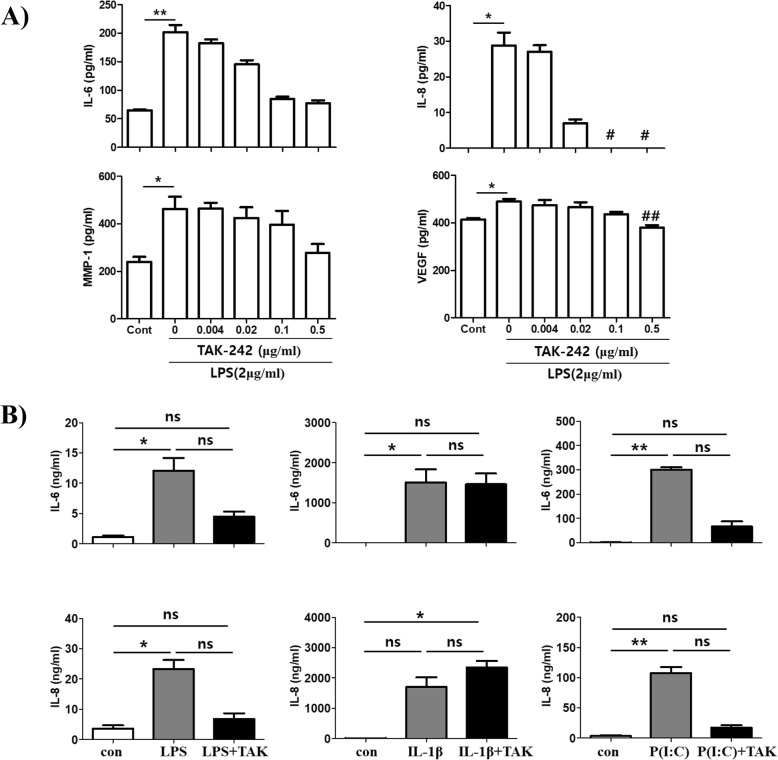
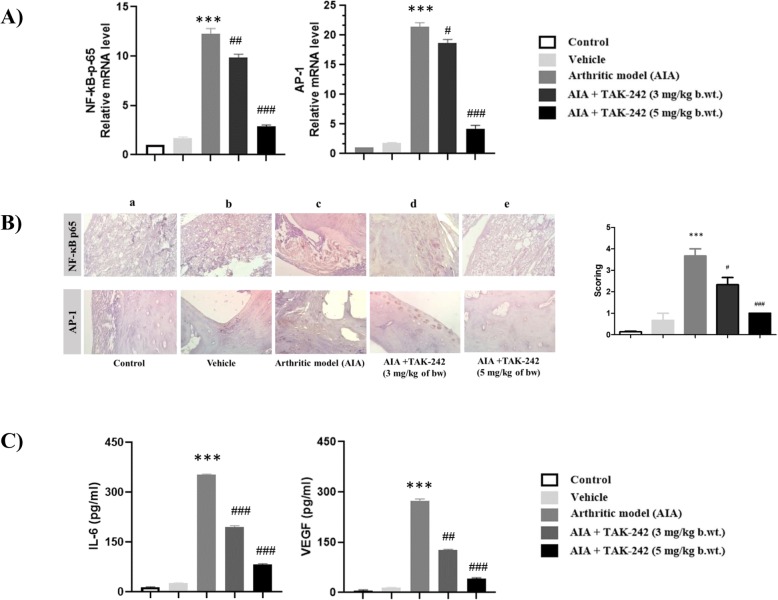
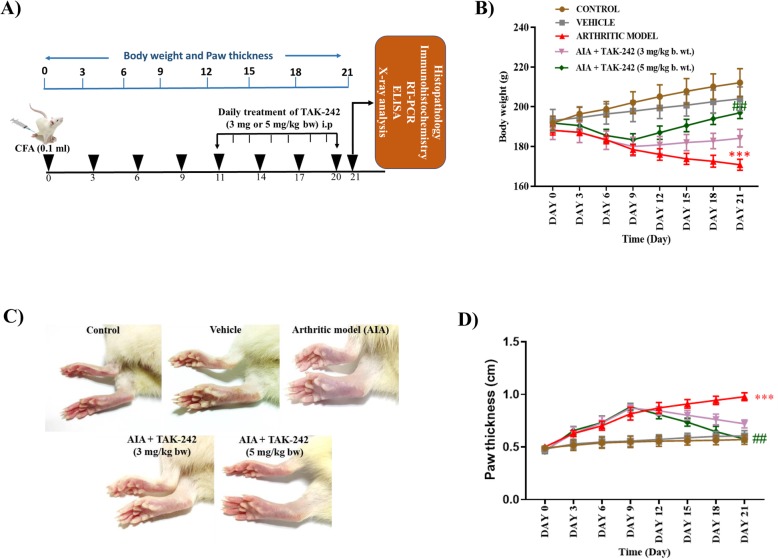
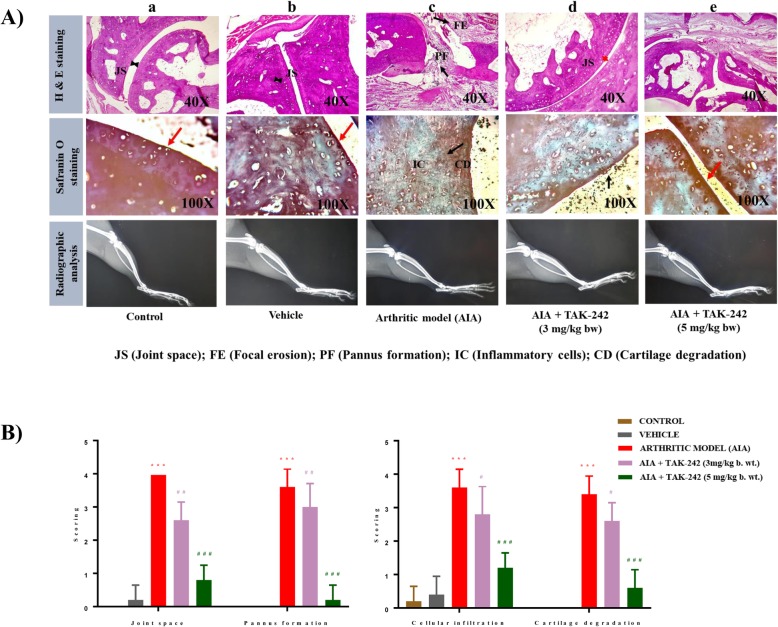
TAK-242 dose dependently inhibited the increased expression of IL-6, IL-8, MMP-1, and VEGF in LPS-stimulated MH7A cells. It also inhibited the expression of IL-6 and IL-8 in poly(I:C), TLR3 activator-stimulated primary FLS, but not in IL-1β-stimulated primary FLS. These findings suggest that TAK-242 blocks a specific signaling pathway to some degree. Further, TAK-242 slightly inhibited mobilization of NF-κB into nuclei. In the AIA rat model, TAK-242 significantly reversed the body weight and paw thickness of AIA rats to the normal state at a dose of 5 mg/kg, but not at 3 mg/kg, and reduced the increased serum level of IL-6 and VEGF in AIA rats. It also significantly ameliorated inflammatory symptoms of joint tissues at day 21 of treatment, according to histology and RT-PCR.
Based on the drug repositioning concept, TAK-242, which is used for the treatment of TLR4-mediated inflammatory diseases, shows potential for cost-effective development as a remedy for rheumatoid arthritis or to control the progression of RA.
在疾病进展过程中,适当阻断 Toll 样受体(TLR)的激活已被报道对类风湿关节炎(RA)的发病机制具有抑制作用。我们测试了 TLR4 抑制剂 TAK-242 是否具有治疗类风湿关节炎的潜力。
在体外使用人类风湿成纤维样滑膜细胞(FLS)系 MH7A 或原代人 FLS 以及佐剂诱导的关节炎(AIA)大鼠模型测试 TAK-242 的治疗效果。
TAK-242 剂量依赖性地抑制 LPS 刺激的 MH7A 细胞中 IL-6、IL-8、MMP-1 和 VEGF 的表达增加。它还抑制了 poly(I:C)、TLR3 激活剂刺激的原代 FLS 中 IL-6 和 IL-8 的表达,但不抑制 IL-1β刺激的原代 FLS 中 IL-6 和 IL-8 的表达。这些发现表明 TAK-242 在某种程度上阻断了特定的信号通路。此外,TAK-242 轻微抑制 NF-κB 向核内的转移。在 AIA 大鼠模型中,TAK-242 在 5mg/kg 剂量下显著将 AIA 大鼠的体重和爪厚度恢复到正常状态,但在 3mg/kg 剂量下则没有,并且降低了 AIA 大鼠血清中升高的 IL-6 和 VEGF 水平。它还显著改善了治疗第 21 天的关节组织的炎症症状,根据组织学和 RT-PCR 结果。
基于药物重新定位的概念,用于治疗 TLR4 介导的炎症性疾病的 TAK-242 具有作为治疗类风湿关节炎或控制 RA 进展的成本效益开发的潜力。