Department of Physiology and Cell Biology, Faculty of Health Sciences, Ben-Gurion University of the Negev, Beer-Sheva 84105, Israel.
Int J Mol Sci. 2020 Jan 22;21(3):734. doi: 10.3390/ijms21030734.
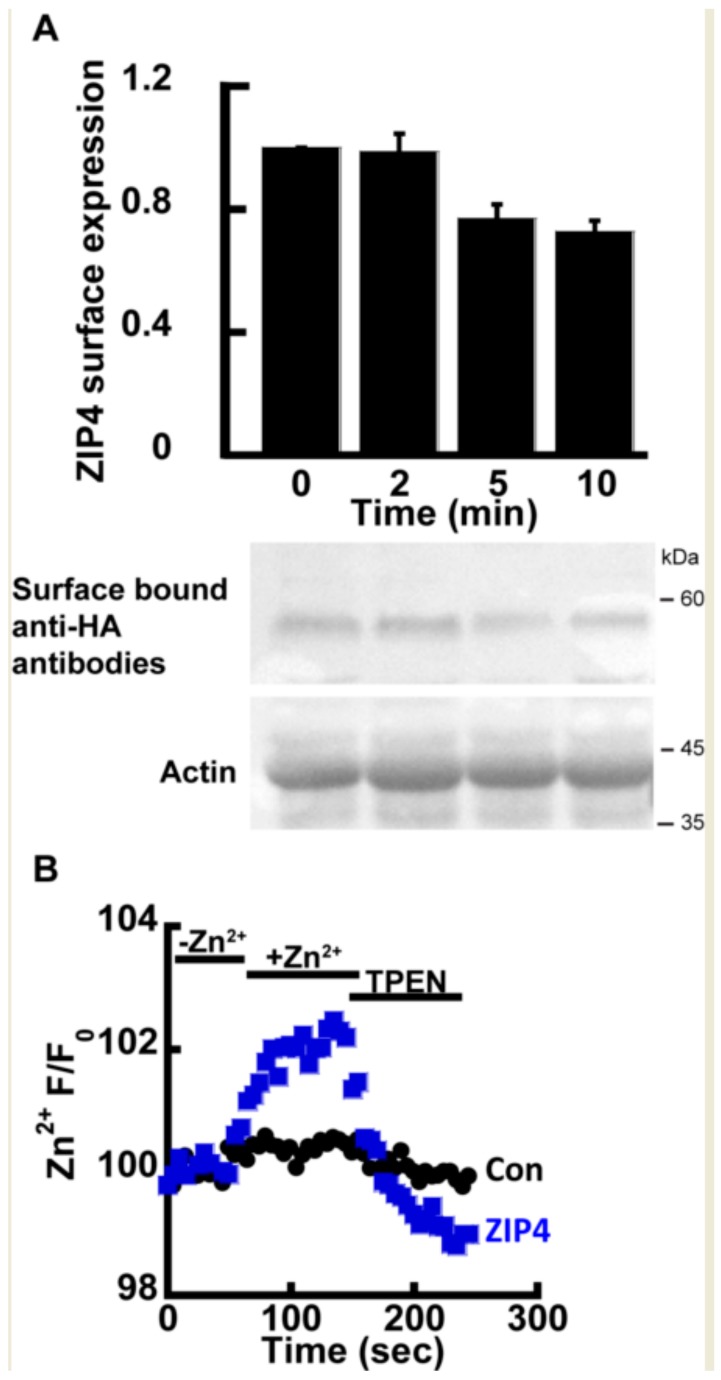
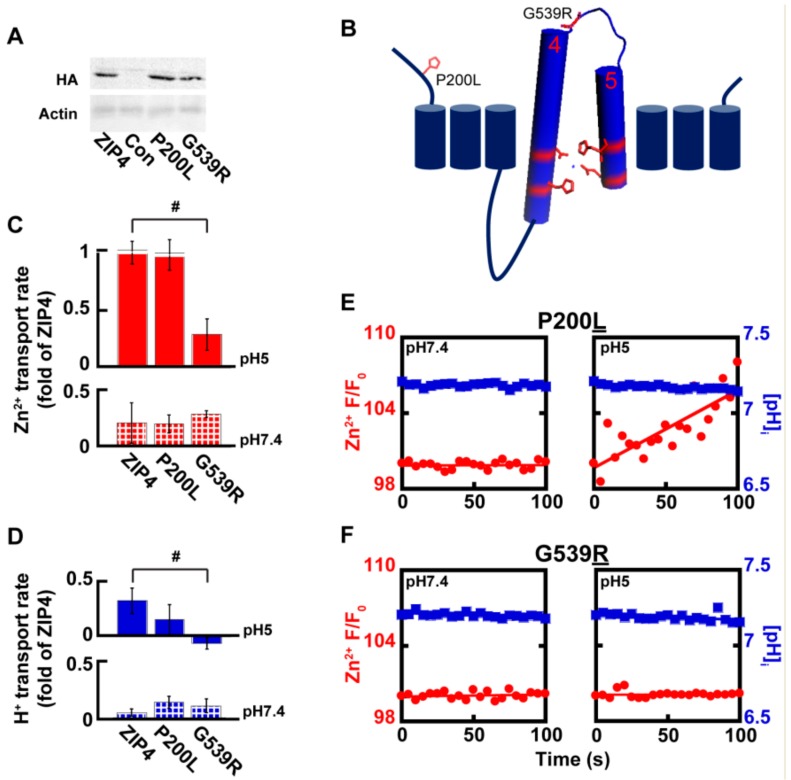
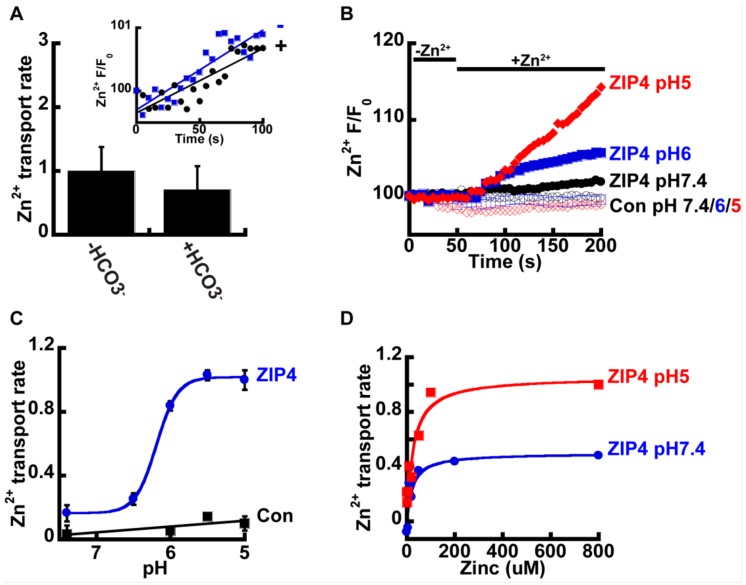
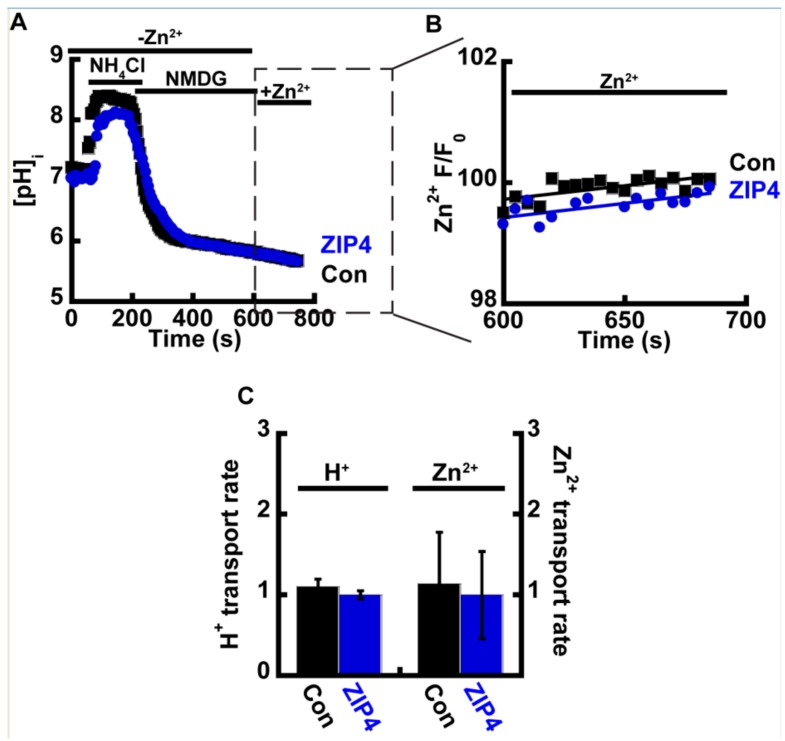
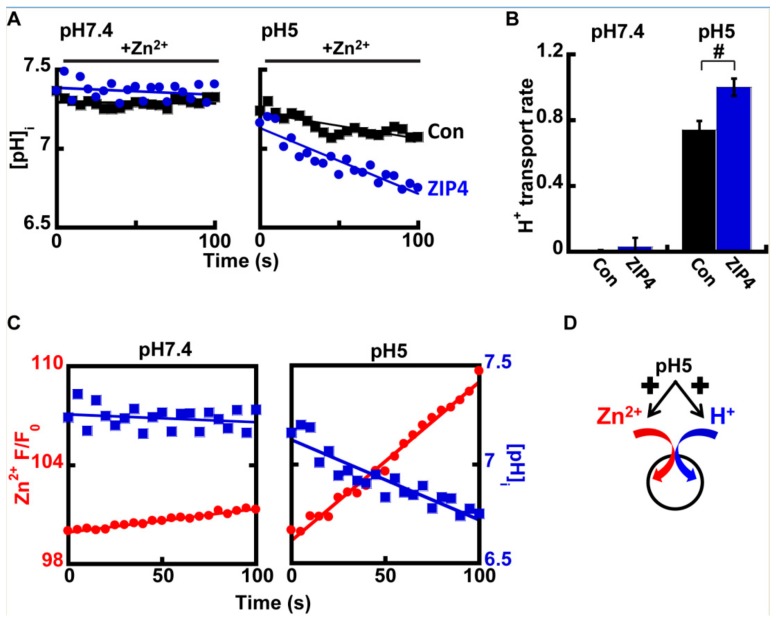
Cellular Zn homeostasis is tightly regulated and primarily mediated by designated Zn transport proteins, namely zinc transporters (ZnTs; SLC30) that shuttle Zn efflux, and ZRT-IRT-like proteins (ZIPs; SLC39) that mediate Zn influx. While the functional determinants of ZnT-mediated Zn efflux are elucidated, those of ZIP transporters are lesser understood. Previous work has suggested three distinct molecular mechanisms: (I) HCO3 or (II) H coupled Zn transport, or (III) a pH regulated electrodiffusional mode of transport. Here, using live-cell fluorescent imaging of Zn and H, in cells expressing ZIP4, we set out to interrogate its function. Intracellular pH changes or the presence of HCO3 failed to induce Zn influx. In contrast, extracellular acidification stimulated ZIP4 dependent Zn uptake. Furthermore, Zn uptake was coupled to enhanced H influx in cells expressing ZIP4, thus indicating that ZIP4 is not acting as a pH regulated channel but rather as an H powered Zn co-transporter. We further illustrate how this functional mechanism is affected by genetic variants in that in turn lead to Acrodermatitis enteropathica, a rare condition of Zn deficiency.
细胞内锌稳态受到严格调控,主要由特定的锌转运蛋白介导,即锌转运体(ZnTs;SLC30)介导锌外流,以及 ZRT-IRT 样蛋白(ZIPs;SLC39)介导锌内流。虽然阐明了 ZnT 介导的锌外流的功能决定因素,但 ZIP 转运蛋白的功能决定因素了解较少。先前的工作表明了三种不同的分子机制:(I)HCO3 或(II)H 偶联的锌转运,或(III)pH 调节的电扩散转运模式。在这里,我们使用表达 ZIP4 的细胞内锌和 H 的荧光成像,研究其功能。细胞内 pH 值变化或 HCO3 的存在均不能诱导锌内流。相比之下,细胞外酸化刺激 ZIP4 依赖的 Zn 摄取。此外,在表达 ZIP4 的细胞中,Zn 摄取与增强的 H 内流偶联,这表明 ZIP4 不是作为 pH 调节通道,而是作为 H 驱动的 Zn 共转运体。我们进一步说明了这种功能机制如何受到 中的遗传变异的影响,进而导致肠病性肢端皮炎,这是一种罕见的锌缺乏症。