Institute for Transfusion Medicine, Hannover Medical School, Hannove 30625, Germany.
Department of Nephrology, Hannover Medical School, Hannover 30625, Germany.
Int J Mol Sci. 2020 Jan 23;21(3):740. doi: 10.3390/ijms21030740.
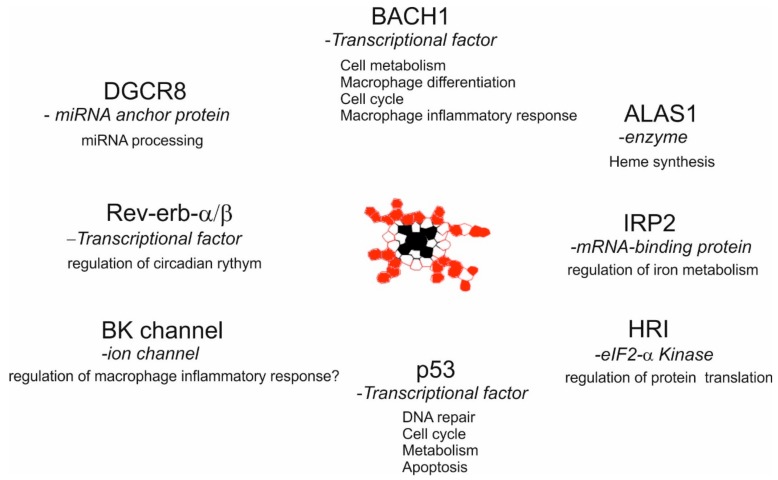
Macrophages are an integral part of the mononuclear phagocyte system that is critical for maintaining immune homeostasis. They play a key role for initiation and modulation of immunological responses in inflammation and infection. Moreover, macrophages exhibit a wide spectrum of tissue-specific phenotypes in steady-state and pathophysiological conditions. Recent clinical and experimental evidence indicates that the ubiquitous compound heme is a crucial regulator of these cells, e.g., in the differentiation of monocytes to tissue-resident macrophages and/ or in activation by inflammatory stimuli. Notably, heme, an iron containing tetrapyrrole, is essential as a prosthetic group of hemoproteins (e.g., hemoglobin and cytochromes), whereas non-protein bound free or labile heme can be harmful via pro-oxidant, pro-inflammatory, and cytotoxic effects. In this review, it will be discussed how the complex interplay of heme with macrophages regulates homeostasis and inflammation via modulating macrophage inflammatory characteristics and/ or hematopoiesis. A particular focus will be the distinct roles of intra- and extracellular labile heme and the regulation of its availability by heme-binding proteins. Finally, it will be addressed how heme modulates macrophage functions via specific transcriptional factors, in particular the nuclear repressor BTB and CNC homologue (BACH)1 and Spi-C.
巨噬细胞是单核吞噬细胞系统的一个组成部分,对于维持免疫稳态至关重要。它们在炎症和感染中免疫反应的启动和调节中发挥关键作用。此外,巨噬细胞在稳态和病理生理条件下表现出广泛的组织特异性表型。最近的临床和实验证据表明,普遍存在的化合物血红素是这些细胞的关键调节剂,例如,在单核细胞向组织驻留巨噬细胞的分化中和/或在炎症刺激下的激活中。值得注意的是,血红素是一种含铁的四吡咯,作为血红素蛋白(如血红蛋白和细胞色素)的辅基是必不可少的,而无蛋白结合的游离或不稳定的血红素可以通过促氧化剂、促炎和细胞毒性作用产生危害。在这篇综述中,将讨论血红素与巨噬细胞的复杂相互作用如何通过调节巨噬细胞的炎症特征和/或造血来调节稳态和炎症。特别关注的是细胞内和细胞外不稳定血红素的不同作用以及血红素结合蛋白对其可用性的调节。最后,将讨论血红素如何通过特定的转录因子(特别是核阻遏物 BTB 和 CNC 同源物(BACH)1 和 Spi-C)来调节巨噬细胞的功能。