Unità di Medicina 2, ASST Santi Paolo e Carlo, Dipartimento di Scienze della Salute, Università degli Studi di Milano, 20142 Milan, Italy.
Department of Electronics, Information and Bioengineering, Politecnico di Milano, 20133 Milan, Italy.
Int J Mol Sci. 2020 Jan 23;21(3):750. doi: 10.3390/ijms21030750.
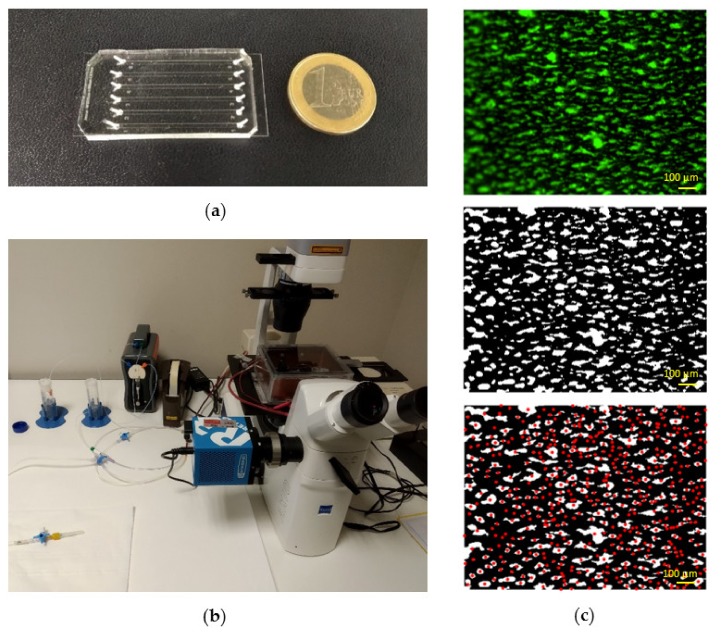
Microfluidic flow chambers (MFCs) allow the study of platelet adhesion and thrombus formation under flow, which may be influenced by several variables. We developed a new MFC, with which we tested the effects of different variables on the results of platelet deposition and thrombus formation on a collagen-coated surface.
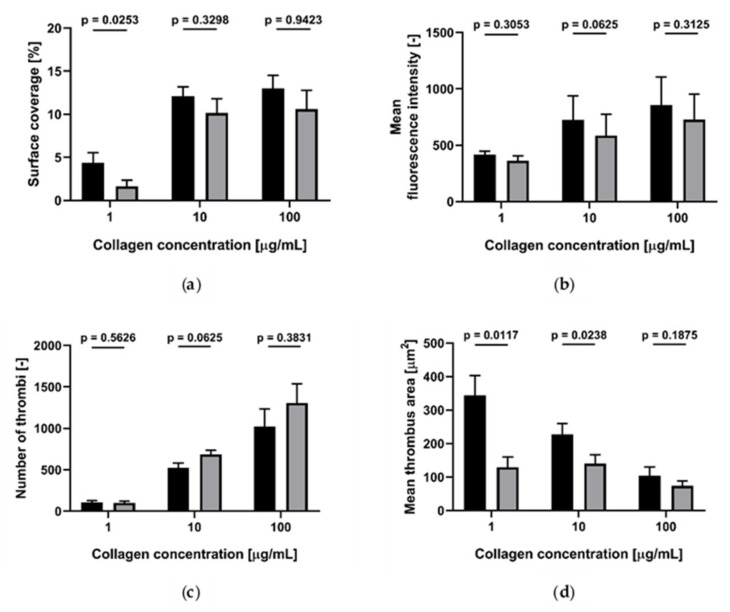
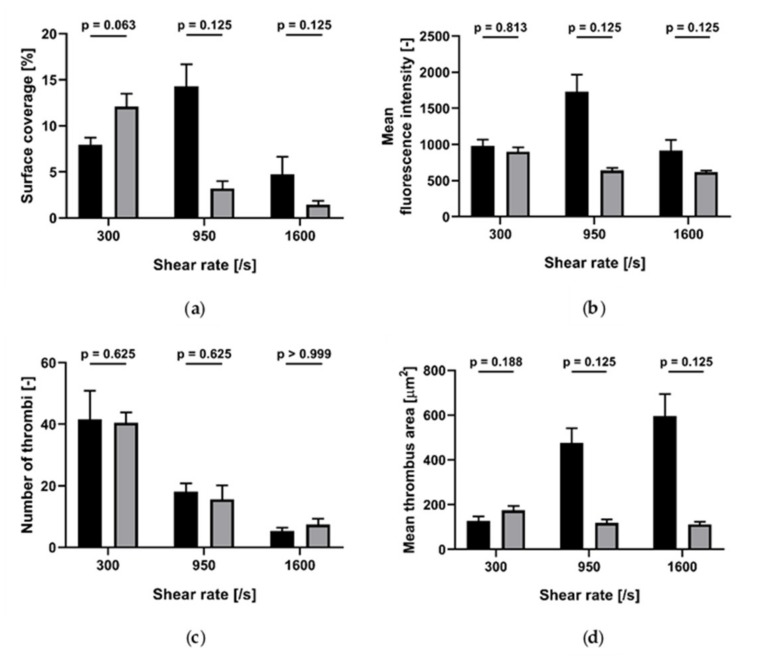
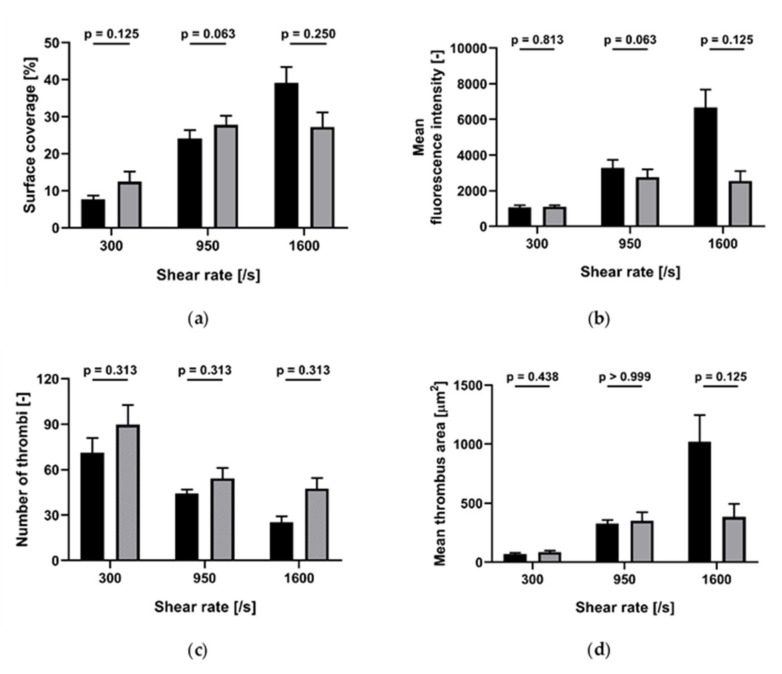
Whole blood was perfused in the MFC over collagen Type I for 4 min at different wall shear rates (WSR) and different concentrations of collagen-coating solutions, keeping blood samples at room temperature or 37 °C before starting the experiments. In addition, we tested the effects of the antiplatelet agent acetylsalicylic acid (ASA) (antagonist of cyclooxygenase-1, 100 µM) and cangrelor (antagonist of P2Y, 1 µM).
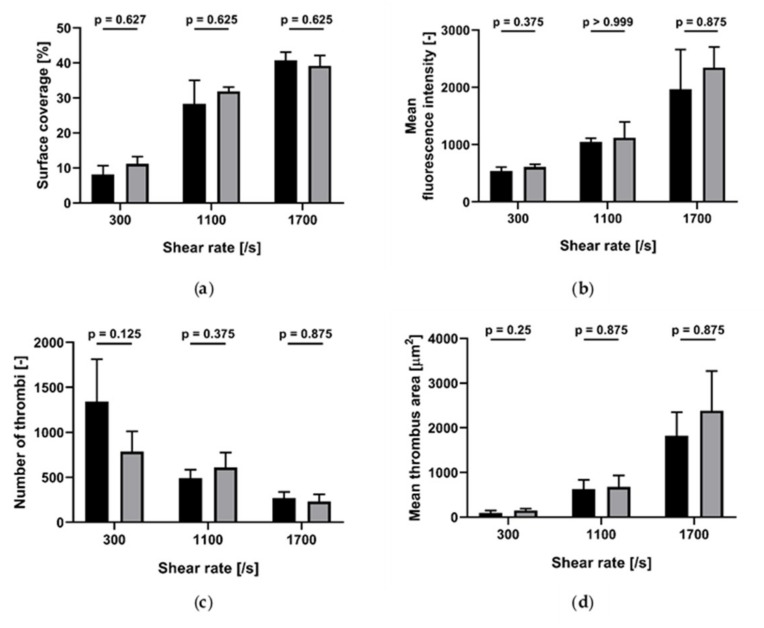
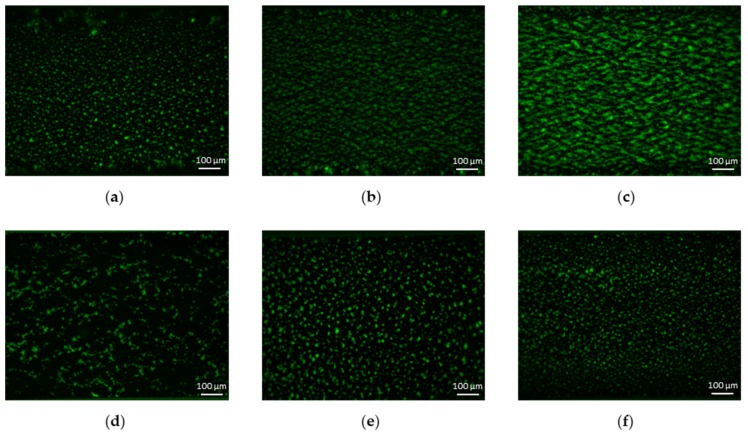
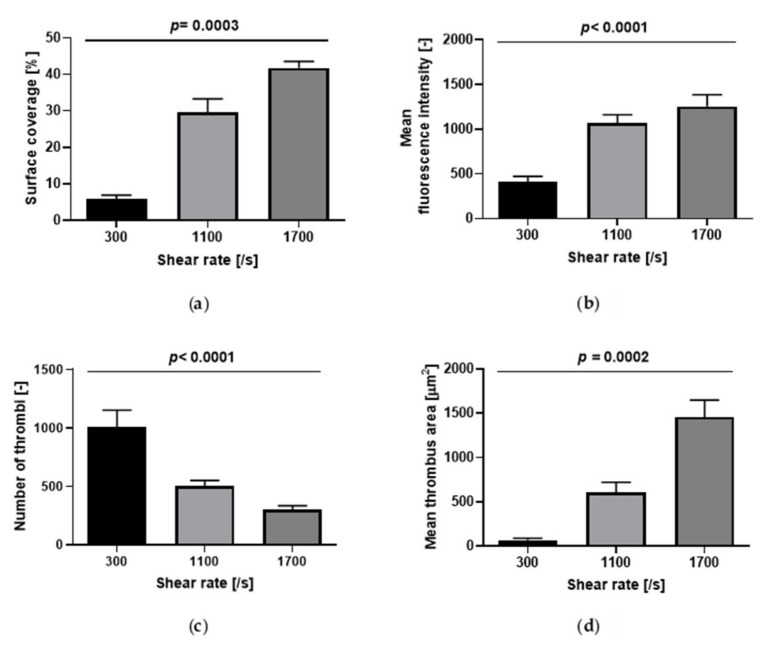
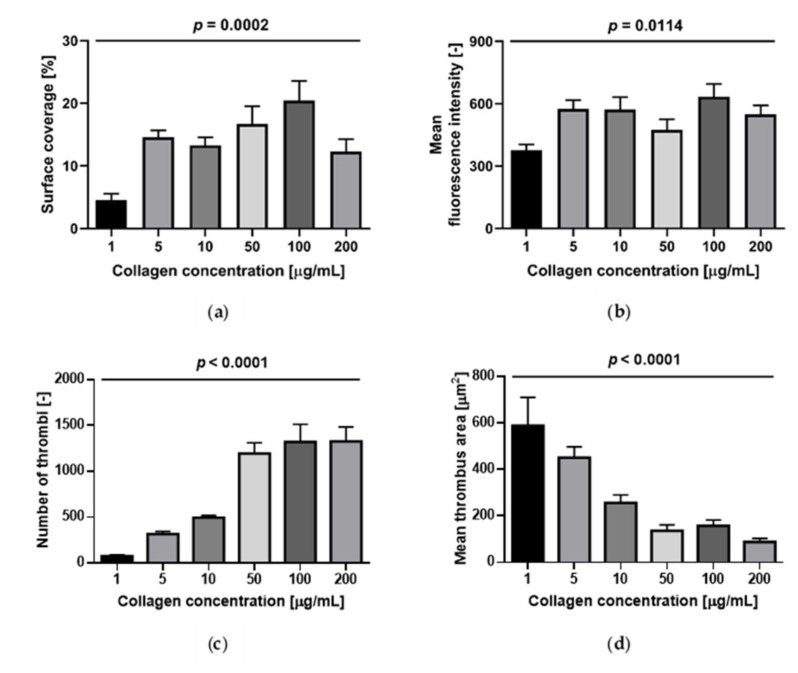
Platelet deposition on collagen (I) was not affected by the storage temperature of the blood before perfusion (room temperature vs. 37 °C); (II) was dependent on a shear rate in the range between 300/s and 1700/s; and (III) was influenced by the collagen concentration used to coat the microchannels up to a value of 10 µg/mL. ASA and cangrelor did not cause statistically significant inhibition of platelet accumulation, except for ASA at low collagen concentrations.
Platelet deposition on collagen-coated surfaces is a shear-dependent process, not influenced by the collagen concentration beyond a value of 10 µg/mL. However, the inhibitory effect of antiplatelet drugs is better observed using low concentrations of collagen.
微流控流室 (MFC) 允许在流动条件下研究血小板黏附和血栓形成,而这些过程可能会受到多种变量的影响。我们开发了一种新的 MFC,并使用它来测试不同变量对在胶原蛋白涂层表面上血小板沉积和血栓形成结果的影响。
在室温或 37°C 下,将全血在 MFC 中以不同的壁面剪切率 (WSR) 和不同浓度的胶原蛋白涂层溶液流过胶原蛋白 I 型 4 分钟,然后开始实验。此外,我们还测试了抗血小板药物乙酰水杨酸 (ASA)(环氧化酶-1 的拮抗剂,100µM)和坎格雷洛(P2Y 的拮抗剂,1µM)的作用。
在灌注前血液的储存温度(室温与 37°C)对胶原蛋白(I)上的血小板沉积没有影响;(II)取决于 300/s 至 1700/s 之间的剪切率范围;(III)受用于涂覆微通道的胶原蛋白浓度的影响,最高可达 10µg/mL。ASA 和坎格雷洛除了在低浓度的胶原蛋白时,没有引起血小板聚集的统计学显著抑制。
胶原蛋白涂层表面上的血小板沉积是一个依赖于剪切的过程,不受胶原蛋白浓度的影响,超过 10µg/mL 时除外。然而,抗血小板药物的抑制作用在使用低浓度的胶原蛋白时更容易观察到。