Institute on the Biology of Aging and Metabolism, University of Minnesota, Minneapolis, MN, USA.
Department of Biochemistry, Molecular Biology and Biophysics, University of Minnesota, Minneapolis, MN, USA.
Aging Cell. 2020 Mar;19(3):e13094. doi: 10.1111/acel.13094. Epub 2020 Jan 25.
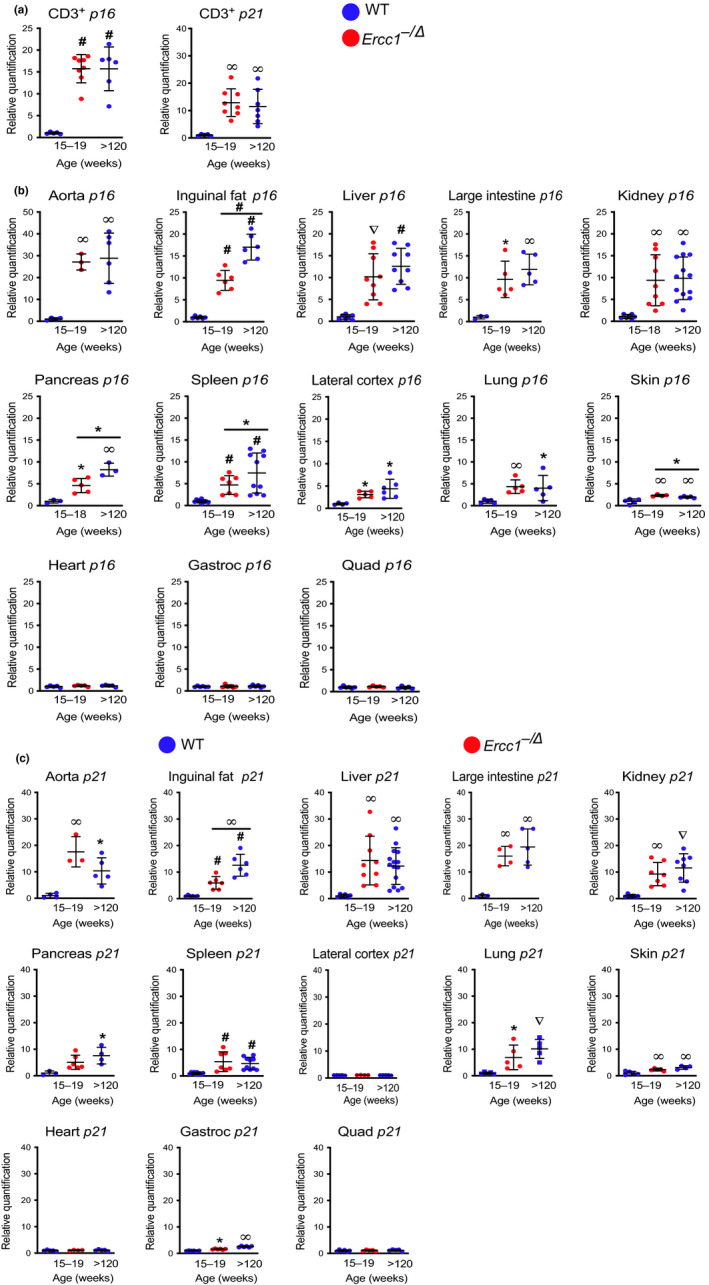
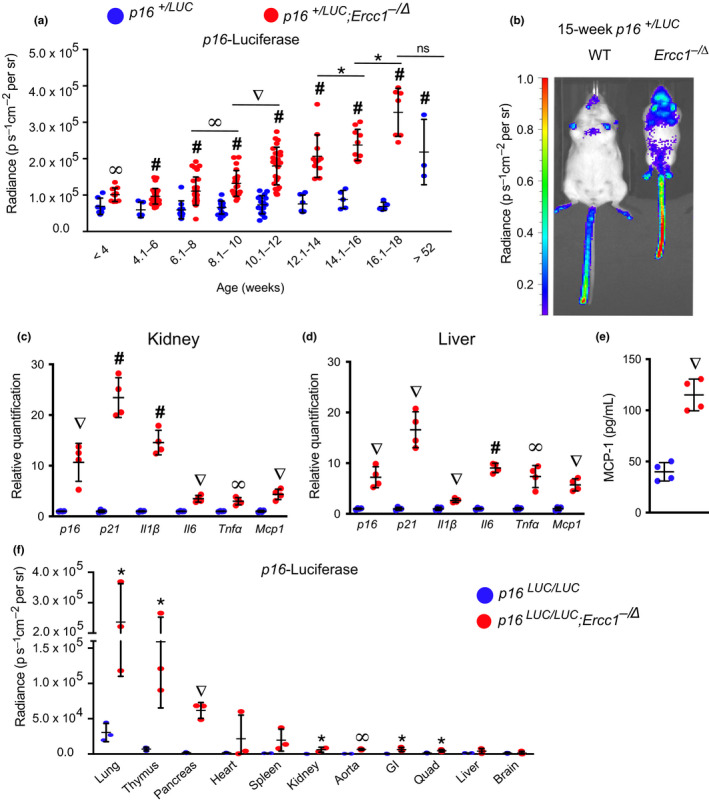
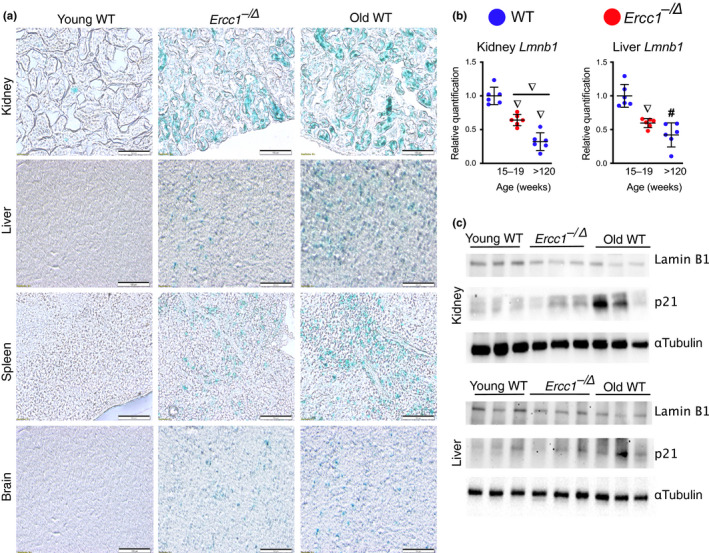
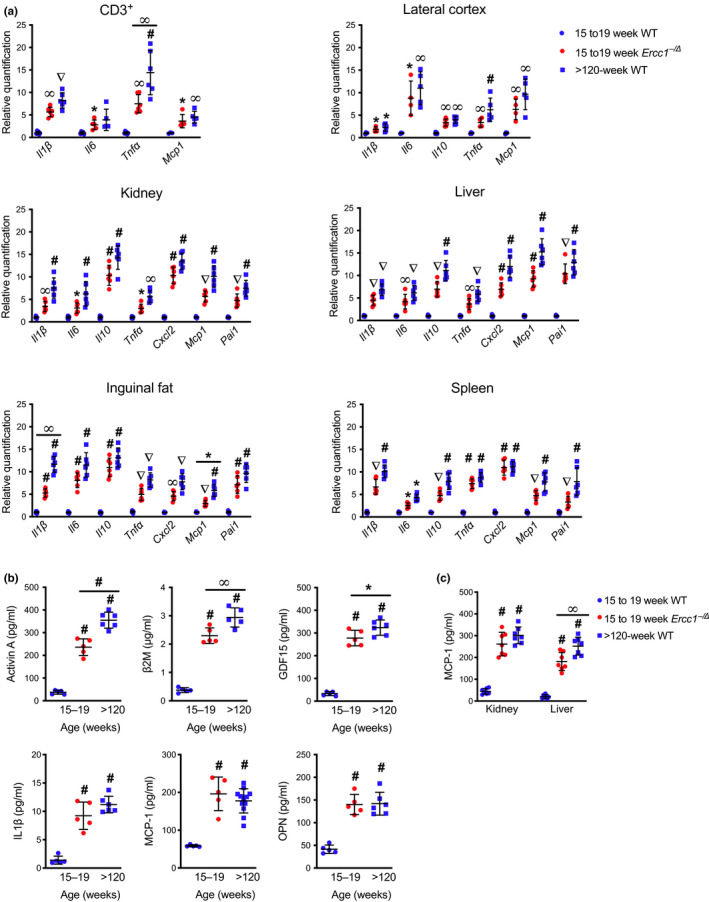
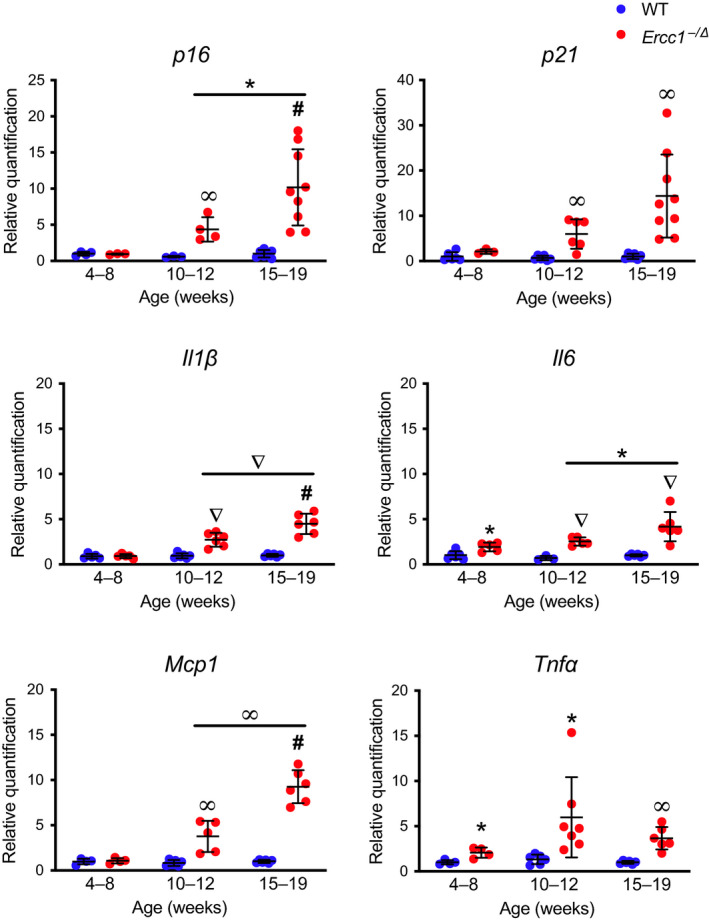
Senescent cells accumulate with age in vertebrates and promote aging largely through their senescence-associated secretory phenotype (SASP). Many types of stress induce senescence, including genotoxic stress. ERCC1-XPF is a DNA repair endonuclease required for multiple DNA repair mechanisms that protect the nuclear genome. Humans or mice with reduced expression of this enzyme age rapidly due to increased levels of spontaneous, genotoxic stress. Here, we asked whether this corresponds to an increased level of senescent cells. p16 and p21 mRNA were increased ~15-fold in peripheral lymphocytes from 4- to 5-month-old Ercc1 and 2.5-year-old wild-type (WT) mice, suggesting that these animals exhibit a similar biological age. p16 and p21 mRNA were elevated in 10 of 13 tissues analyzed from 4- to 5-month-old Ercc1 mice, indicating where endogenous DNA damage drives senescence in vivo. Aged WT mice had similar increases of p16 and p21 mRNA in the same 10 tissues as the mutant mice. Senescence-associated β-galactosidase activity and p21 protein also were increased in tissues of the progeroid and aged mice, while Lamin B1 mRNA and protein levels were diminished. In Ercc1 mice with a p16 luciferase reporter, bioluminescence rose steadily with age, particularly in lung, thymus, and pancreas. These data illustrate where senescence occurs with natural and accelerated aging in mice and the relative extent of senescence among tissues. Interestingly, senescence was greater in male mice until the end of life. The similarities between Ercc1 and aged WT mice support the conclusion that the DNA repair-deficient mice accurately model the age-related accumulation of senescent cells, albeit six-times faster.
衰老细胞在脊椎动物中随着年龄的增长而积累,并通过其衰老相关分泌表型(SASP)在很大程度上促进衰老。许多类型的应激都会诱导衰老,包括遗传毒性应激。ERCC1-XPF 是一种 DNA 修复内切酶,是多种保护核基因组的 DNA 修复机制所必需的。这种酶表达减少的人类或小鼠由于自发遗传毒性应激水平升高而迅速衰老。在这里,我们想知道这是否对应于衰老细胞水平的增加。4-5 月龄 Ercc1 和 2.5 岁野生型(WT)小鼠外周血淋巴细胞中 p16 和 p21mRNA 增加了约 15 倍,这表明这些动物具有相似的生物学年龄。在 4-5 月龄 Ercc1 小鼠的 13 种组织中有 10 种分析中,p16 和 p21mRNA 升高,表明内源性 DNA 损伤在体内驱动衰老的部位。10 种组织中,衰老的 WT 小鼠与突变小鼠具有相似的 p16 和 p21mRNA 增加。衰老相关的β-半乳糖苷酶活性和 p21 蛋白在早衰和衰老小鼠的组织中也增加,而 lamin B1mRNA 和蛋白水平降低。在带有 p16 荧光素酶报告基因的 Ercc1 小鼠中,生物发光随年龄稳步上升,特别是在肺、胸腺和胰腺中。这些数据说明了衰老在小鼠自然和加速衰老过程中发生的部位,以及各组织间衰老的相对程度。有趣的是,直到生命结束,雄性小鼠的衰老程度都更大。Ercc1 小鼠和衰老的 WT 小鼠之间的相似性支持了这样的结论,即 DNA 修复缺陷小鼠准确地模拟了与年龄相关的衰老细胞积累,尽管速度快了六倍。