Horae Gene Therapy Center, University of Massachusetts Medical School, Worcester, MA, USA; Department of Pediatrics, University of Massachusetts Medical School, Worcester, MA, USA.
Horae Gene Therapy Center, University of Massachusetts Medical School, Worcester, MA, USA; Department of Pediatrics, University of Massachusetts Medical School, Worcester, MA, USA; Department of Clinical Sciences, Cummings School of Veterinary Medicine at Tufts University, N. Grafton, MA, USA.
Mol Ther. 2020 Mar 4;28(3):747-757. doi: 10.1016/j.ymthe.2020.01.004. Epub 2020 Jan 13.
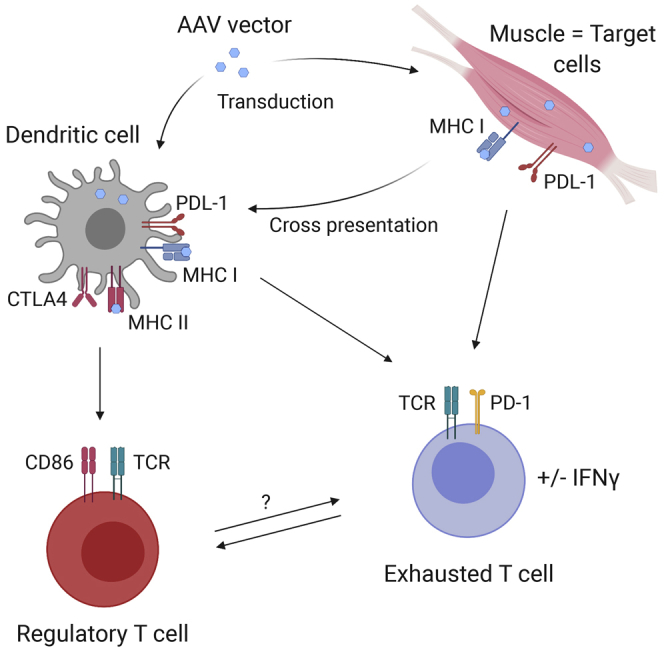
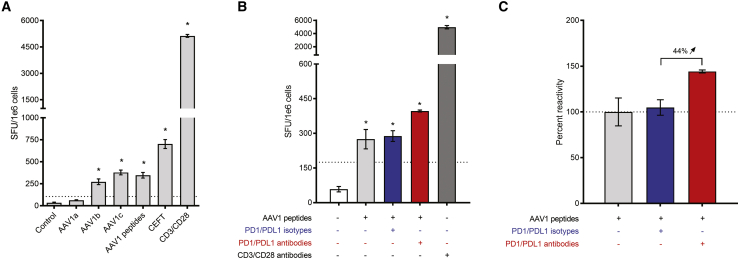
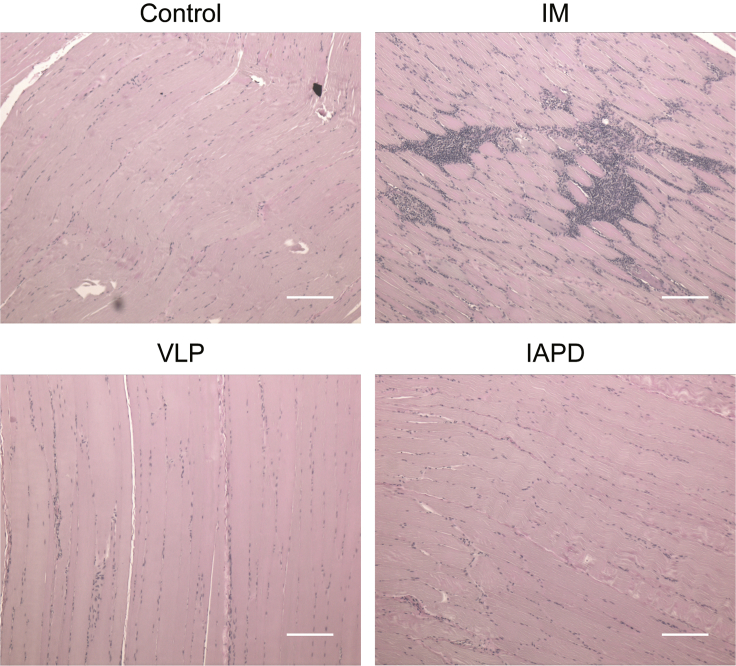
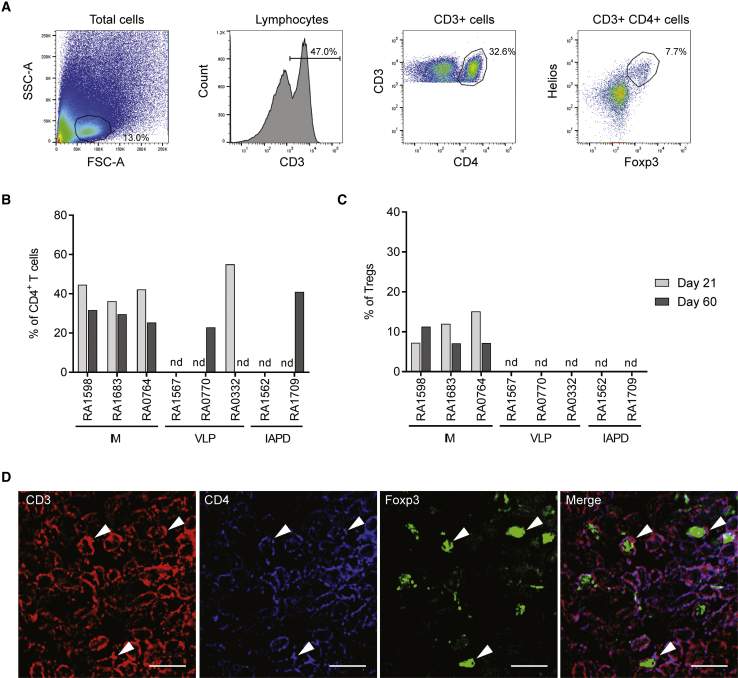
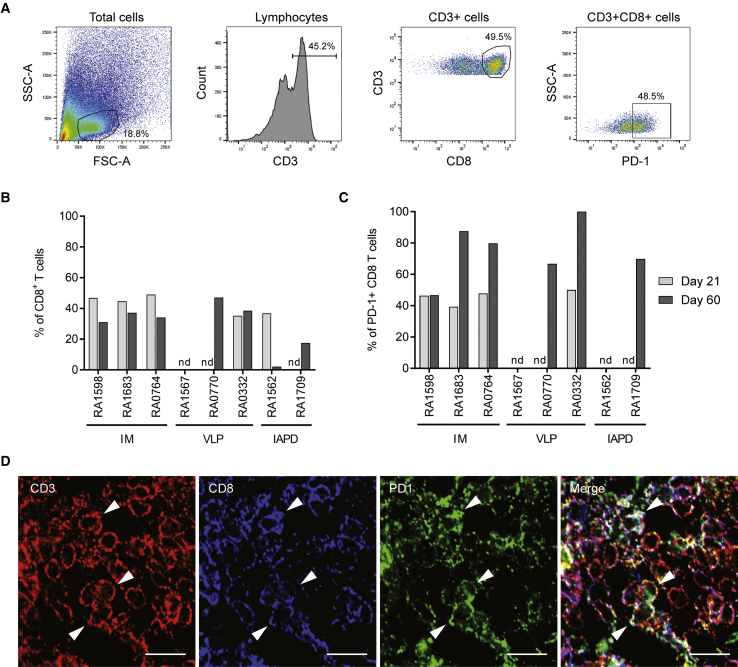
With the US Food and Drug Administration (FDA) and European Medicines Agency (EMA) approvals for Zolgensma, Luxturna, and Glybera, recombinant adeno-associated viruses (rAAVs) are considered efficient tools for gene transfer. However, studies in animals and humans demonstrate that intramuscular (IM) AAV delivery can trigger immune responses to AAV capsids and/or transgenes. IM delivery of rAAV1 in humans has also been described to induce tolerance to rAAV characterized by the presence of capsid-specific regulatory T cells (Tregs) in periphery. To understand mechanisms responsible for tolerance and parameters involved, we tested 3 muscle-directed administration routes in rhesus monkeys: IM delivery, venous limb perfusion, and the intra-arterial push and dwell method. These 3 methods were well tolerated and led to transgene expression. Interestingly, gene transfer in muscle led to Tregs and exhausted T cell infiltrates in situ at both day 21 and day 60 post-injection. In human samples, an in-depth analysis of the functionality of these cells demonstrates that capsid-specific exhausted T cells are detected after at least 5 years post-vector delivery and that the exhaustion can be reversed by blocking the checkpoint pathway. Overall, our study shows that persisting transgene expression after gene transfer in muscle is mediated by Tregs and exhausted T cells.
随着美国食品和药物管理局(FDA)和欧洲药品管理局(EMA)批准了 Zolgensma、Luxturna 和 Glybera,重组腺相关病毒(rAAV)被认为是基因转移的有效工具。然而,动物和人体研究表明,肌肉内(IM)AAV 给药会引发针对 AAV 衣壳和/或转基因的免疫反应。在人类中,rAAV1 的 IM 给药也被描述为诱导对 rAAV 的耐受性,其特征是在外周存在衣壳特异性调节性 T 细胞(Tregs)。为了了解耐受的机制和涉及的参数,我们在恒河猴中测试了 3 种肌肉定向给药途径:IM 给药、静脉肢体灌注和动脉内推注和停留法。这 3 种方法均耐受良好,并导致转基因表达。有趣的是,肌肉内的基因转移导致 Tregs 和耗尽的 T 细胞浸润原位在第 21 天和第 60 天注射后。在人类样本中,对这些细胞的功能进行深入分析表明,在载体给药后至少 5 年后可检测到针对衣壳的耗尽 T 细胞,并且可以通过阻断检查点途径来逆转衰竭。总的来说,我们的研究表明,肌肉内基因转移后持续的转基因表达是由 Tregs 和耗尽的 T 细胞介导的。