Eurotransplant International Foundation, Leiden, The Netherlands.
Department of Respiratory Medicine, Hannover Medical School, Hannover, Germany.
Transpl Int. 2020 May;33(5):544-554. doi: 10.1111/tri.13582. Epub 2020 Feb 13.
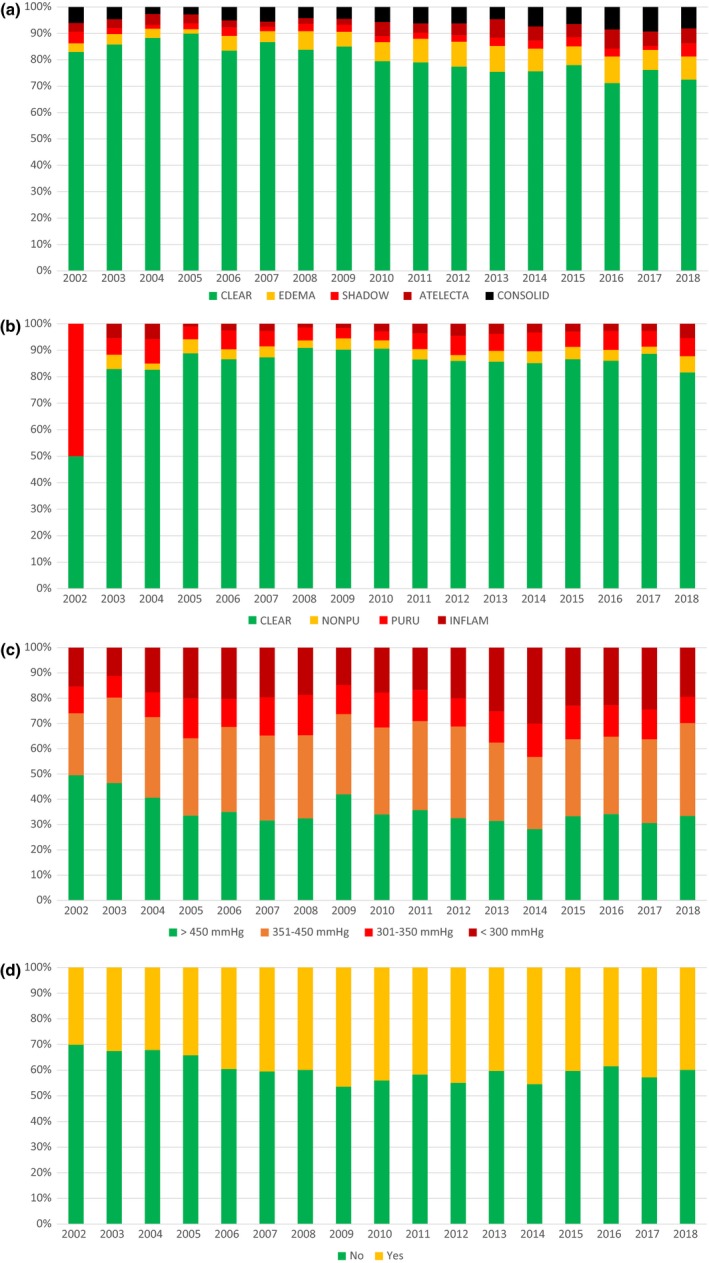
The aim of this study was to investigate whether there is an impact of donation rates on the quality of lungs used for transplantation and whether donor lung quality affects post-transplant outcome in the current Lung Allocation Score era. All consecutive adult LTx performed in Eurotransplant (ET) between January 2012 and December 2016 were included (N = 3053). Donors used for LTx in countries with high donation rate were younger (42% vs. 33% ≤45 years, P < 0.0001), were less often smokers (35% vs. 46%, P < 0.0001), had more often clear chest X-rays (82% vs. 72%, P < 0.0001), had better donor oxygenation ratios (20% vs. 26% with PaO /FiO ≤ 300 mmHg, P < 0.0001), and had better lung donor score values (LDS; 28% vs. 17% with LDS = 6, P < 0.0001) compared with donors used for LTx in countries with low donation rate. Survival rates for the groups LDS = 6 and ≥7 at 5 years were 69.7% and 60.9% (P = 0.007). Lung donor quality significantly impacts on long-term patient survival. Countries with a low donation rate are more oriented to using donor lungs with a lesser quality compared to countries with a high donation rate. Instead of further stretching donor eligibility criteria, the full potential of the donor pool should be realized.
本研究旨在探讨在当前肺分配评分时代,捐赠率是否会影响用于移植的肺脏质量,以及供体肺脏质量是否会影响移植后的结果。纳入了 2012 年 1 月至 2016 年 12 月期间在欧洲器官移植组织(ET)进行的所有连续成人肺移植(LTx)(N=3053)。在高捐赠率国家用于 LTx 的供体更年轻(42% vs. 33%≤45 岁,P<0.0001),吸烟率较低(35% vs. 46%,P<0.0001),胸部 X 线更清晰(82% vs. 72%,P<0.0001),供体氧合比值更好(20% vs. 26%,PaO/FiO≤300mmHg,P<0.0001),肺供体评分值(LDS)更高(28% vs. 17%,LDS=6,P<0.0001)。LDS=6 和≥7 两组患者的 5 年生存率分别为 69.7%和 60.9%(P=0.007)。肺供体质量对长期患者生存率有显著影响。与高捐赠率国家相比,低捐赠率国家更倾向于使用质量较差的供体肺脏。与其进一步放宽供体资格标准,不如充分发挥供体库的潜力。