Department of Head and Neck Oncology, State Key Laboratory of Oral Diseases, West China Hospital of Stomatology, Sichuan University, Chengdu, China.
Biosci Rep. 2020 Feb 28;40(2). doi: 10.1042/BSR20182121.
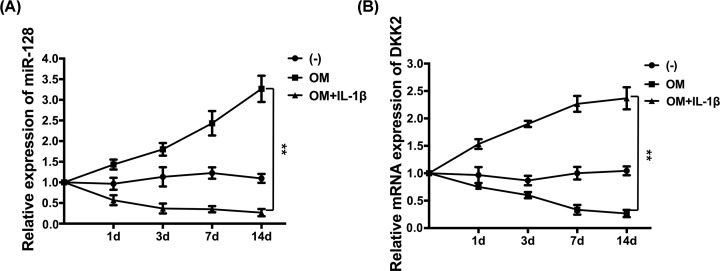
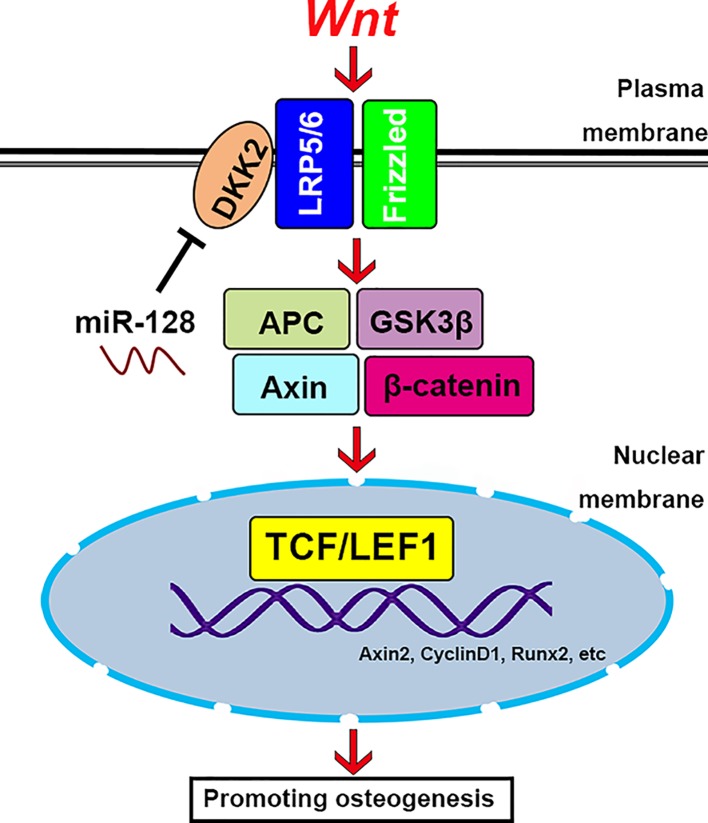
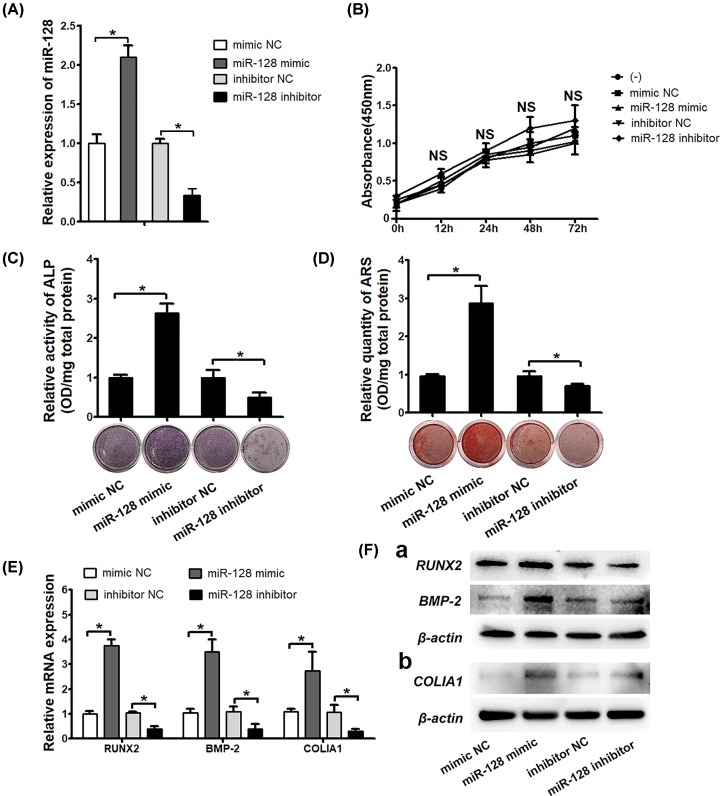
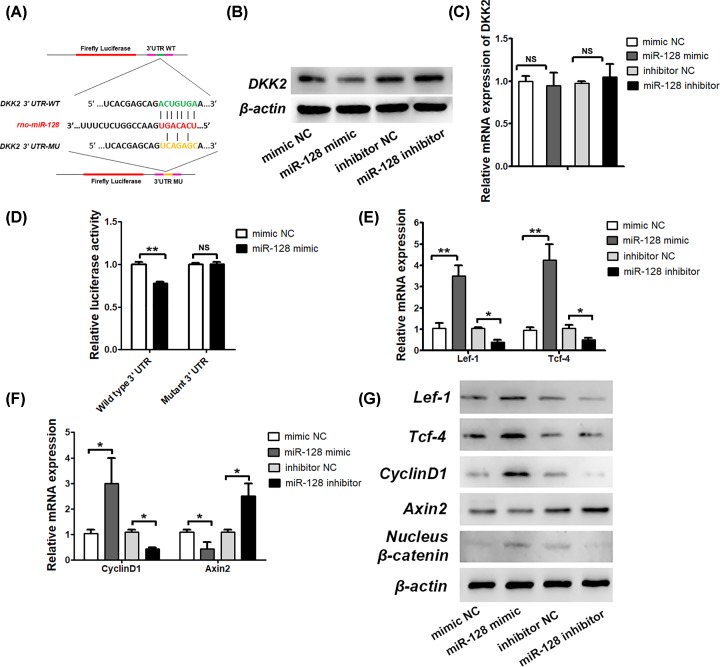
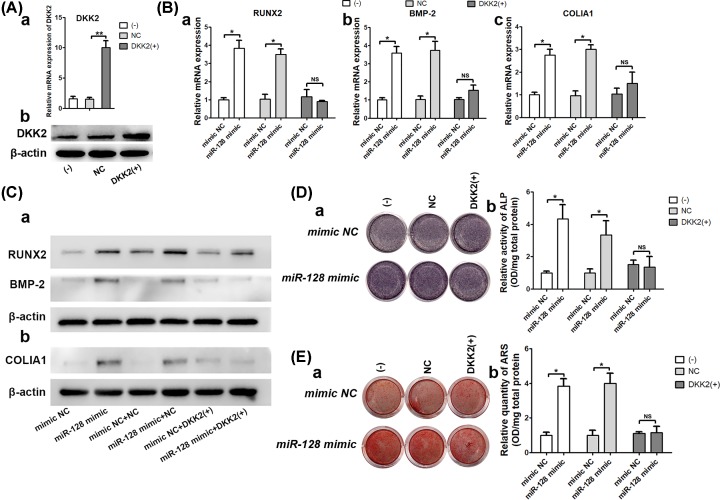
Bone loss caused by inflammatory disease, such as peri-implantitis, poses a great challenge to clinicians for restoration. Emerging evidence indicates that microRNAs (miRNAs) are indispensable regulators of bone growth, development, and formation. In the present study, we found that microRNA-128 (miR-128) was differentially up-regulated during the osteogenic differentiation of rat bone marrow stem cells (rBMSCs). Overexpression of miR-128 promoted osteogenic differentiation of rBMSCs by up-regulating alkaline phosphatase (ALP), matrix mineralization, mRNA, and protein levels of osteogenic makers (e.g. RUNX2, BMP-2, and COLIA1), whereas inhibition of miR-128 suppressed osteoblastic differentiation in vitro. Mechanistically, miR-128 directly and functionally targeted Dickkopf2 (DKK2), which is a Wnt signaling pathway antagonist, and enhanced Wnt/β-catenin signaling activity. Furthermore, the positive effect of miR-128 on osteogenic differentiation was apparently abrogated by DKK2 overexpression. Collectively, these results indicate that miR-128 promotes osteogenic differentiation of rBMSCs by targeting DKK2, which may provide a promising approach to the treatment of peri-implantitis.
炎症性疾病(如种植体周围炎)导致的骨丢失对临床医生的修复构成了巨大挑战。新出现的证据表明,microRNAs(miRNAs)是骨生长、发育和形成不可或缺的调节因子。在本研究中,我们发现 microRNA-128(miR-128)在大鼠骨髓间充质干细胞(rBMSCs)的成骨分化过程中存在差异上调。miR-128 的过表达通过上调碱性磷酸酶(ALP)、基质矿化、成骨标志物(如 RUNX2、BMP-2 和 COLIA1)的 mRNA 和蛋白水平,促进 rBMSCs 的成骨分化,而抑制 miR-128 则抑制体外成骨分化。机制上,miR-128 直接且功能上靶向 Dickkopf2(DKK2),DKK2 是 Wnt 信号通路的拮抗剂,并增强了 Wnt/β-catenin 信号活性。此外,DKK2 的过表达明显削弱了 miR-128 对成骨分化的正向作用。总之,这些结果表明,miR-128 通过靶向 DKK2 促进 rBMSCs 的成骨分化,这可能为治疗种植体周围炎提供一种有前景的方法。