Department of Oncology, CRUK/MRC Oxford Institute for Radiation Oncology, University of Oxford, United Kingdom.
Department of Oncology, CRUK/MRC Oxford Institute for Radiation Oncology, University of Oxford, United Kingdom.
Int J Radiat Oncol Biol Phys. 2020 May 1;107(1):212-221. doi: 10.1016/j.ijrobp.2020.01.015. Epub 2020 Jan 25.
Muscle-invasive bladder cancer has a 40% to 60% 5-year survival rate with radical treatment by surgical removal of the bladder or radiation therapy-based bladder preservation techniques, including concurrent chemoradiation. Elderly patients cannot tolerate current chemoradiation therapy regimens and often receive only radiation therapy, which is less effective. We urgently need effective chemotherapy agents for use with radiation therapy combinations that are nontoxic to normal tissues and tolerated by elderly patients.
We have identified histone deacetylase (HDAC) inhibitors as promising agents to study. Pan-HDAC inhibition, using panobinostat, is a good strategy for radiosensitization, but more selective agents may be more useful radiosensitizers in a clinical setting, resulting in fewer systemic side effects. Herein, we study the HDAC class I-selective agent romidepsin, which we predict to have fewer off-target effects than panobinostat while maintaining an effective level of tumor radiosensitization.
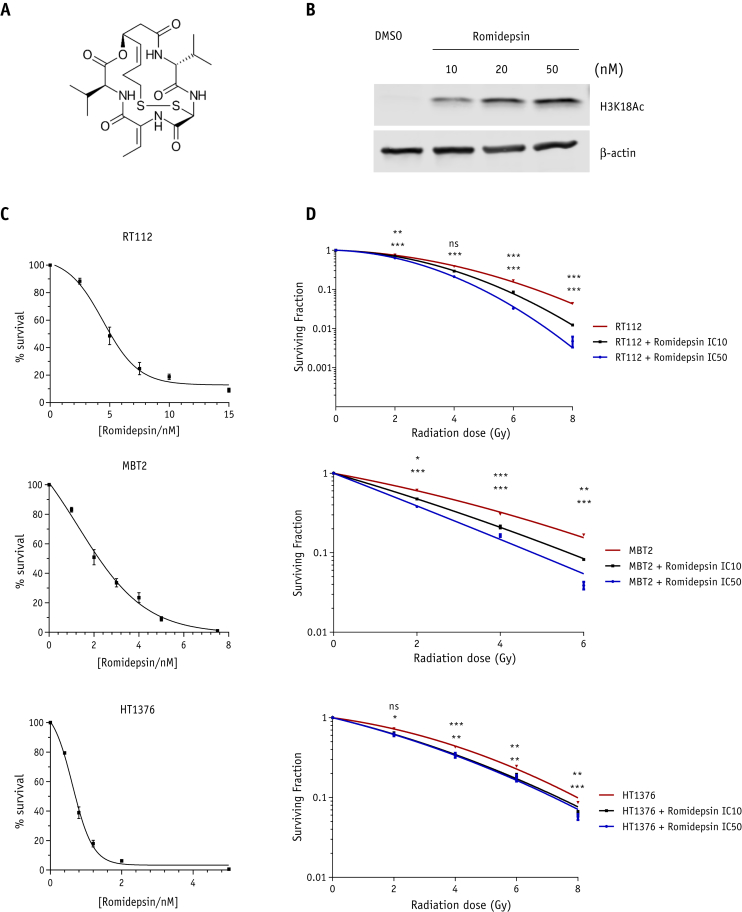
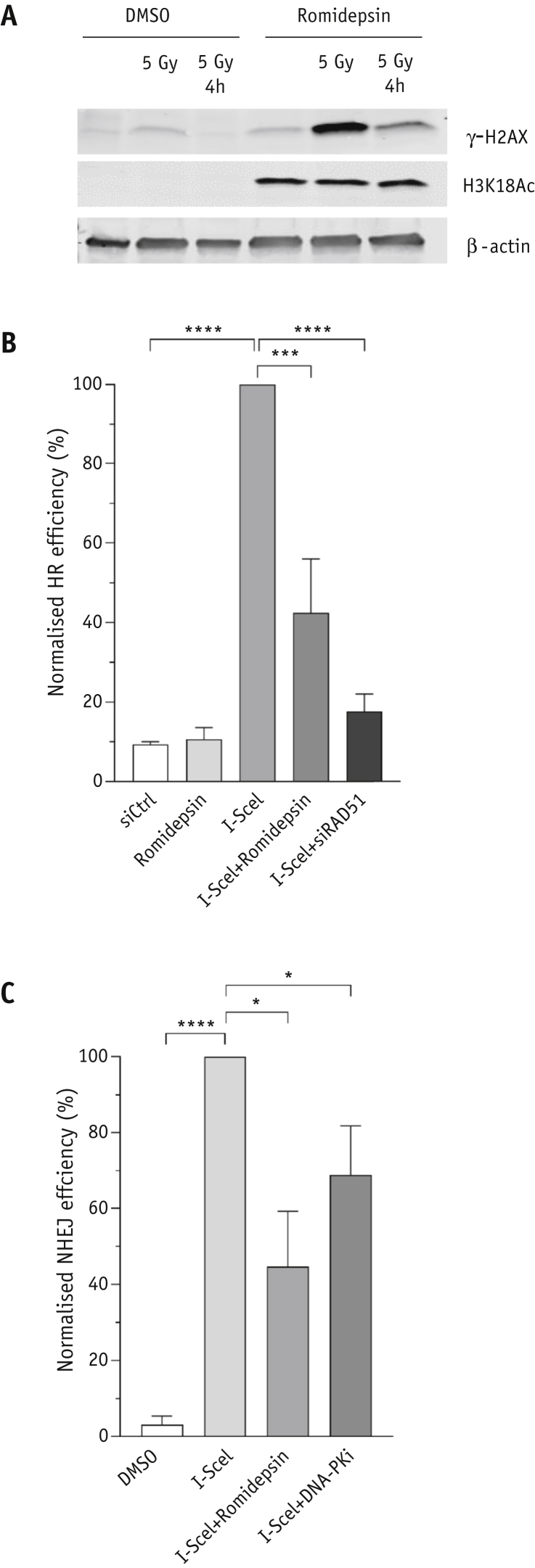
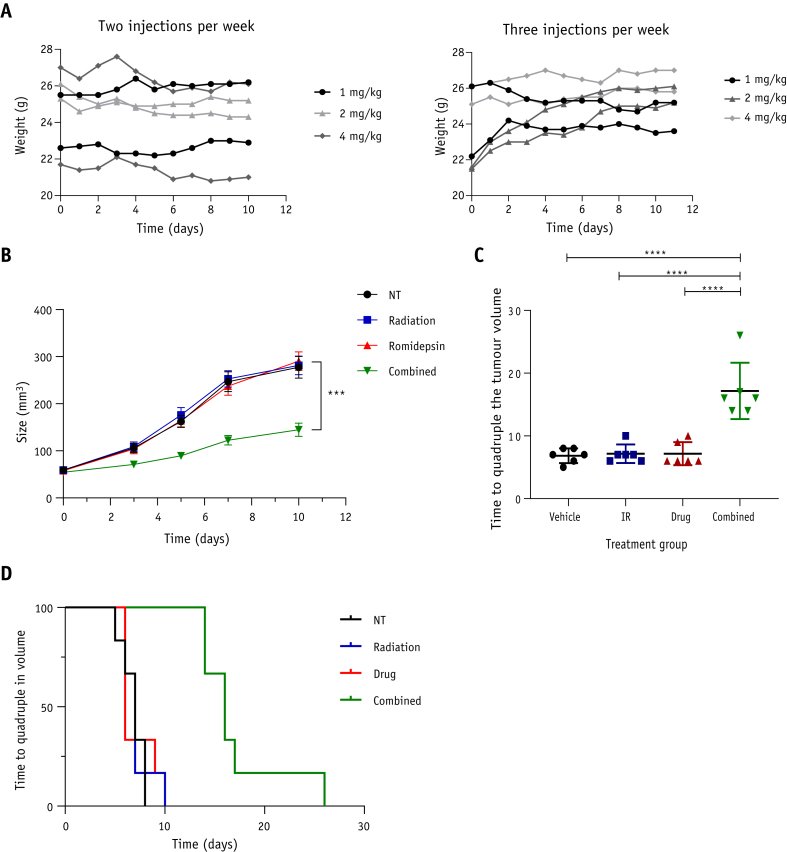
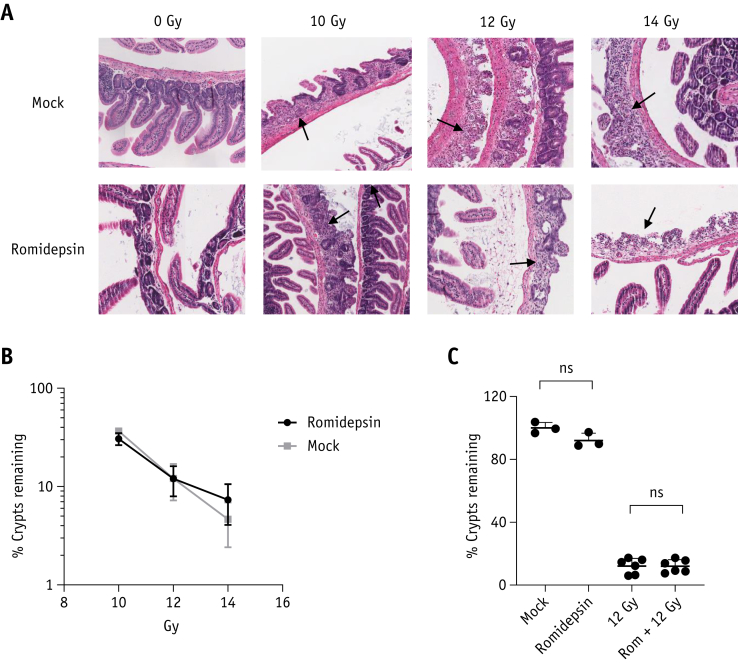
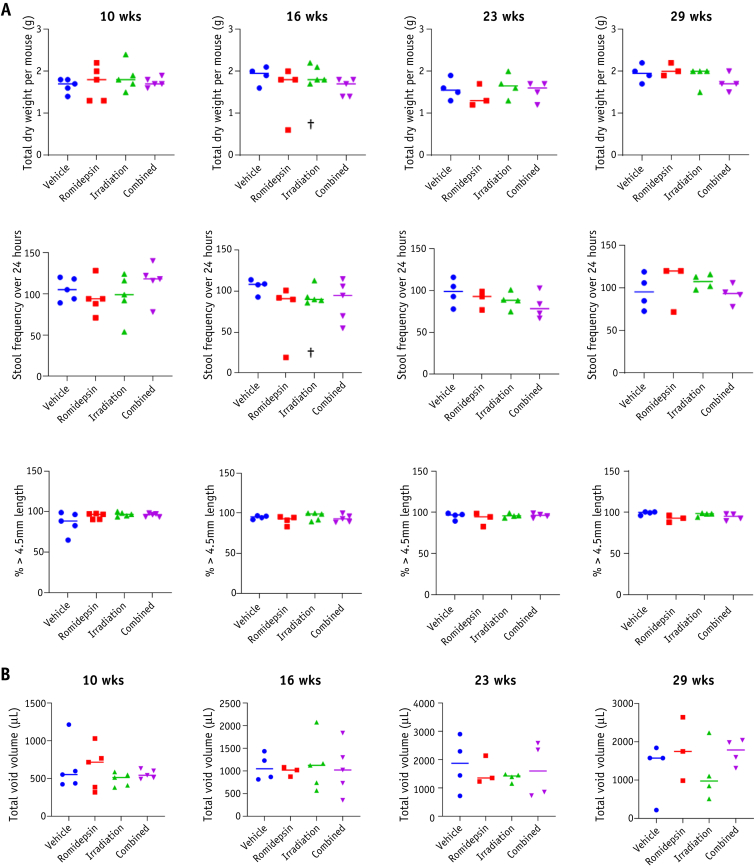
In vitro effects of romidepsin were assessed by clonogenic assay and showed that romidepsin was effective in the nanomolar range in different bladder cancer cells and radiosensitized these cells. The radiosensitizing effect of romidepsin was confirmed in vivo using superficial xenografts. The drug/irradiation combination treatment resulted in significant tumor growth delay but did not increase the severity of acute (3.75 days) intestinal normal tissue toxicity or late toxicity at 29 weeks. Moreover, we showed that romidepsin treatment impaired both homologous recombination and nonhomologous end joining DNA repair pathways, suggesting that the disruption of DNA repair pathways caused by romidepsin is a key mechanism for its radiosensitizing effect in bladder cancer cells.
This study demonstrates that romidepsin is an effective radiosensitizer in vitro and in vivo and does not increase the acute and late toxicity after ionizing radiation. Romidepsin is already in clinical use for the cutaneous T-cell lymphoma, but a phase 1 clinical trial of romidepsin as a radiosensitizer could be considered in muscle-invasive bladder cancer.
肌层浸润性膀胱癌通过手术切除膀胱或基于放射治疗的膀胱保存技术(包括同期放化疗)进行根治性治疗,其 5 年生存率为 40%至 60%。老年患者无法耐受目前的放化疗方案,通常仅接受放射治疗,效果较差。我们迫切需要与放射治疗联合使用的有效化疗药物,这些药物对正常组织无毒,老年患者能够耐受。
我们已经确定组蛋白去乙酰化酶(HDAC)抑制剂是一种很有前途的研究药物。使用 panobinostat 进行全 HDAC 抑制是放射增敏的一种很好的策略,但更具选择性的药物在临床环境中可能更有用的放射增敏剂,从而减少全身副作用。在此,我们研究了 HDAC Ⅰ类选择性药物罗米地辛,我们预测它比 panobinostat 具有更少的脱靶效应,同时保持有效的肿瘤放射增敏水平。
通过集落形成试验评估了罗米地辛的体外作用,结果表明罗米地辛在不同的膀胱癌细胞中以纳摩尔浓度有效,并使这些细胞放射增敏。在浅层异种移植中证实了罗米地辛的放射增敏作用。药物/放疗联合治疗导致肿瘤生长明显延迟,但并未增加急性(3.75 天)肠道正常组织毒性或 29 周时的晚期毒性的严重程度。此外,我们表明罗米地辛治疗破坏了同源重组和非同源末端连接的 DNA 修复途径,表明罗米地辛破坏 DNA 修复途径是其在膀胱癌细胞中放射增敏作用的关键机制。
本研究表明罗米地辛在体外和体内都是有效的放射增敏剂,并且不会增加电离辐射后的急性和晚期毒性。罗米地辛已用于治疗皮肤 T 细胞淋巴瘤,但可考虑在肌层浸润性膀胱癌中进行罗米地辛作为放射增敏剂的 1 期临床试验。