MRC Laboratory of Molecular Biology, Francis Crick Avenue, Cambridge Biomedical Campus, Cambridge CB2 0QH, United Kingdom.
Institute of Pharmaceutical Chemistry, Johann Wolfgang Goethe University, Max-von-Laue-Str. 9, 60438, Frankfurt am Main, Germany.
ACS Chem Biol. 2020 Mar 20;15(3):657-668. doi: 10.1021/acschembio.9b00748. Epub 2020 Feb 21.
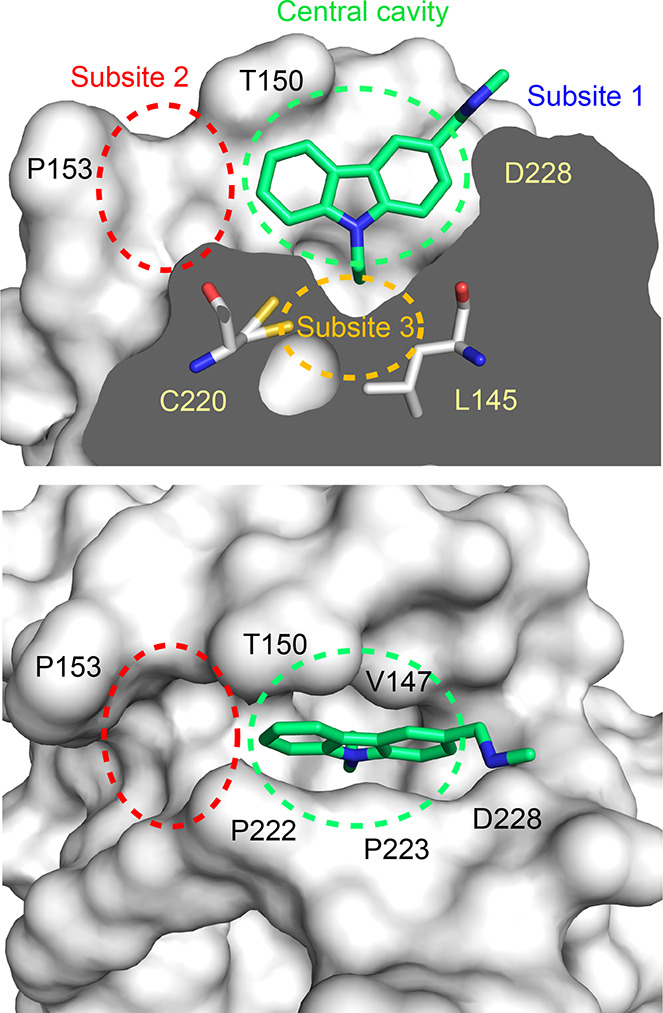
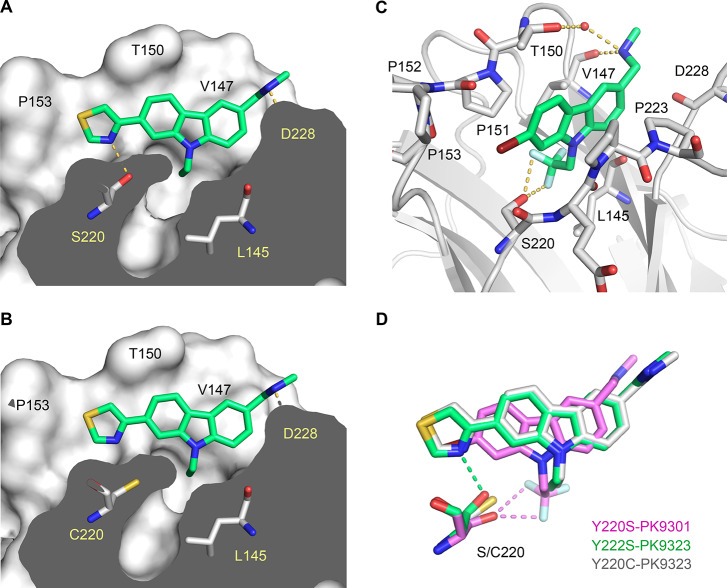
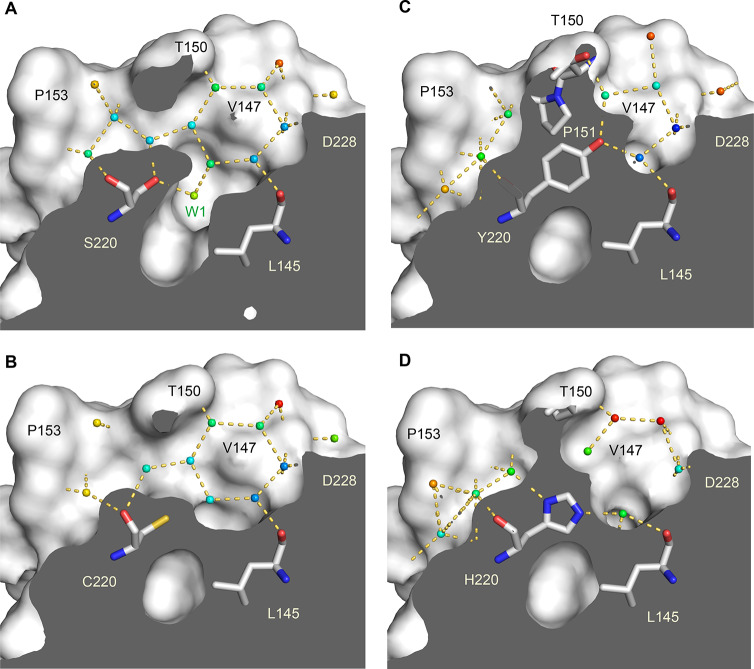
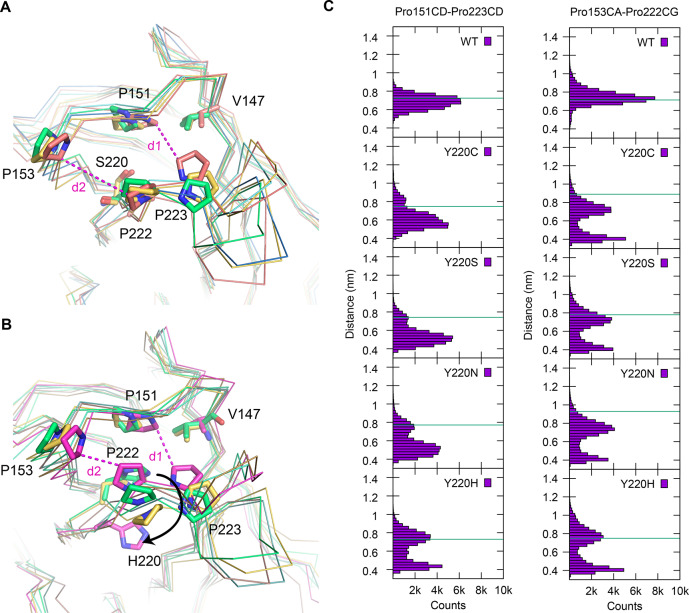
We have previously shown that the thermolabile, cavity-creating p53 cancer mutant Y220C can be reactivated by small-molecule stabilizers. In our ongoing efforts to unearth druggable variants of the p53 mutome, we have now analyzed the effects of other cancer-associated mutations at codon 220 on the structure, stability, and dynamics of the p53 DNA-binding domain (DBD). We found that the oncogenic Y220H, Y220N, and Y220S mutations are also highly destabilizing, suggesting that they are largely unfolded under physiological conditions. A high-resolution crystal structure of the Y220S mutant DBD revealed a mutation-induced surface crevice similar to that of Y220C, whereas the corresponding pocket's accessibility to small molecules was blocked in the structure of the Y220H mutant. Accordingly, a series of carbazole-based small molecules, designed for stabilizing the Y220C mutant, also bound to and stabilized the folded state of the Y220S mutant, albeit with varying affinities due to structural differences in the binding pocket of the two mutants. Some of the compounds also bound to and stabilized the Y220N mutant, but not the Y220H mutant. Our data validate the Y220S and Y220N mutants as druggable targets and provide a framework for the design of Y220S or Y220N-specific compounds as well as compounds with dual Y220C/Y220S specificity for use in personalized cancer therapy.
我们之前已经证明,热不稳定、能形成腔的 p53 癌突变体 Y220C 可以被小分子稳定剂重新激活。在我们正在进行的挖掘 p53 突变体药物靶标的努力中,我们现在分析了密码子 220 处其他癌症相关突变对 p53 DNA 结合域 (DBD) 的结构、稳定性和动力学的影响。我们发现致癌的 Y220H、Y220N 和 Y220S 突变也具有高度的不稳定性,表明它们在生理条件下很大程度上是未折叠的。Y220S 突变体 DBD 的高分辨率晶体结构揭示了一个突变诱导的表面裂缝,类似于 Y220C 的裂缝,而 Y220H 突变体的相应口袋对小分子的可及性被阻断。因此,一系列基于咔唑的小分子,设计用于稳定 Y220C 突变体,也与折叠状态的 Y220S 突变体结合并稳定,尽管由于两个突变体结合口袋的结构差异,结合亲和力不同。一些化合物也与 Y220N 突变体结合并稳定,但不与 Y220H 突变体结合。我们的数据验证了 Y220S 和 Y220N 突变体作为可药物靶标,并为设计 Y220S 或 Y220N 特异性化合物以及具有双重 Y220C/Y220S 特异性的化合物提供了框架,用于个性化癌症治疗。