Department of Nutritional and Food Sciences, Molecular Food Technology, University of Bonn, Endenicher Allee 19b, 53115 Bonn, Germany.
Molecules. 2020 Jan 24;25(3):518. doi: 10.3390/molecules25030518.
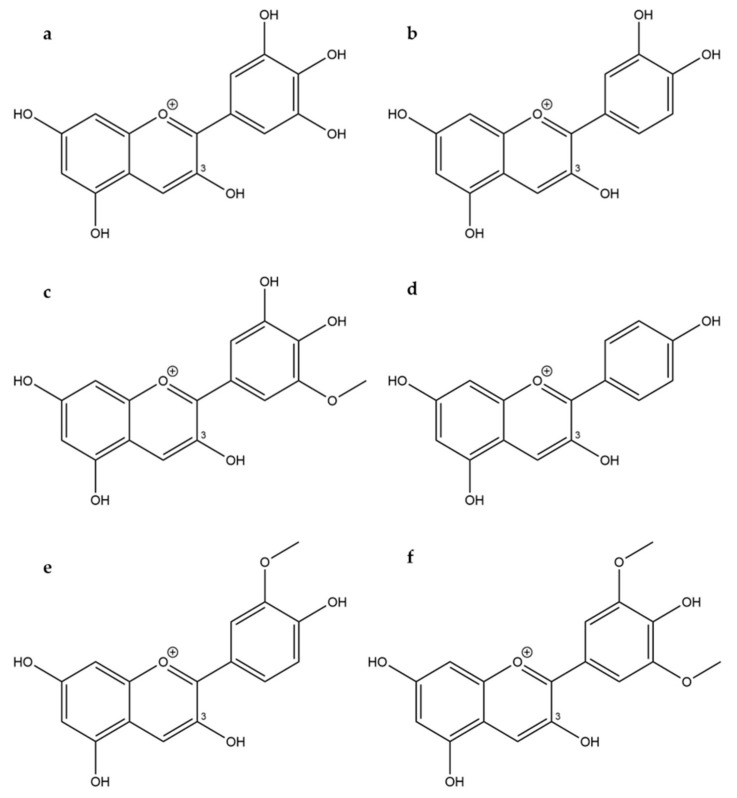
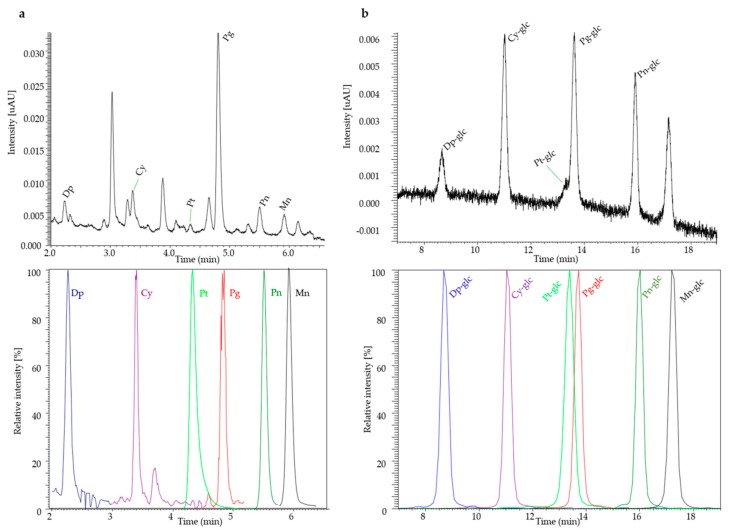
Recent in vitro and in vivo studies on anthocyanins confirmed numerous health-promoting effects in humans. Daily anthocyanin intake can be estimated via food databases, but the amount absorbed by the organism still remains uncertain because anthocyanin bioavailability is yet to be elucidated in its entirety. For this purpose, suitable and validated methods of sample preparation and analysis are required. Therefore, a sample preparation method for anthocyanin metabolite analysis in plasma was successfully established and validated. The validation yielded acceptable results for the anthocyanins in terms of recovery (54-108%) and precision (coefficient of variation (CV) < 15%). The UHPLC-MS method used in the consecutive reaction monitoring (CRM) mode was sufficiently sensitive, resulting in limits of detection <2.3 ng/mL and limits of quantification < 8.1 ng/mL with associated repeatability of the MS system with CVs of <5.1%. In addition, a method for the sum parameter determination of anthocyanidins in urine comprising solely the evaporation of acidified samples was developed, validated, and successfully applied to real samples. The results showed that this method is applicable for the methylated anthocyanidins, but not for the hydroxylated anthocyanidins, due to the chosen CRM modes required for optimum selectivity.
最近的体外和体内研究证实了花色苷对人类有许多促进健康的作用。可以通过食物数据库来估计花色苷的日常摄入量,但由于花色苷的生物利用度尚未完全阐明,因此机体吸收的量仍然不确定。为此,需要合适和经过验证的样品制备和分析方法。因此,成功建立并验证了用于血浆中花色苷代谢物分析的样品制备方法。该方法在回收率(54-108%)和精密度(变异系数(CV)<15%)方面对花色苷的验证结果可接受。在连续反应监测(CRM)模式下使用的 UHPLC-MS 方法具有足够的灵敏度,检测限<2.3ng/mL,定量限<8.1ng/mL,与 MS 系统的重复性相关,CV<5.1%。此外,还开发、验证并成功应用于实际样品的尿液中花色苷总量参数的测定方法,该方法仅包括酸化样品的蒸发。结果表明,由于所选 CRM 模式需要最佳选择性,该方法适用于甲基化花色苷,但不适用于羟基化花色苷。