Weng Qiao, Jiang Jie, Haji Fatma Mrisho, Nondo Lamlet Hassan, Zhou Huaijun
Department of Obstetrics & Gynecology, Nanjing Drum Tower Hospital, Affiliated to Nanjing University Medical College, Nanjing, 210008, China.
Department of Obstetrics & Gynecology, Drum Tower Clinical Medical College, Nanjing Medical University, Nanjing, 210008, China.
BMC Cancer. 2020 Jan 28;20(1):63. doi: 10.1186/s12885-020-6528-x.
Cervical cancer is the most common cancer and the leading cause of cancer death among women in Tanzania. Knowledge of and willingness to receive a cervical cancer screening are important determinants of prevention. This study aimed to describe women's awareness of cervical cancer and to explore the attitudes toward, acceptability of and barriers to cervical cancer screening (CCS) in Zanzibar.
A cross-sectional study was conducted from March to June 2018 involving 1483 women from 10 districts in Zanzibar who responded to questionnaires concerning their general demo-graphic characteristics, screening willingness and awareness of cervical cancer. Chi-square tests, analysis of variance (ANOVA) and stepwise multiple regression were conducted using STATA 15.1 software.
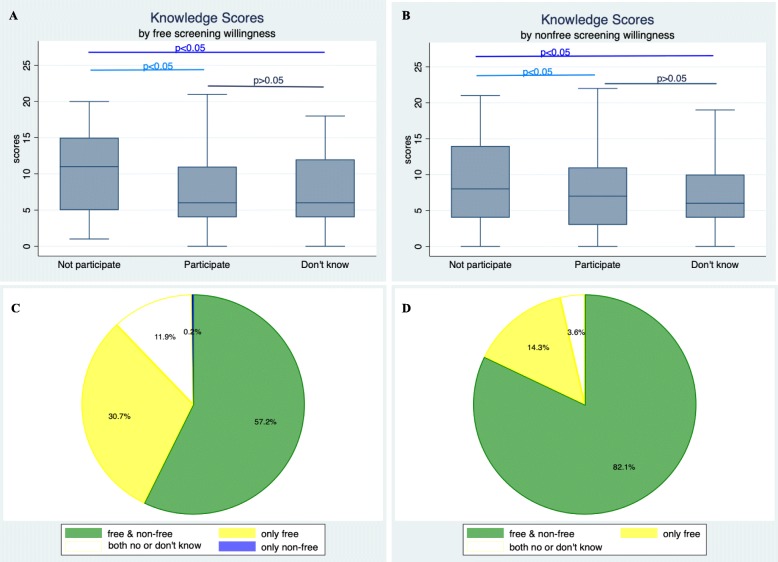
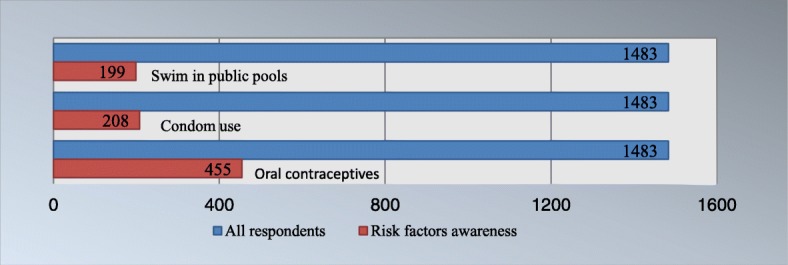
The average total knowledge score (TKS) was 7.84 ± 5.32 on a 23-point scale. Educational level and family income were positively correlated with the TKS. Previous schistosomiasis history and family genetic disease history were strong predictors of screening willingness. Women were less likely to be screened freely if they had 7 or more deliveries and were unaware of any previous family tumor history. Age and educational level were negatively associated non-free screening willingness, while family income was positively associated; being divorced/widowed or single and being unaware of any previous family tumor history were predictors of screening reluctance, while previous disease history was a strong predictor of non-free screening willingness. Fear of screening and inconvenience were the primary concerns among the Zanzibari interviewees. Compared to the 20-49 age group, more women in the less than 20 and 50 or more age groups thought cervical cancer screening was not necessary. The highest rate of cognitive accuracy in regard to cervical cancer warning signs and risk factors was only 37.76%.
The findings revealed that knowledge of cervical cancer was poor. Educational level, family income and awareness of previous disease history were significant influencing factors of screening uptake. Specific awareness programs to increase knowledge of cervical cancer and screening willingness should be designed and implemented in the public without delay, especially for younger and elderly women.
宫颈癌是坦桑尼亚女性中最常见的癌症,也是癌症死亡的主要原因。对宫颈癌筛查的了解和接受意愿是预防的重要决定因素。本研究旨在描述桑给巴尔女性对宫颈癌的认识,并探讨她们对宫颈癌筛查(CCS)的态度、接受程度及障碍。
2018年3月至6月进行了一项横断面研究,涉及桑给巴尔10个地区的1483名女性,她们回答了有关其一般人口统计学特征、筛查意愿和宫颈癌认识的问卷。使用STATA 15.1软件进行卡方检验、方差分析(ANOVA)和逐步多元回归。
在23分制下,平均总知识得分(TKS)为7.84±5.32。教育水平和家庭收入与TKS呈正相关。既往血吸虫病史和家族遗传病史是筛查意愿的强预测因素。分娩7次及以上且不了解任何既往家族肿瘤病史的女性接受免费筛查的可能性较小。年龄和教育水平与非免费筛查意愿呈负相关,而家庭收入呈正相关;离婚/丧偶或单身且不了解任何既往家族肿瘤病史是筛查不情愿的预测因素,而既往疾病史是非免费筛查意愿的强预测因素。对筛查的恐惧和不便之处是桑给巴尔受访者的主要担忧。与20 - 49岁年龄组相比,20岁以下和50岁及以上年龄组中更多女性认为宫颈癌筛查没有必要。关于宫颈癌警示信号和危险因素的认知准确率最高仅为37.76%。
研究结果表明,对宫颈癌的了解较差。教育水平、家庭收入和对既往疾病史的知晓是筛查接受度的重要影响因素。应立即在公众中设计并实施提高宫颈癌知识和筛查意愿的特定宣传项目,尤其是针对年轻和老年女性。