Swedish Orphan Biovitrum AB, SE-112 76, Stockholm, Sweden.
School of Engineering Sciences in Chemistry, Biotechnology and Health, KTH Royal Institute of Technology, Science for Life Laboratory, Tomtebodavägen 23, Box 1031, SE-171 21, Solna, Sweden.
Sci Rep. 2020 Jan 28;10(1):1315. doi: 10.1038/s41598-020-57913-y.
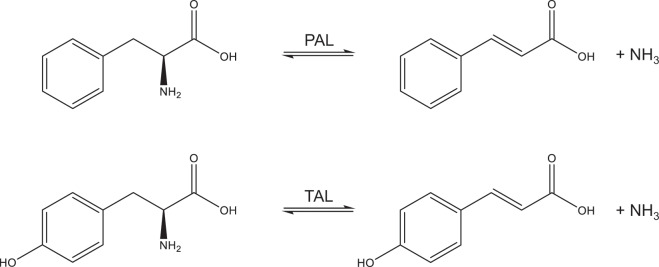
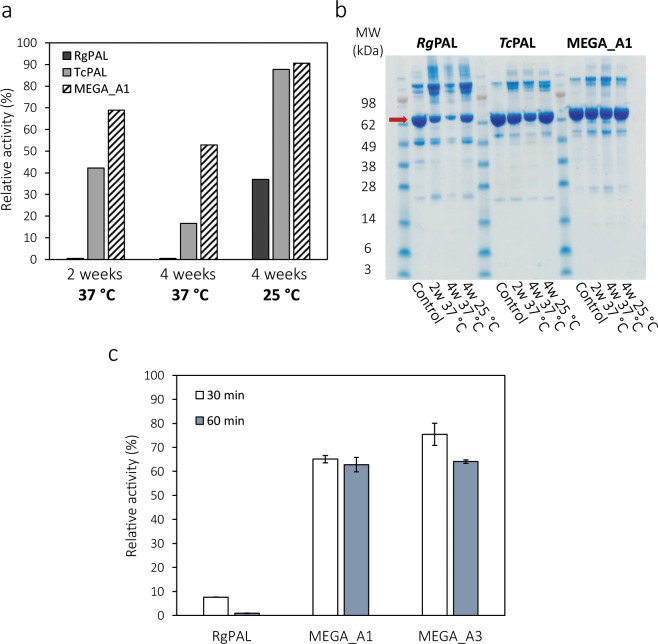
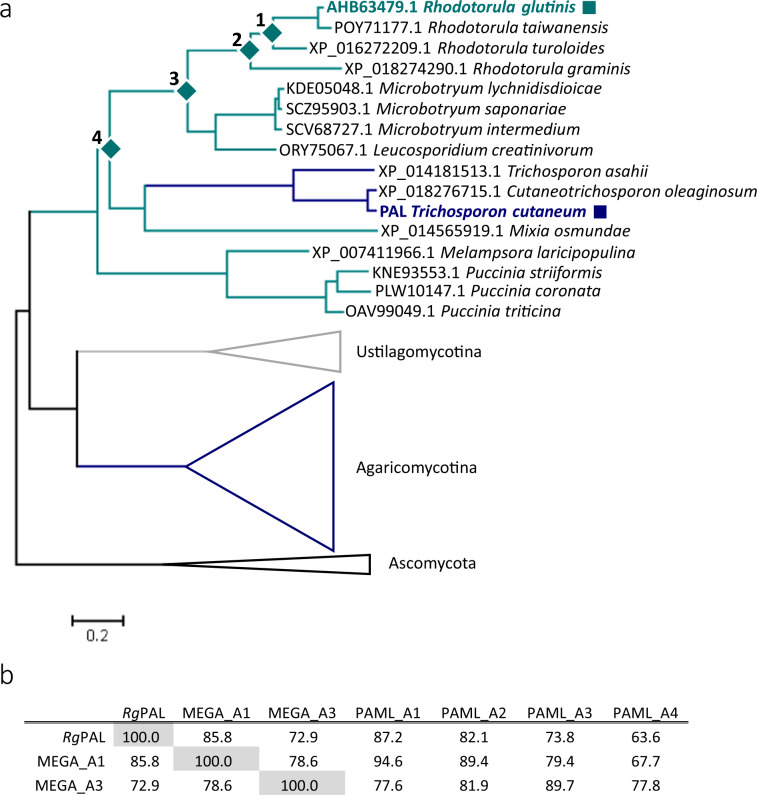
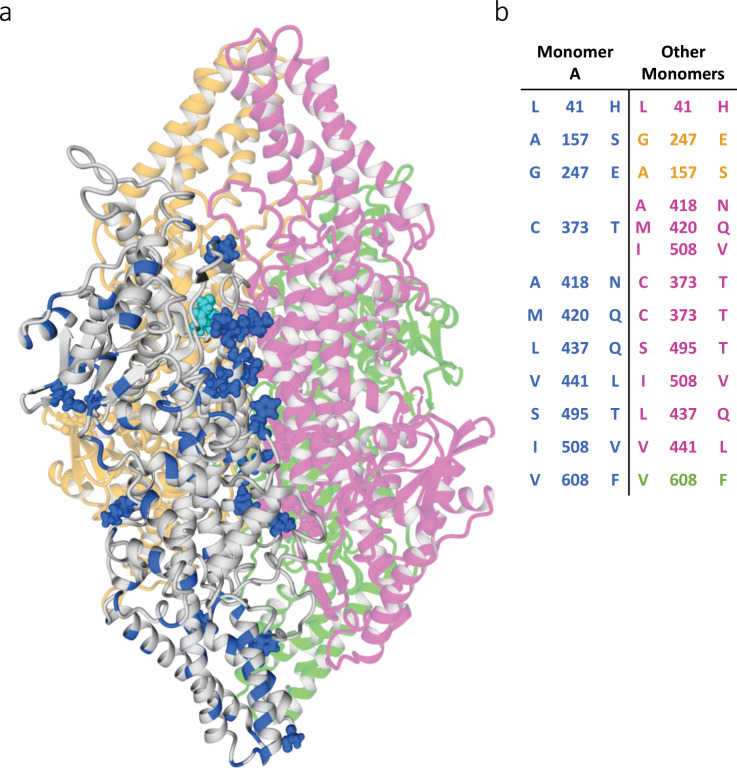
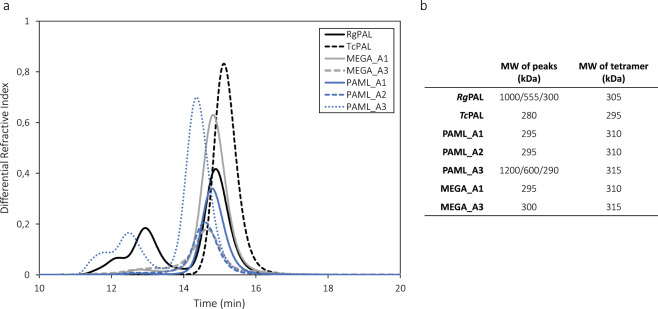
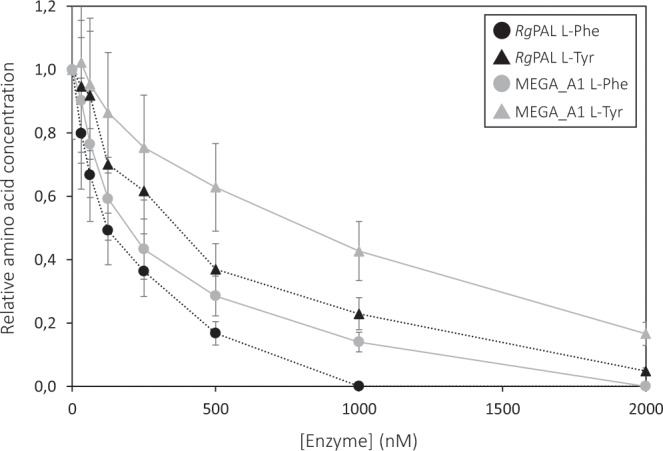
Phenylalanine/tyrosine ammonia-lyases (PAL/TALs) have been approved by the FDA for treatment of phenylketonuria and may harbour potential for complementary treatment of hereditary tyrosinemia Type I. Herein, we explore ancestral sequence reconstruction as an enzyme engineering tool to enhance the therapeutic potential of PAL/TALs. We reconstructed putative ancestors from fungi and compared their catalytic activity and stability to two modern fungal PAL/TALs. Surprisingly, most putative ancestors could be expressed as functional tetramers in Escherichia coli and thus retained their ability to oligomerize. All ancestral enzymes displayed increased thermostability compared to both modern enzymes, however, the increase in thermostability was accompanied by a loss in catalytic turnover. One reconstructed ancestral enzyme in particular could be interesting for further drug development, as its ratio of specific activities is more favourable towards tyrosine and it is more thermostable than both modern enzymes. Moreover, long-term stability assessment showed that this variant retained substantially more activity after prolonged incubation at 25 °C and 37 °C, as well as an increased resistance to incubation at 60 °C. Both of these factors are indicative of an extended shelf-life of biopharmaceuticals. We believe that ancestral sequence reconstruction has potential for enhancing the properties of enzyme therapeutics, especially with respect to stability. This work further illustrates that resurrection of putative ancestral oligomeric proteins is feasible and provides insight into the extent of conservation of a functional oligomerization surface area from ancestor to modern enzyme.
苯丙氨酸/酪氨酸氨裂解酶(PAL/TAL)已被 FDA 批准用于治疗苯丙酮尿症,并且可能具有治疗遗传性酪氨酸血症 I 型的潜力。在此,我们探讨了祖先序列重建作为一种酶工程工具,以增强 PAL/TAL 的治疗潜力。我们从真菌中重建了假定的祖先,并比较了它们的催化活性和稳定性与两种现代真菌 PAL/TAL。令人惊讶的是,大多数假定的祖先都可以在大肠杆菌中表达为功能性四聚体,因此保留了它们的寡聚化能力。与两种现代酶相比,所有祖先酶都显示出更高的热稳定性,但热稳定性的提高伴随着催化周转率的降低。特别是一种重建的祖先酶可能对进一步的药物开发很有意义,因为它的酪氨酸比活性比两种现代酶更有利,而且比两种现代酶更耐热。此外,长期稳定性评估表明,该变体在 25°C 和 37°C 下长时间孵育后保留了更多的活性,并且对 60°C 孵育的抵抗力也有所提高。这两个因素都表明生物制药的保质期延长。我们相信,祖先序列重建具有增强酶治疗剂特性的潜力,特别是在稳定性方面。这项工作进一步表明,假定的祖先寡聚蛋白的复活是可行的,并提供了有关从祖先到现代酶的功能寡聚化表面积的保守程度的见解。