Department of Oral Biology, School of Dental Medicine, State University of New York at Buffalo, Buffalo, NY, United States.
Department of Biostatistics, School of Public Health and Health Professions, State University of New York at Buffalo, Buffalo, NY, United States.
Front Immunol. 2020 Jan 9;10:2963. doi: 10.3389/fimmu.2019.02963. eCollection 2019.
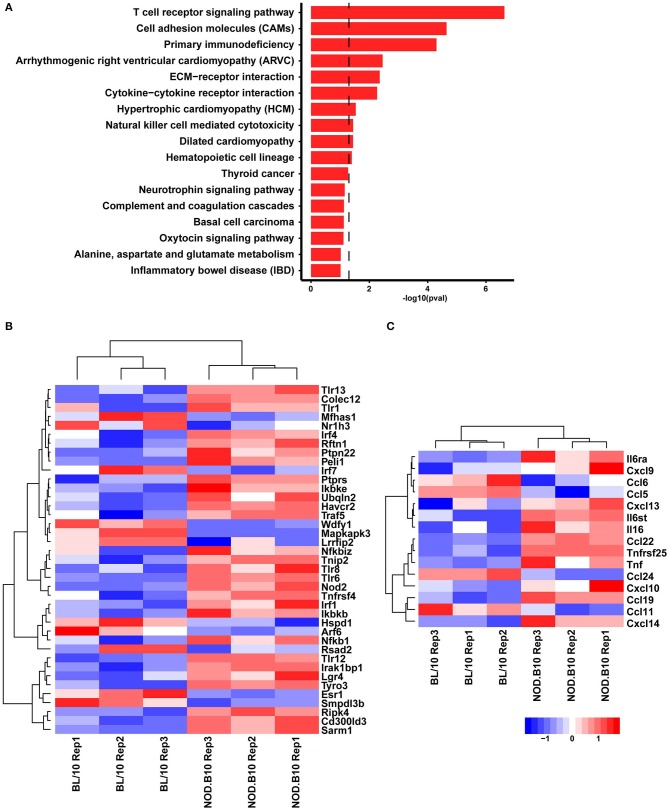
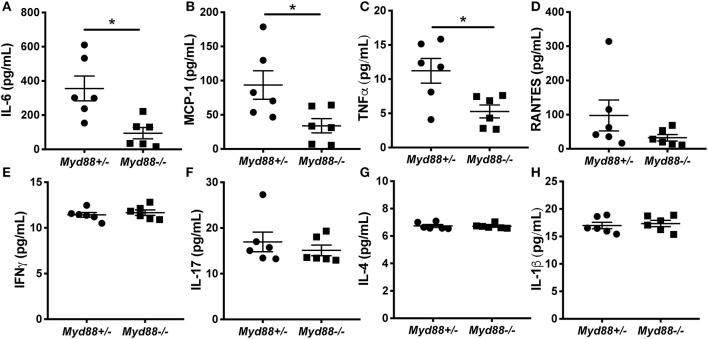
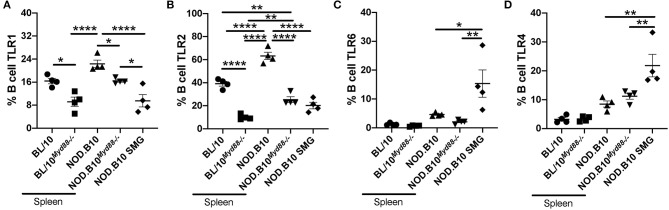
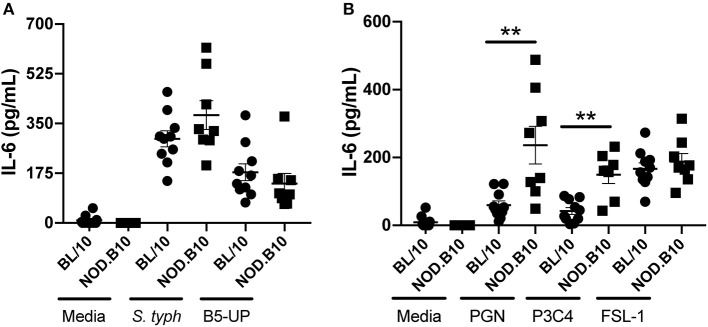
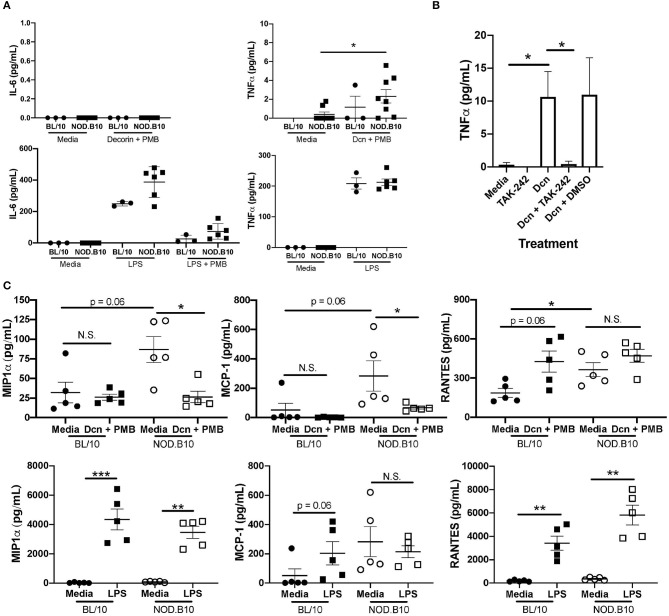
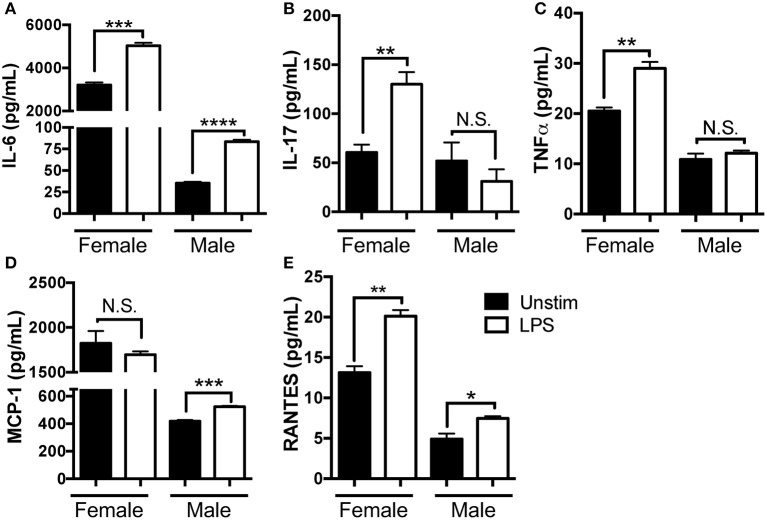
Toll-like receptors (TLRs) are important mediators of chronic inflammation in numerous autoimmune diseases, although the role of these receptors in primary Sjögren's syndrome (pSS) remains incompletely understood. Previous studies in our laboratory established Myd88 as a crucial mediator of pSS, although the disease-relevant ligands and the upstream signaling events that culminate in Myd88 activation have yet to be established. The objective of this study was to identify specific Myd88-dependent TLR-related pathways that are dysregulated both locally and systemically in a mouse model of pSS [NOD.B10Sn- /J (NOD.B10)]. We performed RNA-sequencing on spleens derived from NOD.B10 mice. We then harvested salivary tissue and spleens from -sufficient and deficient C57BL/10 (BL/10) and NOD.B10 mice and performed flow cytometry to determine expression of Myd88-dependent TLRs. We cultured splenocytes with TLR2 and TLR4 agonists and measured production of inflammatory mediators by ELISA. Next, we evaluated spontaneous and TLR4-mediated inflammatory cytokine secretion in NOD.B10 salivary tissue. Finally, we assessed spontaneous Myd88-dependent cytokine secretion by NOD.B10 salivary cells. We identified dysregulation of numerous TLR-related networks in pSS splenocytes, particularly those employed by TLR2 and TLR4. We found upregulation of TLRs in both the splenic and salivary tissue from pSS mice. In NOD.B10 splenic tissue, robust expression of B cell TLR1 and TLR2 required Myd88. Splenocytes from NOD.B10 mice were hyper-responsive to TLR2 ligation and the endogenous molecule decorin modulated inflammation via TLR4. Finally, we observed spontaneous secretion of numerous inflammatory cytokines and this was enhanced following TLR4 ligation in female NOD.B10 salivary tissue as compared to males. The spontaneous production of salivary IL-6, MCP-1 and TNFα required Myd88 in pSS salivary tissue. Thus, our data demonstrate that Myd88-dependent TLR pathways contribute to the inflammatory landscape in pSS, and inhibition of such will likely have therapeutic utility.
Toll 样受体 (TLRs) 是许多自身免疫性疾病慢性炎症的重要介质,尽管这些受体在原发性干燥综合征 (pSS) 中的作用仍不完全清楚。我们实验室的先前研究确立了 Myd88 是 pSS 的关键介质,尽管与疾病相关的配体以及导致 Myd88 激活的上游信号事件尚未确定。本研究的目的是确定特定的 Myd88 依赖性 TLR 相关途径,这些途径在 pSS 的小鼠模型 [NOD.B10Sn- / J (NOD.B10)] 中既局部又全身性失调。我们对源自 NOD.B10 小鼠的脾脏进行了 RNA 测序。然后,我们从 NOD.B10 小鼠和 C57BL/10 (BL/10) 敲除和敲入小鼠中收获唾液组织和脾脏,并通过流式细胞术测定 Myd88 依赖性 TLR 的表达。我们用 TLR2 和 TLR4 激动剂培养脾细胞,并通过 ELISA 测量炎症介质的产生。接下来,我们评估了 NOD.B10 唾液组织中自发和 TLR4 介导的炎症细胞因子分泌。最后,我们评估了 NOD.B10 唾液细胞自发的 Myd88 依赖性细胞因子分泌。我们发现 pSS 脾细胞中许多 TLR 相关网络失调,尤其是那些由 TLR2 和 TLR4 驱动的网络。我们发现 pSS 小鼠的脾组织和唾液组织中的 TLR 上调。在 NOD.B10 脾组织中,B 细胞 TLR1 和 TLR2 的强烈表达需要 Myd88。NOD.B10 小鼠的脾细胞对 TLR2 配体的反应过度,内源性分子 decorin 通过 TLR4 调节炎症。最后,我们观察到许多炎症细胞因子的自发分泌,与男性相比,女性 NOD.B10 唾液组织在 TLR4 结合后这种分泌增强。pSS 唾液组织中自发产生的唾液 IL-6、MCP-1 和 TNFα需要 Myd88。因此,我们的数据表明,Myd88 依赖性 TLR 途径有助于 pSS 中的炎症景观,抑制这些途径可能具有治疗用途。