Ghajarzadeh Mahsa, Rahimi Foroushani Abbas, Nedjat Saharnaz, Sheikhrezaei Abdolreza, Saberi Hooshang
Brain and Spinal Cord Injury Research Center, Tehran University of Medical Sciences, Tehran, Iran.
Department of Epidemiology and Biostatistics, School of Public Health, Tehran University of Medical Sciences, Tehran, Iran.
Iran J Public Health. 2019 Dec;48(12):2260-2269.
The goal of this study was to determine hazard rate of death rate and the causes of death in Iranian patients with Traumatic spinal cord injury (TSCI).
Overall, 1024 patients with chronic traumatic spinal cord injury referred to Brain and Spinal Injury Research Center, Tehran University of Medical Sciences, Tehran, Iran from Jan 2013-2017 were enrolled. Epidemiological and neurological data, along with secondary complications were recorded for all participants. In the case of death, the cause, and the date of death were recorded. The Kaplan-Meier method was used for survival analysis. A log-rank test was carried out to compare survival due to different risk factors. Risk factors and relative risk estimates associated with death were assessed by means of a Cox regression model.
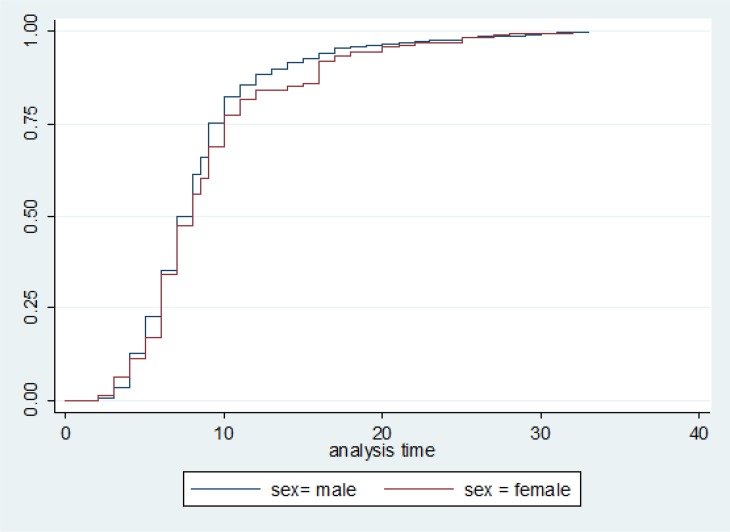
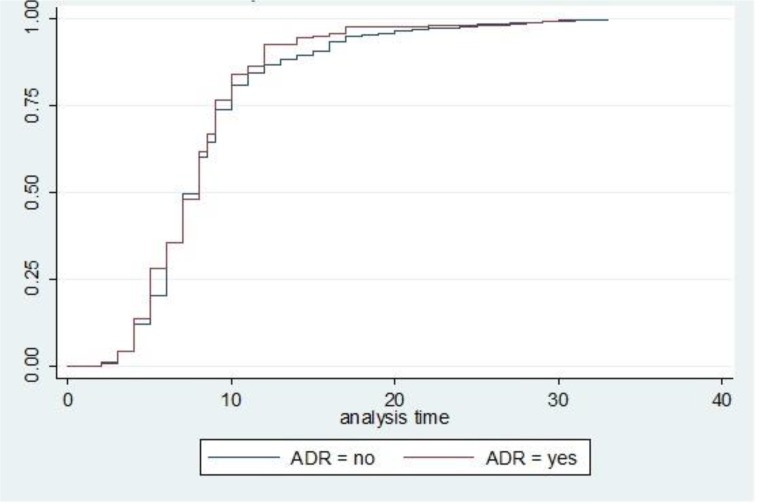
Nineteen percent were lost to follow up. During the follow-up period, 22 out of 830 remaining cases (2.6%) died. Deaths were only observed in patients with cervical injuries (59% in C1-C4 level and 41% in C5-C7 level). Kaplan-Meier Log-rank test showed that probability of survival was significantly less in females, complete injury cases, patients with cervical spine injury, depression, and ADR (Autonomic dysreflexia). Controlling for age, sex and education level, Cox regression model showed that hazard rate of death was significantly affected by the categorical variables such as level of injury (HR=0.2, 95% CI=0.12-0.39), severe ADR.
Probability of survival is lower in female individuals, cases with complete injuries, patients with cervical spine injury, individuals with depression (BDI>10), and clients who experience ADR.
本研究的目的是确定伊朗创伤性脊髓损伤(TSCI)患者的死亡率及死亡原因。
2013年1月至2017年期间,共纳入了1024例转诊至伊朗德黑兰医科大学脑与脊髓损伤研究中心的慢性创伤性脊髓损伤患者。记录了所有参与者的流行病学和神经学数据以及继发性并发症。若患者死亡,则记录死亡原因和日期。采用Kaplan-Meier法进行生存分析。进行对数秩检验以比较不同风险因素下的生存率。通过Cox回归模型评估与死亡相关的风险因素和相对风险估计值。
19%的患者失访。在随访期间,830例剩余病例中有22例(2.6%)死亡。仅在颈椎损伤患者中观察到死亡(C1-C4水平占59%,C5-C7水平占41%)。Kaplan-Meier对数秩检验显示,女性、完全损伤病例、颈椎损伤患者、抑郁症患者和自主神经反射异常(ADR)患者的生存率显著较低。在控制年龄、性别和教育水平后,Cox回归模型显示,损伤水平(HR=0.2,95%CI=0.12-0.39)、严重ADR等分类变量显著影响死亡风险率。
女性个体、完全损伤病例、颈椎损伤患者、抑郁症患者(BDI>10)和经历ADR的患者的生存率较低。