Mizuguchi Shinjiro, Takahama Makoto, Nakajima Ryu, Inoue Hidetoshi, Ito Ryuichi, Yamamoto Ryoji
Department of Thoracic Surgery, Osaka City General Hospital, Osaka, Japan.
Biomed Hub. 2019 Jul 25;4(2):1-5. doi: 10.1159/000501157. eCollection 2019 May-Aug.
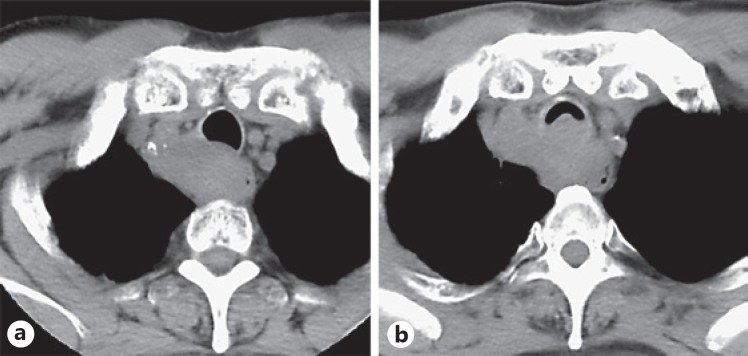
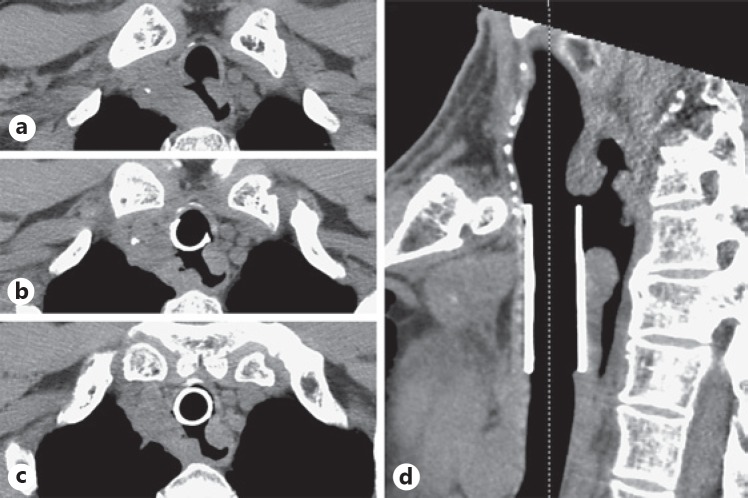
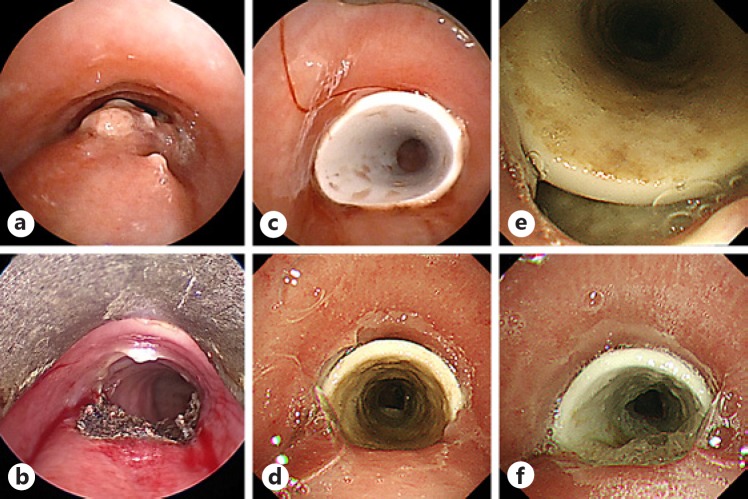
Development of a tracheoesophageal fistula (TEF) is a serious complication of treatment for esophageal or lung cancer, especially following radiation therapy. However, development of a TEF as a complication of chemotherapy or tracheal stenting after surgical debulking is quite uncommon. We herein report a rare case involving a patient with advanced adenocarcinoma invading the mediastinum who rapidly developed a TEF after placement of a tracheal stent and administration of nivolumab immunotherapy. A 55-year-old heavy ex-smoker was diagnosed with lung adenocarcinoma with mediastinal invasion. Nine months after first-line therapy (chemotherapy and radiation therapy), he underwent treatment with nivolumab (3 mg/kg) as fourth-line therapy. Two weeks after the first dose, he underwent mechanical debulking of the tumor with tracheal stenting because of the rapid development of paraesophageal lymph node swelling and severe tracheal stenosis. He received a second dose of nivolumab 2 weeks later; however, imaging studies 12 days after this second dose revealed a huge fistula between the upper trachea and esophagus through a metastatic lymph node. Neither an additional stent nor replacement of the stent was considered because of the fistula site expansion and suffocation risk. Despite further treatment, the patient died of his primary disease 2 months later. Our findings will be of great interest to the readers, especially those involved in the clinical treatment of patients with advanced lung cancer treated by immunotherapy. The knowledge of potentially devastating TEF formation in the presence of transmural tracheal metastasis/invasion will allow clinicians to provide the best possible care for their patients.
气管食管瘘(TEF)的形成是食管癌或肺癌治疗的严重并发症,尤其是在放射治疗后。然而,TEF作为手术减瘤后化疗或气管支架置入的并发症却相当罕见。我们在此报告一例罕见病例,一名晚期腺癌侵犯纵隔的患者在置入气管支架并给予纳武单抗免疫治疗后迅速发生了TEF。一名55岁有重度吸烟史的男性被诊断为肺腺癌伴纵隔侵犯。一线治疗(化疗和放疗)9个月后,他接受纳武单抗(3mg/kg)作为四线治疗。首剂给药两周后,由于食管旁淋巴结迅速肿大和严重气管狭窄,他接受了气管支架置入的肿瘤机械减瘤治疗。两周后他接受了第二剂纳武单抗;然而,第二剂给药12天后的影像学检查显示,上气管和食管之间通过一个转移性淋巴结形成了一个巨大的瘘管。由于瘘管部位扩大和窒息风险,未考虑额外置入支架或更换支架。尽管进行了进一步治疗,患者在两个月后死于原发性疾病。我们的发现将引起读者的极大兴趣,尤其是那些参与晚期肺癌免疫治疗临床的读者。了解在存在气管壁转移/侵犯的情况下可能发生的毁灭性TEF形成,将使临床医生能够为患者提供尽可能好的治疗。