Kumar Namrata, Qian Wei, Van Houten Bennett
Molecular Genetics and Developmental Biology Graduate Program, University of Pittsburgh School of Medicine, Pittsburgh, PA, USA.
University of Pittsburgh Medical Center (UPMC) Hillman Cancer Center, University of Pittsburgh School of Medicine, Pittsburgh, PA, USA.
Mol Cell Oncol. 2019 Nov 4;7(1):1678362. doi: 10.1080/23723556.2019.1678362. eCollection 2020.
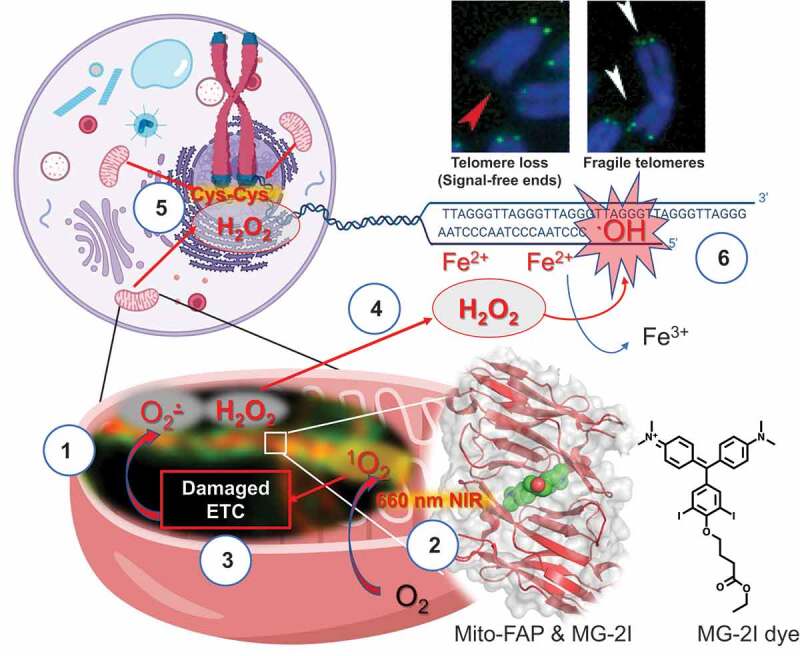
Dysfunctional mitochondria have been implicated in a variety of human pathophysiological conditions such as cancer, neurodegeneration, and aging. However, the precise role of mitochondrial-generated reactive oxygen species (ROS) in these maladies is unclear. Using a light-activated mitochondrially targeted approach, we recently reported direct evidence that damaged mitochondria produce a wave of secondary ROS, causing rapid and preferential telomere dysfunction but not gross nuclear DNA damage (Fig 1).
功能失调的线粒体与多种人类病理生理状况有关,如癌症、神经退行性变和衰老。然而,线粒体产生的活性氧(ROS)在这些疾病中的确切作用尚不清楚。我们最近使用一种光激活的线粒体靶向方法,报告了直接证据,即受损线粒体产生一波继发性ROS,导致快速且优先的端粒功能障碍,但不会造成明显的核DNA损伤(图1)。