Center for Medical, Agricultural and Veterinary Entomology, United States Department of Agriculture-Agricultural Research Service, Gainesville, Florida, United States of America.
Biological Control Section, Plant Protection Division, Yangon, Myanmar.
Sci Rep. 2020 Jan 29;10(1):1421. doi: 10.1038/s41598-020-58249-3.
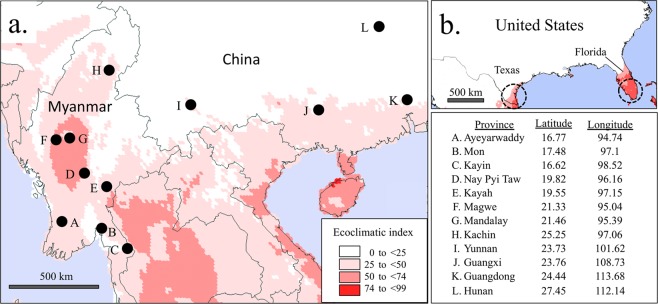
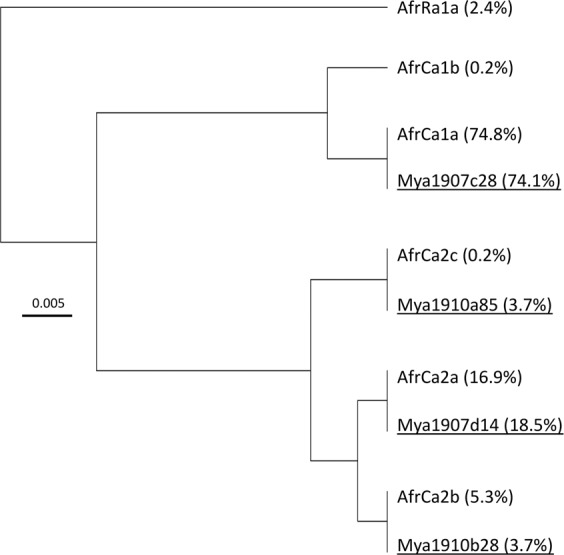
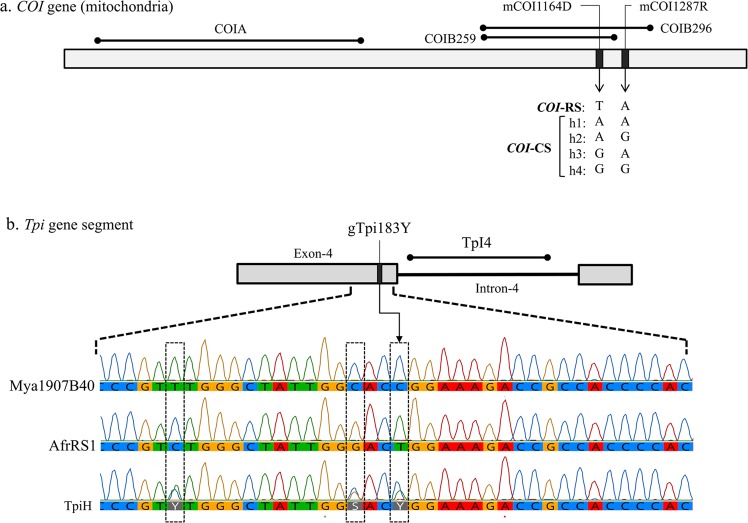
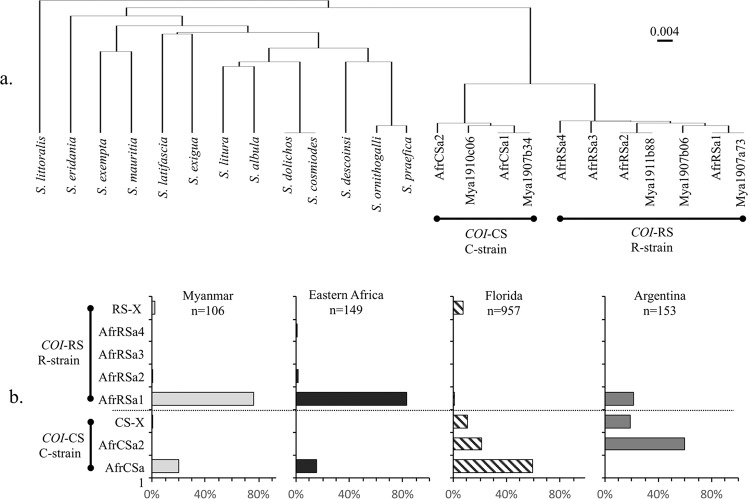
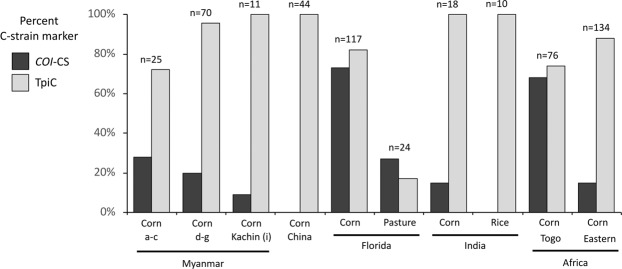
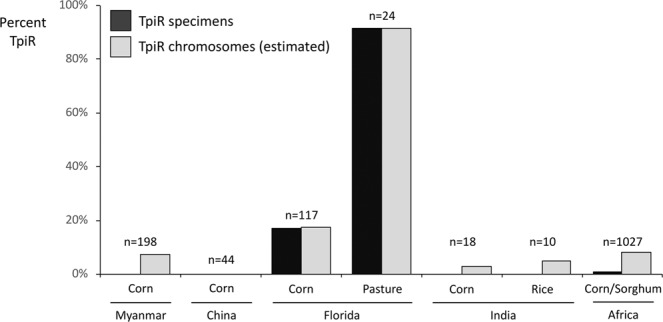
The discovery of fall armyworm, a native of the Western Hemisphere, in western Africa in 2016 was rapidly followed by detections throughout sub-Saharan Africa, India, and most recently southeastern Asia. This moth pest has a broad host range that threatens such important crops as corn, rice, millet, and sorghum, creating concern for its potential impact on agriculture in the Eastern Hemisphere. Although genetic data suggest populations sampled in Africa and India originate from a recent common source, it is not known whether this is the case for populations in southeastern Asia, nor whether the subgroup with a preference for rice and millet is present in the region. This study found through comparisons of genetic markers that the fall armyworm from Myanmar and southern China are closely related to those from Africa and India, suggesting a common origin for these geographically distant populations. The results are consistent with a single recent introduction into the Eastern Hemisphere followed by rapid dispersion. The molecular similarities include discrepancies between the genetic markers that brings into question whether the subpopulation most likely to be a threat to rice and millet is present in significant numbers in Asia.
2016 年,在西非发现了美洲粘虫,这是一种原产于西半球的昆虫。随后,在撒哈拉以南非洲、印度和最近的东南亚都发现了这种昆虫。这种蛾类害虫的寄主范围很广,威胁到玉米、水稻、小米和高粱等重要作物,因此人们担心它可能会对东半球的农业产生影响。尽管遗传数据表明,在非洲和印度采样的种群起源于最近的一个共同来源,但尚不清楚东南亚的种群是否也是如此,也不知道是否存在偏爱水稻和小米的亚种群。本研究通过比较遗传标记发现,来自缅甸和中国南方的粘虫与来自非洲和印度的粘虫密切相关,这表明这些地理位置遥远的种群具有共同的起源。研究结果与一种假说一致,即这种昆虫是最近才传入东半球的,随后迅速扩散。分子相似性包括遗传标记之间的差异,这使得人们对最有可能对水稻和小米构成威胁的亚种群在亚洲的数量是否达到显著水平产生了质疑。