Laboratory of Functional Neuroscience, Pablo de Olavide University, Seville, 41013, Spain.
CIBERNED, Network Center for Biomedical Research in Neurodegenerative Diseases, Madrid, Spain.
Sci Rep. 2020 Jan 29;10(1):1449. doi: 10.1038/s41598-020-58496-4.
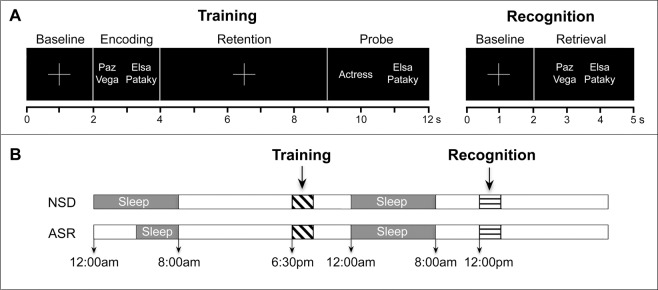
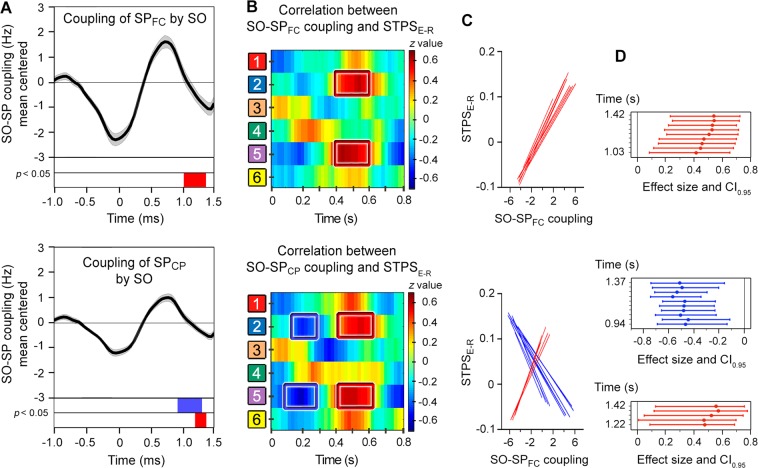
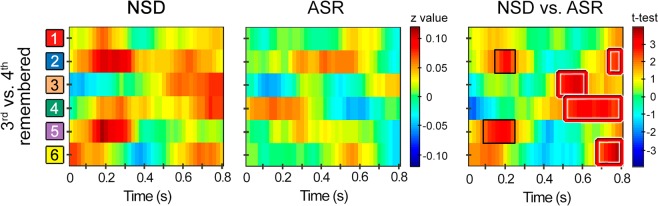
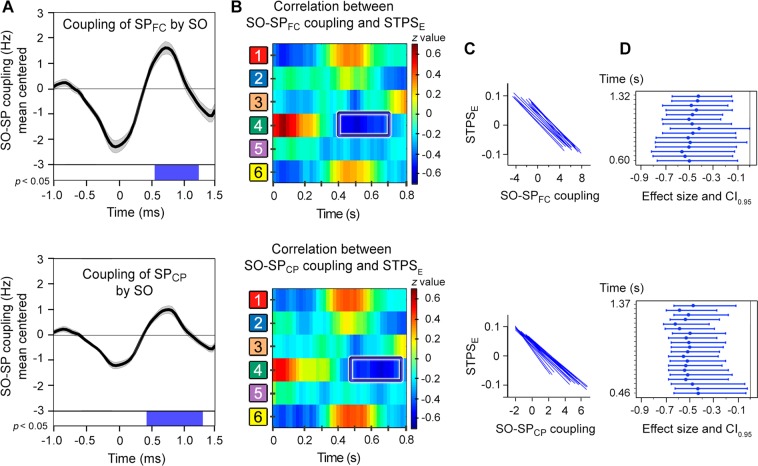
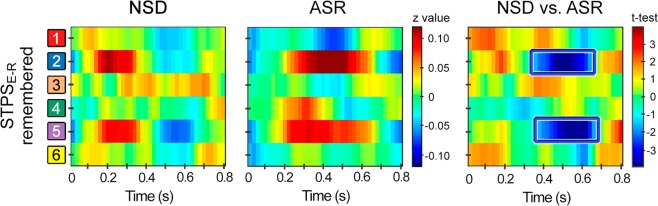
Sleep is thought to play a complementary role in human memory processing: sleep loss impairs the formation of new memories during the following awake period and, conversely, normal sleep promotes the strengthening of the already encoded memories. However, whether sleep can strengthen deteriorated memories caused by insufficient sleep remains unknown. Here, we showed that sleep restriction in a group of participants caused a reduction in the stability of EEG activity patterns across multiple encoding of the same event during awake, compared with a group of participants that got a full night's sleep. The decrease of neural stability patterns in the sleep-restricted group was associated with higher slow oscillation-spindle coupling during a subsequent night of normal sleep duration, thereby suggesting the instantiation of restorative neural mechanisms adaptively supporting cognition and memory. Importantly, upon awaking, the two groups of participants showed equivalent retrieval accuracy supported by subtle differences in the reinstatement of encoding-related activity: it was longer lasting in sleep-restricted individuals than in controls. In addition, sustained reinstatement over time was associated with increased coupling between spindles and slow oscillations. Taken together, these results suggest that the strength of prior encoding might be an important moderator of memory consolidation during sleep. Supporting this view, spindles nesting in the slow oscillation increased the probability of correct recognition only for weakly encoded memories. Current results demonstrate the benefit that a full night's sleep can induce to impaired memory traces caused by an inadequate amount of sleep.
睡眠不足会损害随后清醒期新记忆的形成,相反,正常的睡眠会促进已编码记忆的强化。然而,睡眠是否可以强化因睡眠不足而恶化的记忆尚不清楚。在这里,我们表明,与获得完整一夜睡眠的一组参与者相比,一组参与者的睡眠限制导致在清醒时对同一事件进行多次编码时 EEG 活动模式的稳定性降低。睡眠受限组中神经稳定性模式的降低与随后正常睡眠持续时间内较慢的振荡-纺锤波耦合增加有关,从而表明适应性地支持认知和记忆的恢复性神经机制的实现。重要的是,醒来后,两组参与者的检索准确性相当,这得益于编码相关活动恢复的细微差异:在睡眠受限的个体中,这种恢复持续时间更长,而在对照组中则更短。此外,随着时间的推移,持续恢复与纺锤波和慢波之间的耦合增加有关。总之,这些结果表明,先前编码的强度可能是睡眠期间记忆巩固的一个重要调节因素。支持这一观点的是,只有在弱编码记忆中,嵌套在慢波中的纺锤波才会增加正确识别的可能性。目前的结果表明,一整夜的睡眠可以为因睡眠不足而受损的记忆痕迹带来益处。