Zhu Qunyan, Lu Cuitao, Jiang Xuan, Yao Qing, Jiang Xue, Huang Zhiwei, Jiang Yina, Peng Lei, Fu Hongxing, Zhao Yingzheng
College of Pharmaceutical Sciences, Wenzhou Medical University, Wenzhou, China.
Engineering Laboratory of Zhejiang Province for Pharmaceutical Development of Growth Factors, Biomedical Collaborative Innovation Center of Wenzhou, Wenzhou, China.
Front Pharmacol. 2020 Jan 10;10:1536. doi: 10.3389/fphar.2019.01536. eCollection 2019.
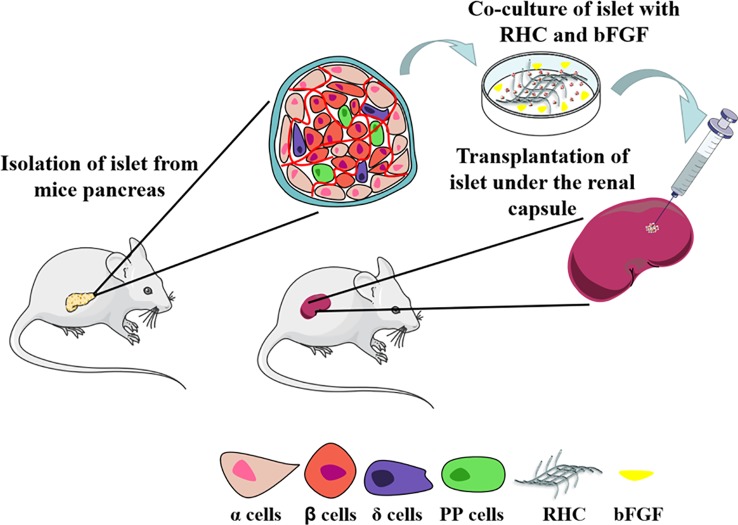
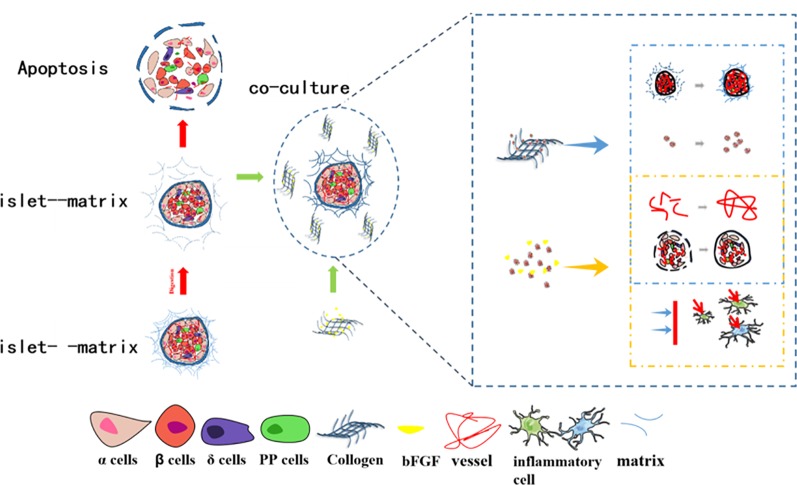
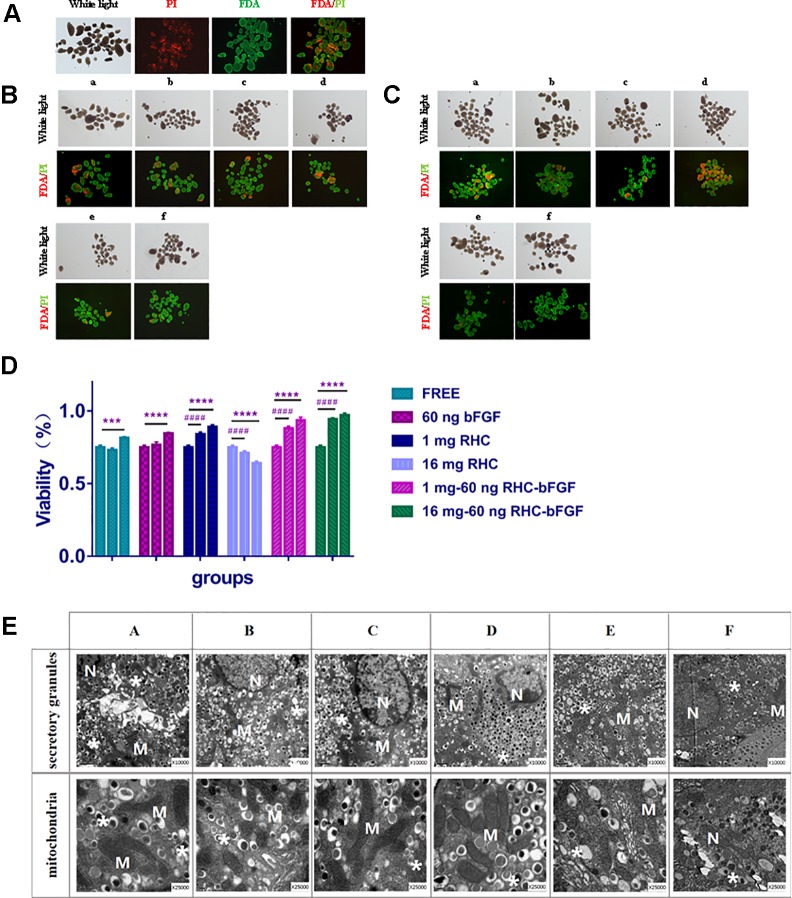
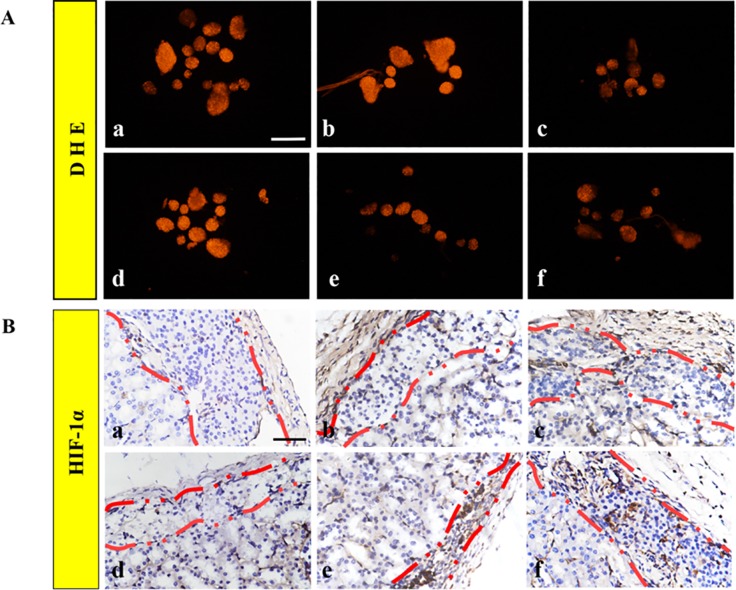
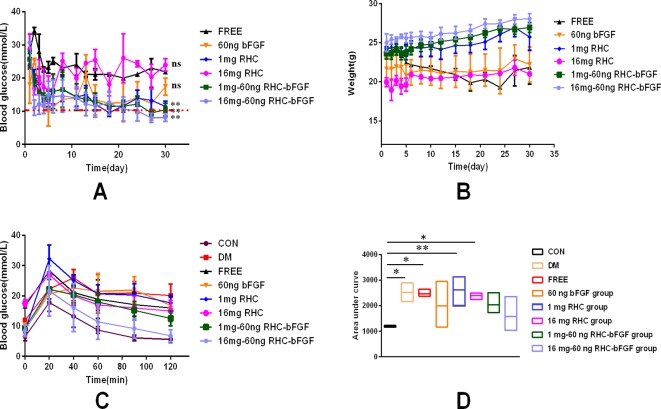
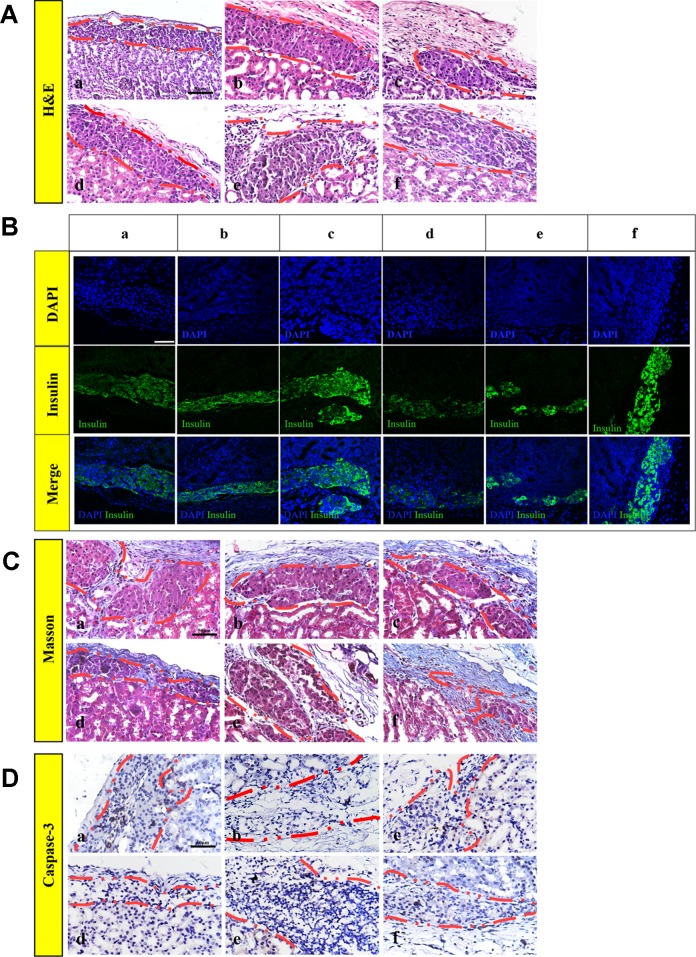
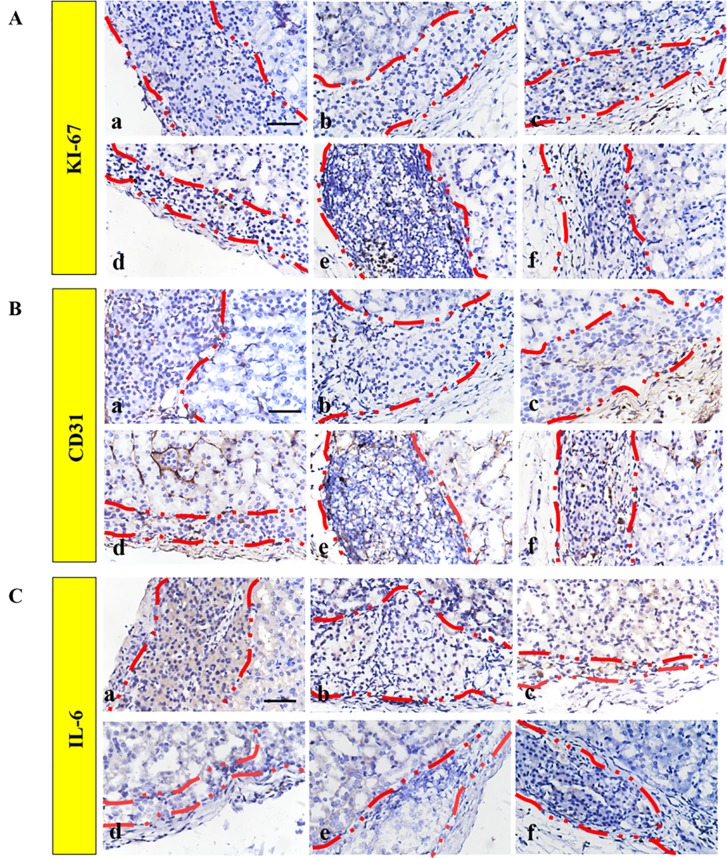
Islet transplantation is considered a potential therapeutic option to reverse diabetes. The pancreatic basement membrane contains a variety of extracellular matrix (ECM) proteins. The abundant ECM is essential for the survival of transplanted islets. However, the ECM proteins necessary for maintaining islet vascularization and innervation are impaired by enzymatic digestion in the isolation process before islet transplantation, leading to destruction of islet microvessels. These are the primary concern and major barrier for long-term islet survival and function. Thus, it is crucial to create an appropriate microenvironment for improving revascularization and islet function to achieve better transplantation outcome. Given the importance of the presence of ECM proteins for islets, we introduce recombinant human collagen (RHC) to construct a simulated ECM microenvironment. To accelerate revascularization and reduce islet injury, we add basic fibroblast growth factor (bFGF) to RHC, a growth factor that has been shown to promote angiogenesis. In order to verify the outcome, islets were treated with RHC combination containing bFGF and then implanted into kidney capsule in type 1 diabetic mouse models. After transplantation, 30-day-long monitoring displayed that 16 mg-60 ng RHC-bFGF group could serve as superior transplantation outcome. It reversed the hyperglycemia condition in host rapidly, and the OGTT (oral glucose tolerance test) showed a similar pattern with the control group. Histological assessment showed that 16 mg-60 ng RHC-bFGF group attenuated apoptosis, promoted cellular proliferation, triggered vascularization, and inhibited inflammation reaction. In summary, this work demonstrates that application of 16 mg-60 ng RHC-bFGF and islets composite enhance the islet survival, function, and long-term transplantation efficiency.
胰岛移植被认为是逆转糖尿病的一种潜在治疗选择。胰腺基底膜包含多种细胞外基质(ECM)蛋白。丰富的细胞外基质对于移植胰岛的存活至关重要。然而,在胰岛移植前的分离过程中,维持胰岛血管化和神经支配所必需的细胞外基质蛋白会因酶消化而受损,导致胰岛微血管遭到破坏。这些是胰岛长期存活和功能的主要关注点及主要障碍。因此,为改善血管再生和胰岛功能以获得更好的移植效果,创建一个合适的微环境至关重要。鉴于细胞外基质蛋白对胰岛的重要性,我们引入重组人胶原蛋白(RHC)来构建模拟的细胞外基质微环境。为加速血管再生并减少胰岛损伤,我们在RHC中添加碱性成纤维细胞生长因子(bFGF),这是一种已被证明可促进血管生成的生长因子。为了验证结果,将胰岛用含有bFGF的RHC组合处理,然后植入1型糖尿病小鼠模型的肾包膜中。移植后,为期30天的监测显示,16 mg - 60 ng RHC - bFGF组可获得更好的移植效果。它迅速逆转了宿主的高血糖状况,口服葡萄糖耐量试验(OGTT)显示出与对照组相似的模式。组织学评估表明,16 mg - 60 ng RHC - bFGF组减轻了细胞凋亡,促进了细胞增殖,引发了血管生成,并抑制了炎症反应。总之,这项工作表明应用16 mg - 60 ng RHC - bFGF与胰岛复合物可提高胰岛的存活率、功能及长期移植效率。