Jiao Jianhang, Wang Yang, Ren Pengfei, Sun Shicai, Wu Minfei
Department of Orthopedics, The Second Hospital of Jilin University, Changchun, China.
Front Pharmacol. 2020 Jan 9;10:1538. doi: 10.3389/fphar.2019.01538. eCollection 2019.
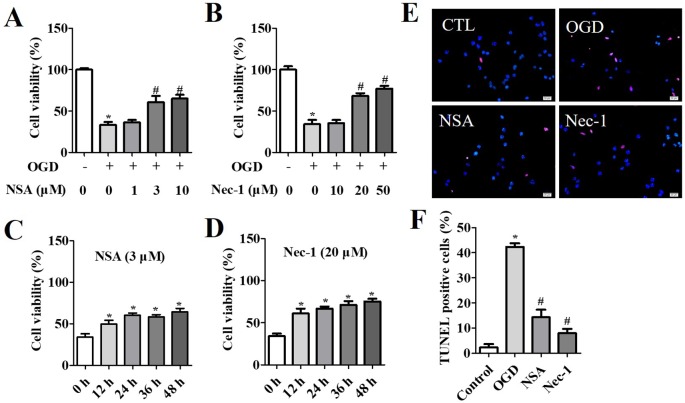
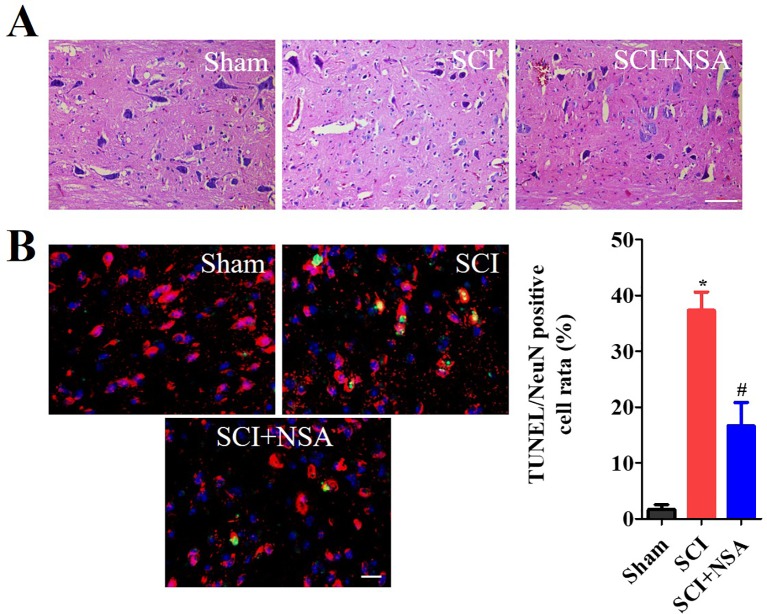
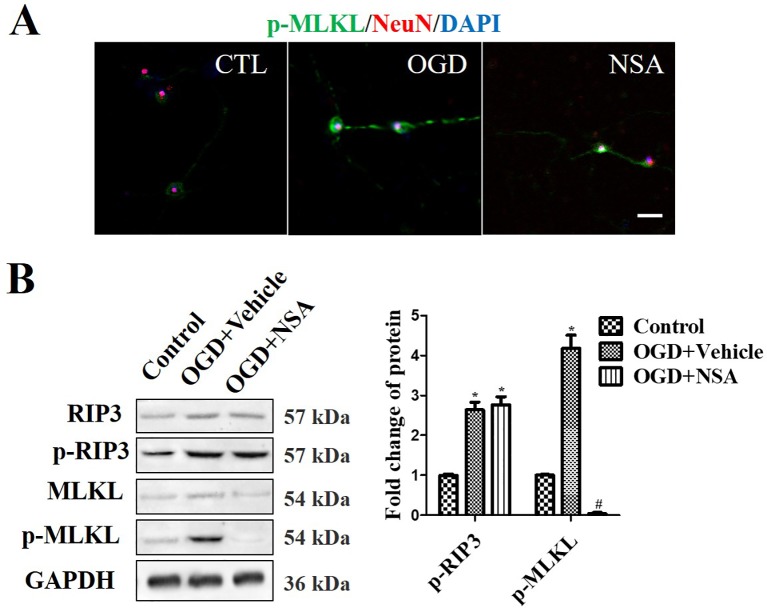
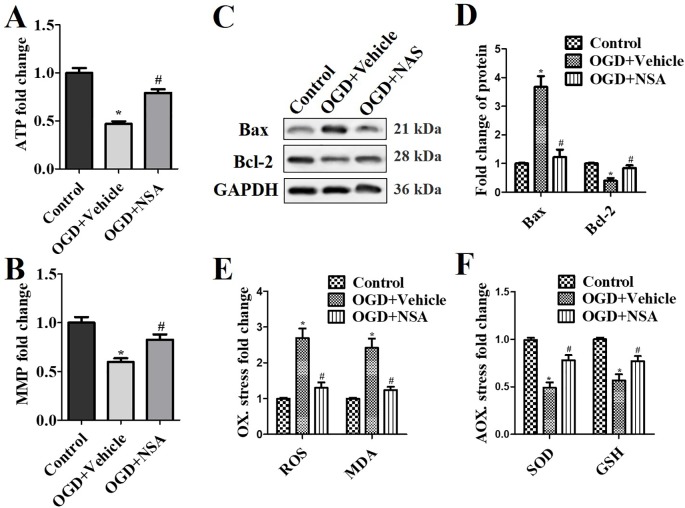
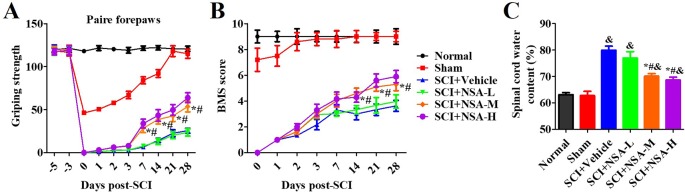
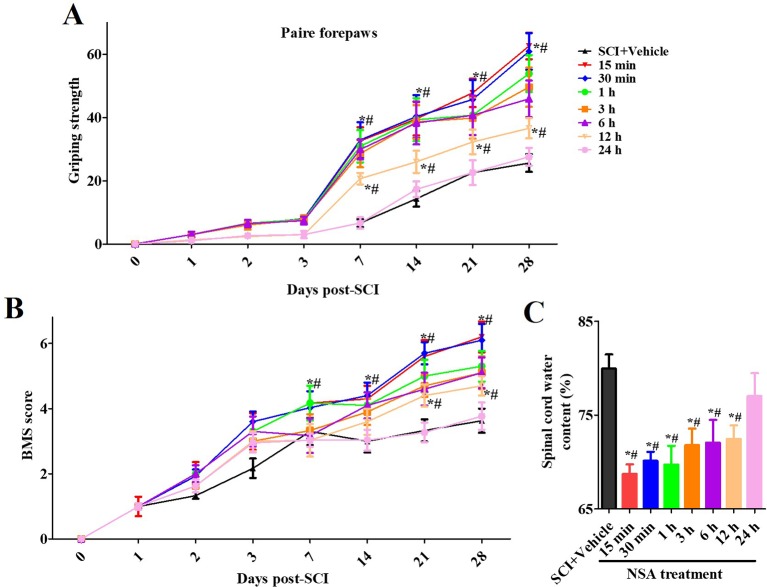
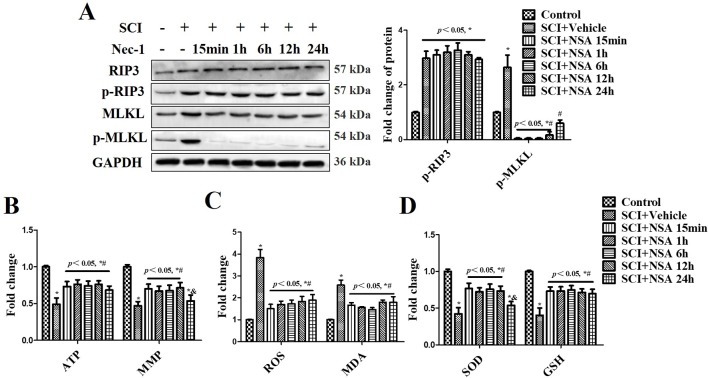
Currently, there is no efficient therapy for spinal cord injury (SCI). Anoxemia after SCI is a key problem, which leads to tissue destruction, while hypoxia after SCI induces cell injury along with inflammation. Mixed-lineage kinase domain-like protein (MLKL) is a critical signal molecule of necroptosis, and mitochondrial dysfunction is regarded as one of the most pivotal events after SCI. Based on the important role of MLKL in cell damage and potential role of mitochondrial dysfunction, our study focuses on the regulation of MLKL by Necrosulfonamide (NSA) in mitochondrial dysfunction of oxygen-glucose deprivation (OGD)-induced cell damage and SCI-mice, which specifically blocks the MLKL. Our results showed that NSA protected against a decrease in the mitochondrial membrane potential, adenosine triphosphate, glutathione, and superoxide dismutase levels and an increase in reactive oxygen species and malonyldialdehyde levels. NSA also improved the locomotor function in SCI-mice and OGD-induced spinal neuron injury through inhibition of MLKL activation independently of receptor-interacting protein kinase 3 (RIP3) phosphorylation. Besides the protective effects, NSA exhibited a therapeutic window. The optimal treatment time was within 12 h after the injury in the SCI-mice model. In conclusion, our data suggest a close association between the NSA level inhibiting p-MLKL independently of RIP3 phosphorylation and induction of neurological impairment by improving antioxidative capacity after SCI. NSA ameliorates neurological impairment in SCI through inhibiting MLKL-dependent necroptosis. It also provides a theoretical basis for further research and application of NSA in the treatment of SCI.
目前,脊髓损伤(SCI)尚无有效的治疗方法。SCI后的缺氧血症是一个关键问题,会导致组织破坏,而SCI后的低氧会引发细胞损伤并伴有炎症。混合谱系激酶结构域样蛋白(MLKL)是坏死性凋亡的关键信号分子,线粒体功能障碍被认为是SCI后最关键的事件之一。基于MLKL在细胞损伤中的重要作用以及线粒体功能障碍的潜在作用,我们的研究聚焦于坏死磺酰胺(NSA)对氧糖剥夺(OGD)诱导的细胞损伤和SCI小鼠线粒体功能障碍中MLKL的调控,NSA可特异性阻断MLKL。我们的结果表明,NSA可防止线粒体膜电位、三磷酸腺苷、谷胱甘肽和超氧化物歧化酶水平降低,以及活性氧和丙二醛水平升高。NSA还通过独立于受体相互作用蛋白激酶3(RIP3)磷酸化抑制MLKL激活,改善了SCI小鼠的运动功能和OGD诱导的脊髓神经元损伤。除了保护作用外,NSA还表现出一个治疗窗。在SCI小鼠模型中,最佳治疗时间是损伤后12小时内。总之,我们的数据表明,NSA水平在独立于RIP3磷酸化抑制p-MLKL与SCI后通过提高抗氧化能力诱导神经功能障碍之间存在密切关联。NSA通过抑制MLKL依赖性坏死性凋亡改善SCI中的神经功能障碍。这也为NSA在SCI治疗中的进一步研究和应用提供了理论依据。