Magnusson Magnus S
Human Behavior Laboratory, School of Health Sciences, University of Iceland, Reykjavik, Iceland.
Front Psychol. 2020 Jan 10;10:2663. doi: 10.3389/fpsyg.2019.02663. eCollection 2019.
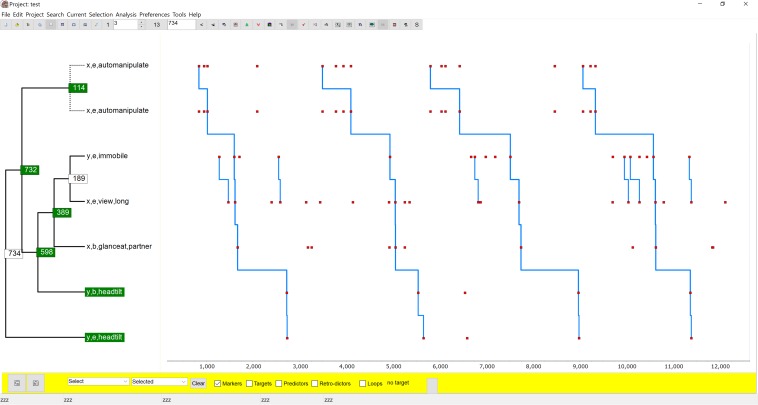
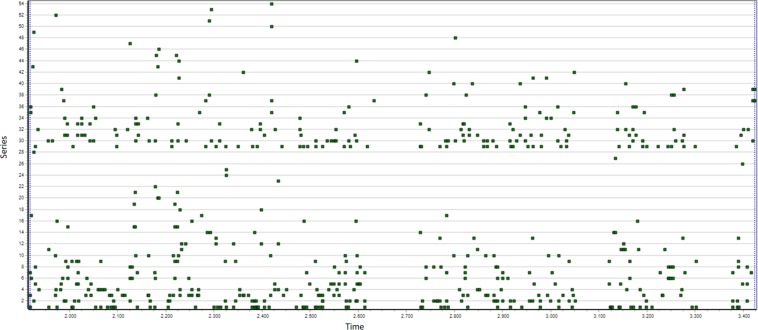
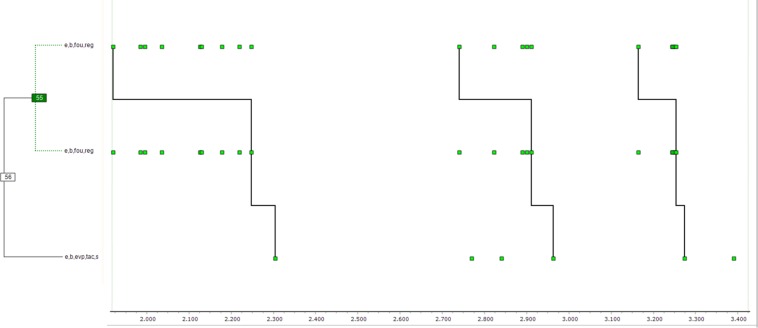
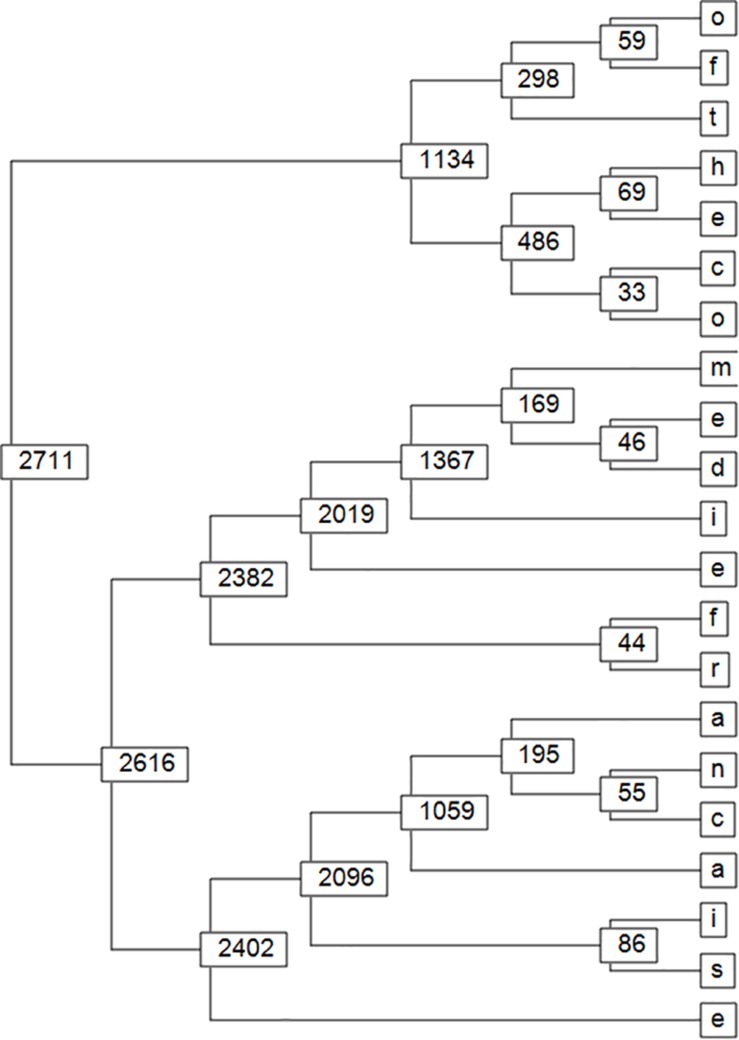
This work, which was started in the early 1970s, was inspired by social interaction analysis based on direct observation and careful coding of behaviors according to a list of behavioral (mostly ethological) categories, especially the ethological work of N. Tinbergen, K. Lorenz, and K. von Frisch, for which they shared a Nobel Prize in 1973 in Medicine or Physiology but also H. Montagner's ethological analyses of interactions in social insects and children. S. Duncan's psychological and linguistic research on turn-taking in human interactions provided great inspiration, and so did Chomsky's work on syntactic structure and Skinner's probabilistic real-time functional analysis and their consequent debate. A hypothesis concerning numerous kinds of temporal and spatial natural and especially biological structures, the T-pattern is a hierarchical self-similar fractal-like structure that recurs with significant translational symmetry on a single discrete dimension, initially real time. It also points to profound self-similarity across many levels of biological spatio-temporal organization, as it seems characteristic of molecular structures such as genes and a multitude of recurrent motives on DNA and its 3D generalization corresponding to (3D) folded proteins. Developed initially to facilitate empirical analysis, the T-pattern and its detection algorithms were first presented in AI (Magnusson, 1981) and Applied Statistics (Magnusson, 1983) through THEME (3 k Fortran IV) software using an evolution algorithm. It is now over 300 k lines of code, runs under Windows, and, more recently, uses parallel processing for increased speed. This has allowed abundant detection of hidden structure in numerous kinds of biological phenomena at highly varied scales, from human behavior at timescales of days (Hirschenhauser et al., 2002; Hirschenhauser and Frigerio, 2005) to interactions of many individual neurons simultaneously registered at a temporal resolution of 10 s in neuronal networks in rat brains to ongoing work on T-patterns in DNA molecules at a spatial nano-scale. T-pattern detection and analysis (TPA) thus mix qualitative and quantitative analyses, as T-patterns themselves are artificial categories composed of recurring coding categories with special real-scale statistical relations between their instances. After their detection, T-patterns are thus analyzed much as are other behavioral categories.
这项工作始于20世纪70年代初,其灵感来源于基于直接观察和根据行为(主要是行为学)类别列表对行为进行仔细编码的社会互动分析,特别是N. 廷贝亨、K. 洛伦兹和K. 冯·弗里施的行为学研究,他们因这项研究于1973年共同获得诺贝尔医学或生理学奖,同时也受到了H. 蒙塔涅尔对社会昆虫和儿童互动的行为学分析的启发。S. 邓肯关于人类互动中轮流发言的心理学和语言学研究提供了巨大的灵感,乔姆斯基关于句法结构的研究以及斯金纳的概率实时功能分析及其引发的争论也同样如此。作为一种关于多种时间和空间自然结构,尤其是生物结构的假设,T模式是一种分层的、自相似的、类分形的结构,它在单个离散维度(最初是实时)上以显著的平移对称性反复出现。它还指向生物时空组织多个层面上的深刻自相似性,因为它似乎是基因等分子结构以及DNA上大量反复出现的基序及其与(3D)折叠蛋白相对应的3D泛化的特征。T模式及其检测算法最初是为便于实证分析而开发的,首次通过THEME(3k Fortran IV)软件并使用进化算法在《人工智能》(马格努松,1981年)和《应用统计学》(马格努松,1983年)中呈现。它现在有超过30万行代码,在Windows系统下运行,最近还使用并行处理来提高速度。这使得能够在从数天时间尺度的人类行为(赫申豪泽等人,2002年;赫申豪泽和弗里杰里奥,2005年)到大鼠大脑神经网络中以10秒时间分辨率同时记录的许多单个神经元的相互作用,再到DNA分子在纳米空间尺度上的T模式的持续研究等高度不同的尺度上大量检测隐藏结构。因此,T模式检测与分析(TPA)将定性分析和定量分析结合起来,因为T模式本身是由反复出现的编码类别组成的人工类别,其实例之间具有特殊的实际尺度统计关系。在检测到T模式之后,就像对其他行为类别一样对其进行分析。