Urbina Jenny, Chestnut Tara, Schwalm Donelle, Allen Jenn, Levi Taal
Department of Fisheries and Wildlife, Oregon State University, Corvallis, OR, United States of America.
Mount Rainier National Park, National Park Service, Ashford, WA, United States of America.
PeerJ. 2020 Jan 20;8:e8141. doi: 10.7717/peerj.8141. eCollection 2020.
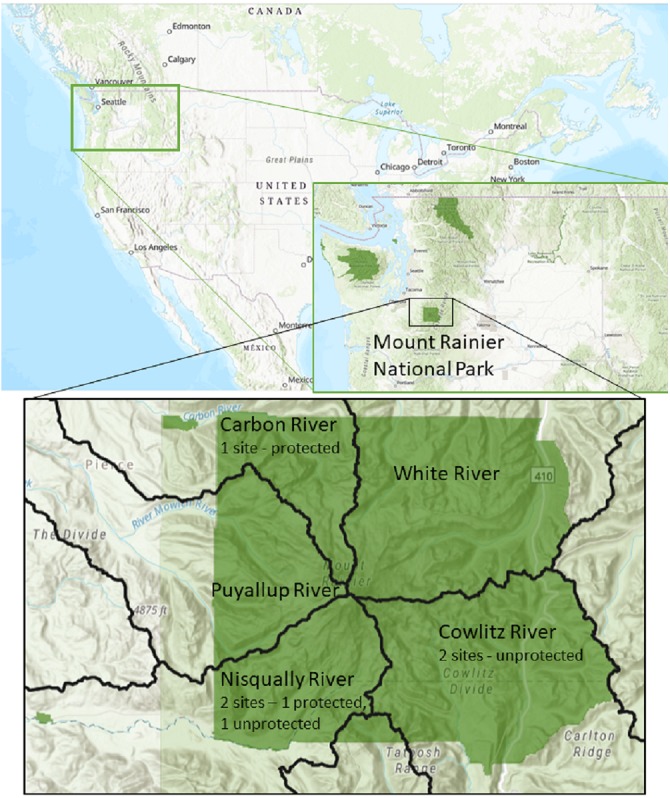
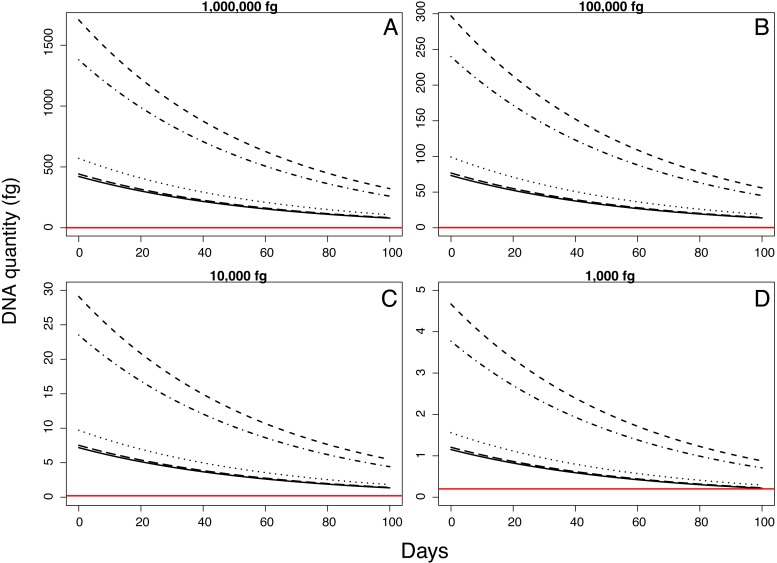
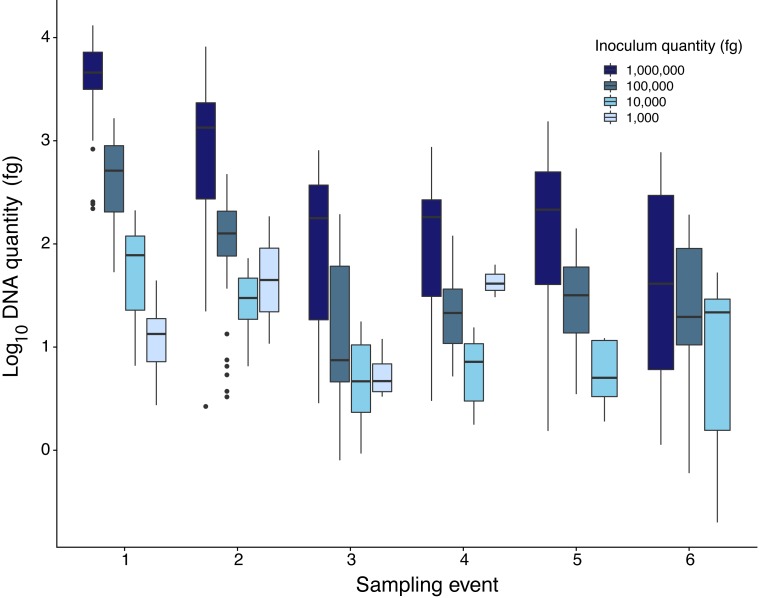
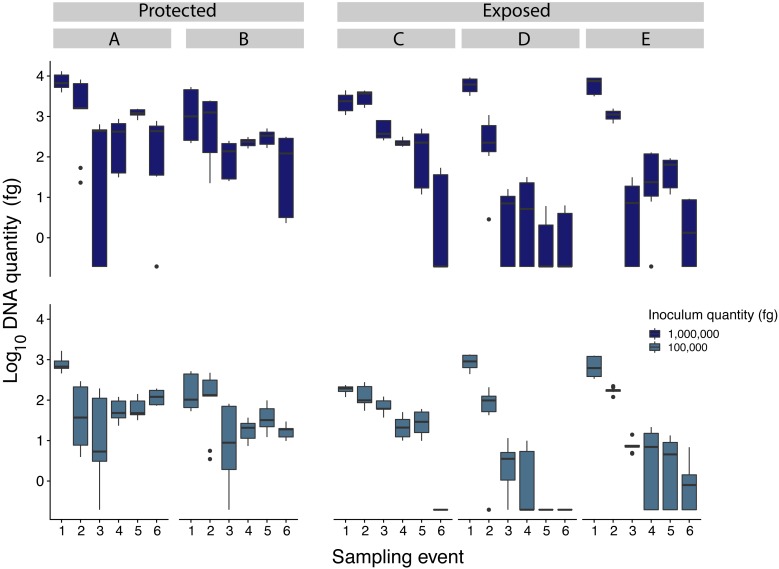
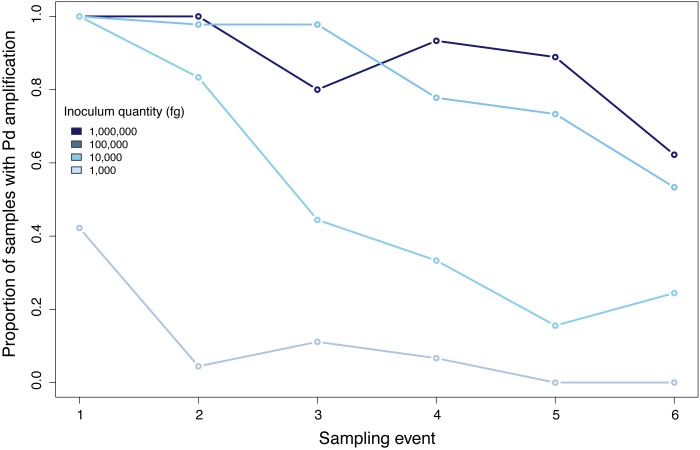
(Pd), the causative agent of white-nose syndrome in bats (WNS), has led to dramatic declines of bat populations in eastern North America. In the spring of 2016, WNS was first detected at several locations in Washington State, USA, which has prompted the need for large scale surveillance efforts to monitor the spread of Pd. Pd is typically detected in bats using invasive methods requiring capturing and swabbing individual bats. However, Pd can also be detected in guano, which may provide an efficient, affordable, and noninvasive means to monitor Pd in bats across North America. The widespread implementation of Pd surveillance in guano is hindered by substantial uncertainty about the probability of detecting Pd when present, and how this probability is influenced by the time since defecation, local environmental conditions, the amount of guano sampled, and the original concentration of DNA shed in the guano. In addition, the expected degradation rate of Pd DNA depends on whether the Pd DNA found in guano represents extracellular DNA fragments, intracellular DNA from dead Pd fungal cells, or from intracellular and viable Pd cells. While this is currently unknown, it has been posited that most environmental DNA, such as Pd found in guano long after defecation, is fragmented extracellular DNA. Using non-viable isolated DNA at precise quantities, we experimentally characterized the degradation rates of Pd DNA in guano samples. We spiked 450 guano samples with Pd gDNA in a 10-fold dilution series from 1 million to 1,000 fg and placed them in variable environmental conditions at five sites at Mount Rainier National Park in Washington State, which is a priority location for Pd surveillance. We evaluated DNA degradation over 70 days by quantifying the amount of DNA in samples collected every 14 days using real-time quantitative PCR (qPCR). Our sampling period was from July 10th to September 17th 2018 which overlaps with bat movement between summer roosts as well as movement from maternity colonies fall swarms. We detected Pd DNA in guano 56 and 70 days after inoculation with 1 million and 100,000 fg respectively, while the lowest quantity (1,000 fg) was detected until 42 days. Detection probability was variable among sites and lower where samples were left exposed without overhead cover. If Pd is shed as extracellular DNA in guano at quantities above 1,000 fg, then guano collection is likely to provide an effective tool for environmental screening of Pd that can be employed in an early detection and rapid response framework throughout Washington and other regions where this disease is rapidly emerging.
白鼻综合征(WNS)的病原体——白鼻真菌(Pd)已导致北美东部蝙蝠种群数量急剧下降。2016年春季,美国华盛顿州的多个地点首次检测到WNS,这促使人们需要开展大规模监测工作来监控Pd的传播。通常采用侵入性方法检测蝙蝠体内的Pd,即捕获并擦拭每只蝙蝠。然而,也可以在粪便中检测到Pd,这可能为监测北美各地蝙蝠体内的Pd提供一种高效、经济且非侵入性的方法。粪便中Pd监测的广泛实施受到诸多因素的阻碍,比如存在Pd时检测到它的概率存在很大不确定性,以及该概率如何受到排便时间、当地环境条件、采集的粪便量以及粪便中脱落的DNA原始浓度的影响。此外,Pd DNA的预期降解速率取决于在粪便中发现的Pd DNA是代表细胞外DNA片段、死亡Pd真菌细胞的细胞内DNA,还是来自细胞内且存活的Pd细胞。虽然目前尚不清楚,但据推测,大多数环境DNA,如排便后很长时间在粪便中发现的Pd,是碎片化的细胞外DNA。我们使用精确数量的无活性分离DNA,通过实验确定了粪便样本中Pd DNA的降解速率。我们将450个粪便样本用Pd基因组DNA(gDNA)以10倍稀释系列从100万fg稀释到1000 fg进行加样,并将它们置于华盛顿州雷尼尔山国家公园五个地点的不同环境条件下,该公园是Pd监测的重点区域。我们通过使用实时定量PCR(qPCR)每14天对采集样本中的DNA量进行定量,评估了70天内DNA的降解情况。我们的采样期为2018年7月10日至9月17日,这段时间与蝙蝠在夏季栖息地之间的移动以及从繁殖群体到秋季集群的移动时间重叠。分别在接种100万fg和10万fg后的56天和70天,我们在粪便中检测到了Pd DNA,而最低量(1000 fg)直到42天才被检测到。不同地点的检测概率各不相同,在没有顶部遮盖物而暴露在外的样本中检测概率较低。如果Pd以高于1000 fg的量作为细胞外DNA排泄在粪便中,那么粪便采集很可能为Pd的环境筛查提供一种有效工具,可用于华盛顿州及其他该疾病迅速出现地区的早期检测和快速反应框架。