Gerhard Charlotte, Jaffey Jared A
Department of Small Animal Medicine and Surgery, College of Veterinary Medicine, Midwestern University, Glendale, AZ, United States.
Front Vet Sci. 2020 Jan 9;6:472. doi: 10.3389/fvets.2019.00472. eCollection 2019.
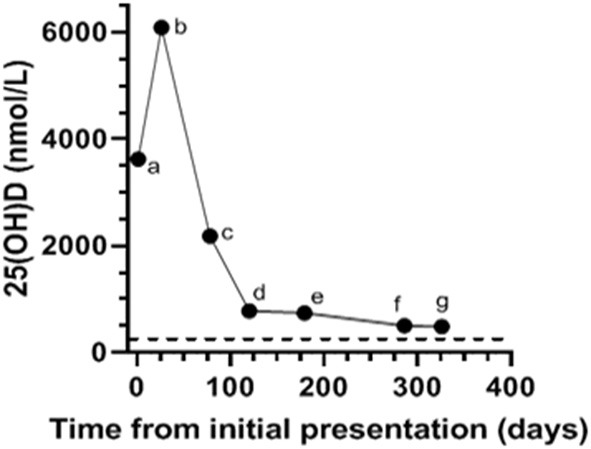
Cholecalciferol is becoming an increasingly utilized rodenticide in the United States due to changes implemented by the Environmental Protection Agency (EPA) to reduce unintended exposure of wildlife to second-generation anticoagulant rodenticides. The lipophilic properties of cholecalciferol and prolonged tissue elimination are well-documented; however, long-term clinical ramifications are unknown. This report describes unique clinicopathologic and treatment features during the acute phase of cholecalciferol rodenticide toxicosis in a 4-year-old neutered Shih-Tzu mix that presented for intermittent vomiting, anorexia, polyuria, and polydipsia. In addition, this report also highlights the potential benefit of serial measurements of serum 25-hydroxyvitamin D concentrations and long-term treatment in the chronic phase of cholecalciferol rodenticide toxicosis in dogs.
由于美国环境保护局(EPA)实施了相关措施以减少野生动物意外接触第二代抗凝血灭鼠剂的情况,胆钙化醇在美国正越来越多地被用作灭鼠剂。胆钙化醇的亲脂性特性和组织清除时间延长已得到充分记录;然而,其长期临床影响尚不清楚。本报告描述了一只4岁绝育的西施犬混种犬在胆钙化醇灭鼠剂中毒急性期的独特临床病理和治疗特征,该犬出现间歇性呕吐、厌食、多尿和多饮症状。此外,本报告还强调了在犬类胆钙化醇灭鼠剂中毒慢性期连续测量血清25-羟基维生素D浓度以及长期治疗的潜在益处。