Tang Wei, Wang Di, Shao Lianqi, Liu Xiaobai, Zheng Jian, Xue Yixue, Ruan Xuelei, Yang Chunqing, Liu Libo, Ma Jun, Li Zhen, Liu Yunhui
Department of Neurosurgery, Shengjing Hospital of China Medical University, Shenyang 110004, China; Liaoning Clinical Medical Research Center in Nervous System Disease, Shenyang 110004, China; Key Laboratory of Neuro-oncology in Liaoning Province, Shenyang 110004, China.
Department of Neurobiology, School of Life Sciences, China Medical University, Shenyang 110122, China; Key Laboratory of Cell Biology, Ministry of Public Health of China, China Medical University, Shenyang 110122, China; Key Laboratory of Medical Cell Biology, Ministry of Education of China, China Medical University, Shenyang 110122, China.
Mol Ther Nucleic Acids. 2020 Mar 6;19:905-921. doi: 10.1016/j.omtn.2019.10.043. Epub 2019 Nov 16.
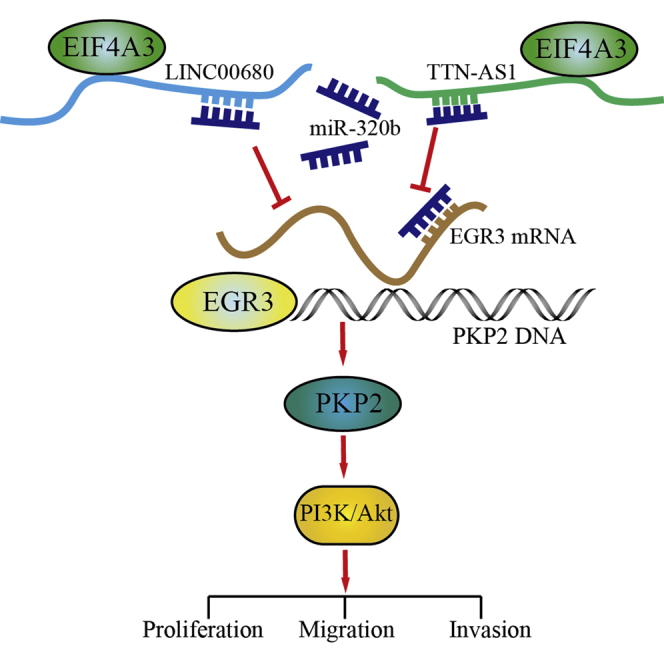
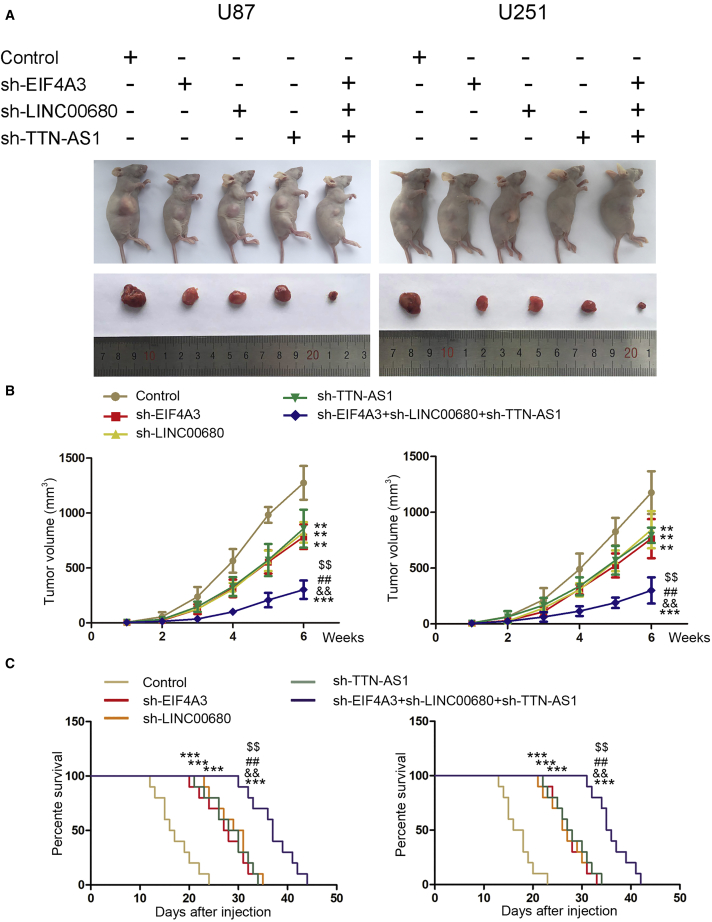
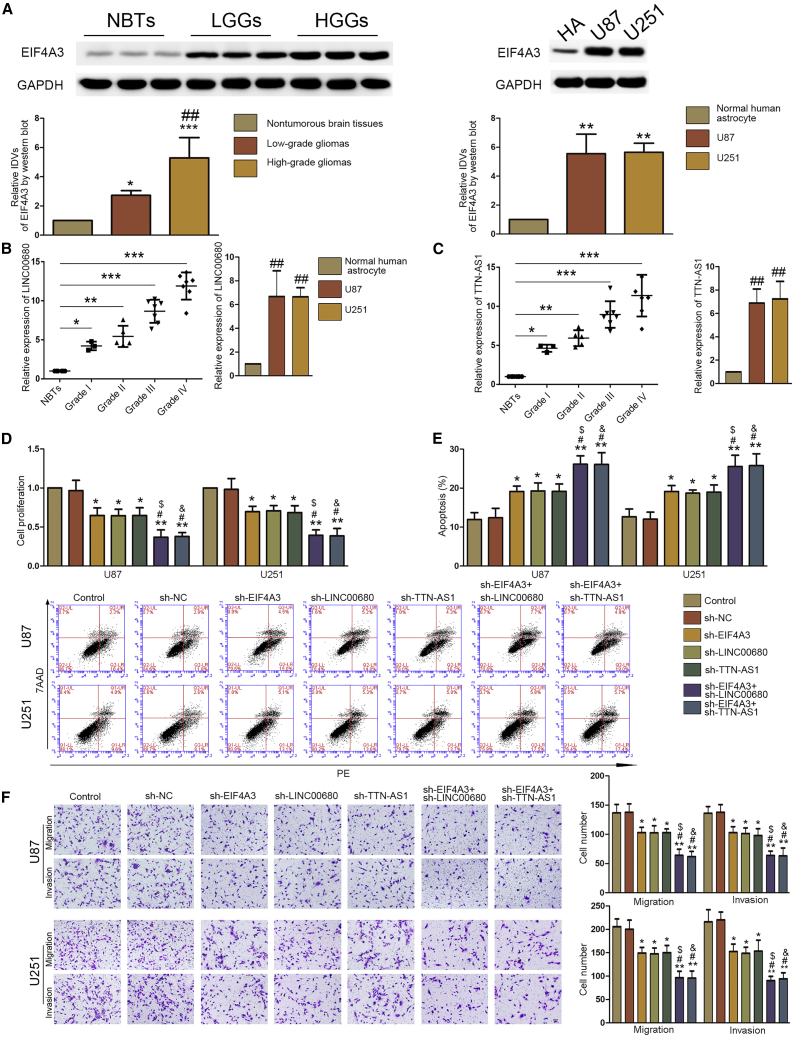
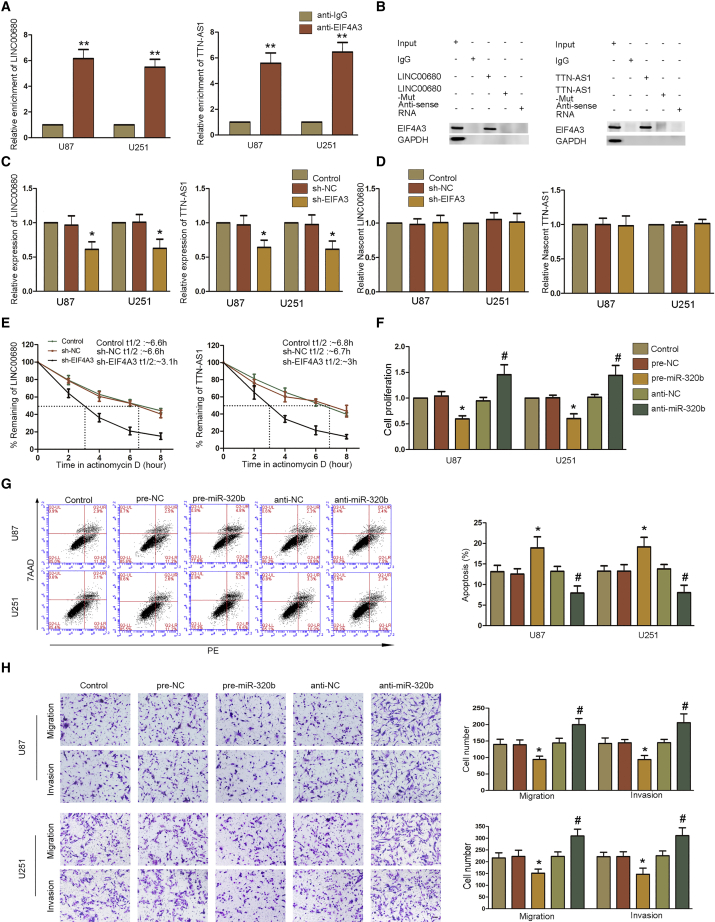
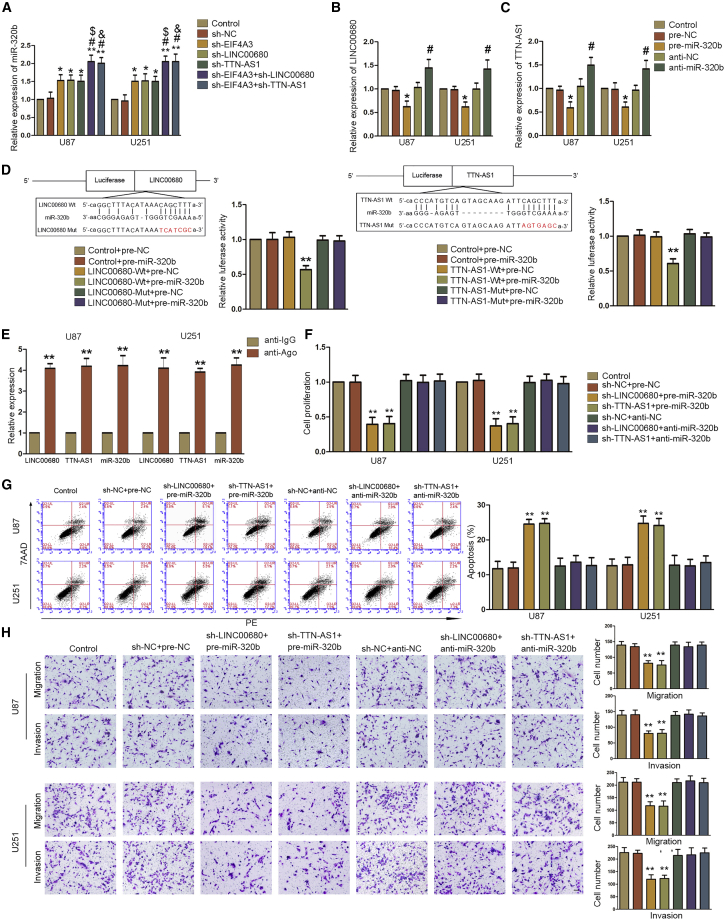
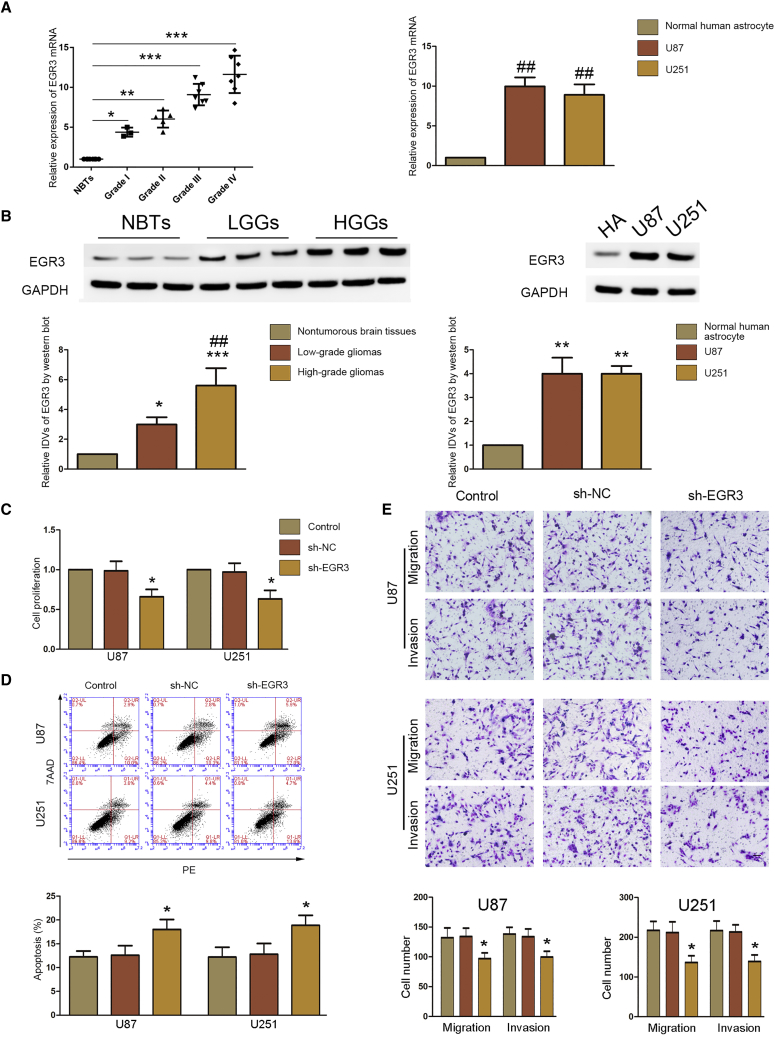
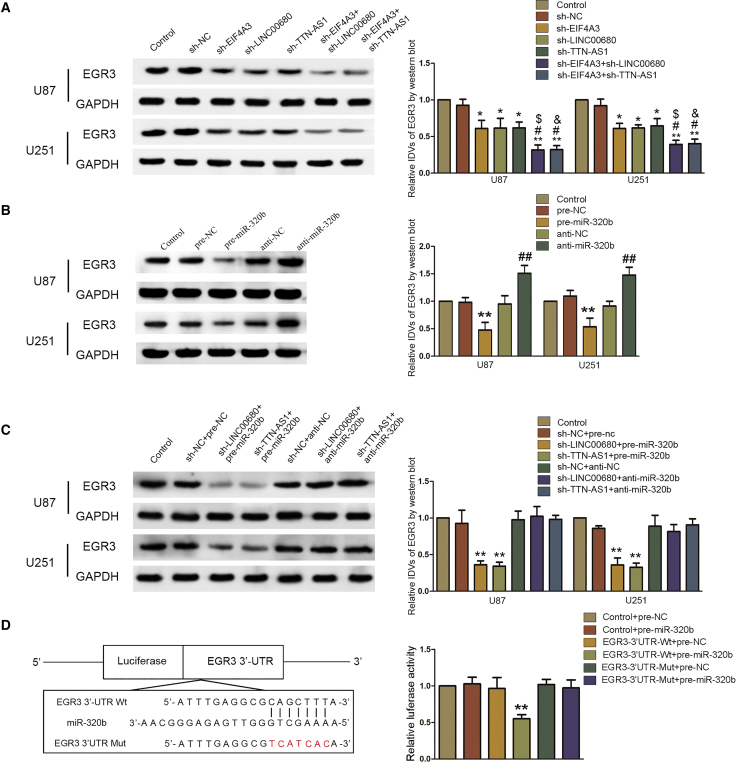
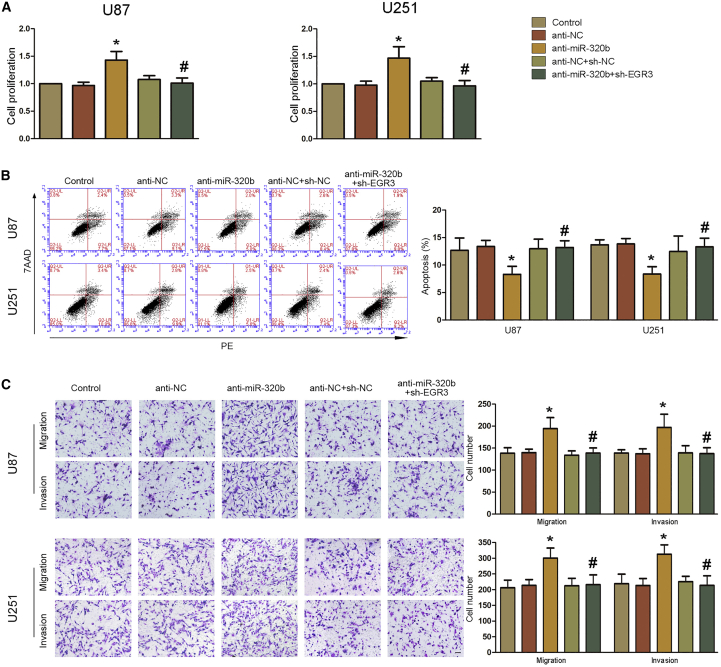
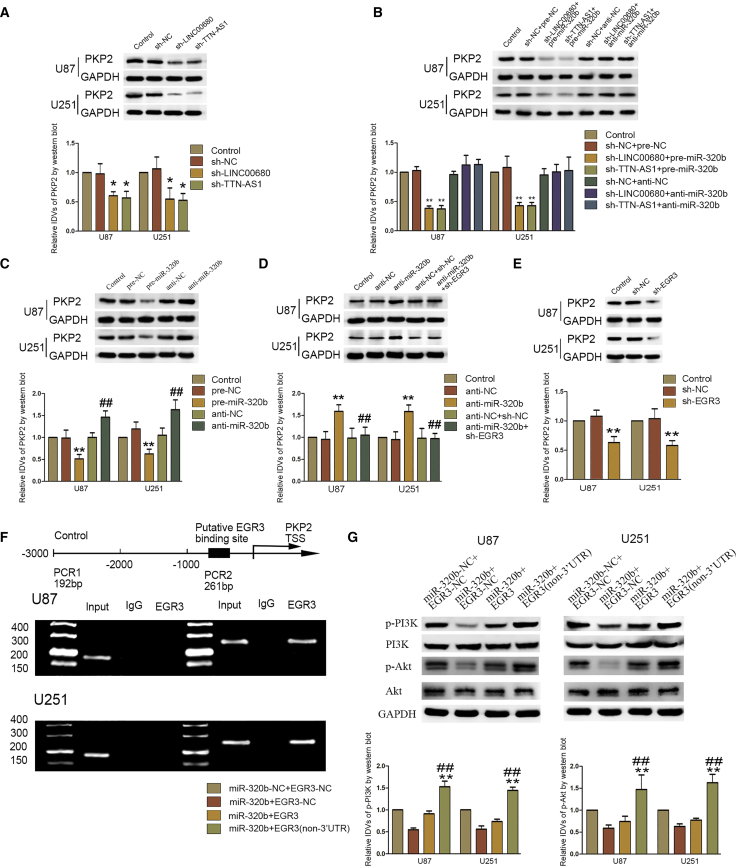
Glioblastomas are the most common and malignant intracranial tumors with a low survival rate. Dysregulation of long non-coding RNAs and RNA-binding protein causes various diseases, including cancers. However, the function of LINC00680 and TTN-AS1 in the progression of glioblastomas is still elusive. In this study, we detected that LINC00680 and TTN-AS1 were upregulated in glioblastoma cells. RNA-binding protein EIF4A3 could prolong the half-life of LINC00680 and TTN-AS1. Knockdown of EIF4A3, LINC00680, and TTN-AS1 impaired proliferation, migration, and invasion and inhibited the growth of tumor in vivo and promoted apoptosis of glioblastoma cells. miR-320b was proven to be a target of LINC00680 and TTN-AS1. They interacted with miR-320b as competing endogenous RNAs, which resulted in the reduction of binding between transcriptional factor EGR3 (early growth response 3) mRNA and miR-320b. The accumulation of EGR3 promoted expression of plakophilin (PKP)2, which could activate the epidermal growth factor receptor (EFGR) pathway, leading to the malignant biological behaviors of glioblastoma cells. In summary, LINC00680 and TTN-AS1 promoted glioblastoma cell malignant biological behaviors via the miR-320b/EGR3/PKP2 axis by being stabilized by EIF4A3, which may provide a novel strategy for glioblastoma therapy.
胶质母细胞瘤是最常见且恶性程度高的颅内肿瘤,生存率低。长链非编码RNA和RNA结合蛋白的失调会引发包括癌症在内的各种疾病。然而,LINC00680和TTN-AS1在胶质母细胞瘤进展中的作用仍不清楚。在本研究中,我们检测到LINC00680和TTN-AS1在胶质母细胞瘤细胞中上调。RNA结合蛋白EIF4A3可延长LINC00680和TTN-AS1的半衰期。敲低EIF4A3、LINC00680和TTN-AS1会损害细胞增殖、迁移和侵袭能力,并抑制体内肿瘤生长,促进胶质母细胞瘤细胞凋亡。miR-320b被证明是LINC00680和TTN-AS1的靶点。它们作为竞争性内源性RNA与miR-320b相互作用,导致转录因子EGR3(早期生长反应3)mRNA与miR-320b之间的结合减少。EGR3的积累促进了桥粒芯蛋白(PKP)2的表达,PKP2可激活表皮生长因子受体(EFGR)途径,导致胶质母细胞瘤细胞的恶性生物学行为。总之,LINC00680和TTN-AS1通过被EIF4A3稳定,经由miR-320b/EGR3/PKP2轴促进胶质母细胞瘤细胞的恶性生物学行为,这可能为胶质母细胞瘤治疗提供一种新策略。