Department of Electrical and Computer Engineering, UCSD, San Diego, CA, USA.
Beyster Center for Genomics of Psychiatric Diseases, Department of Psychiatry, UCSD, San Diego, CA, USA.
BMC Genomics. 2020 Jan 30;21(1):95. doi: 10.1186/s12864-020-6516-1.
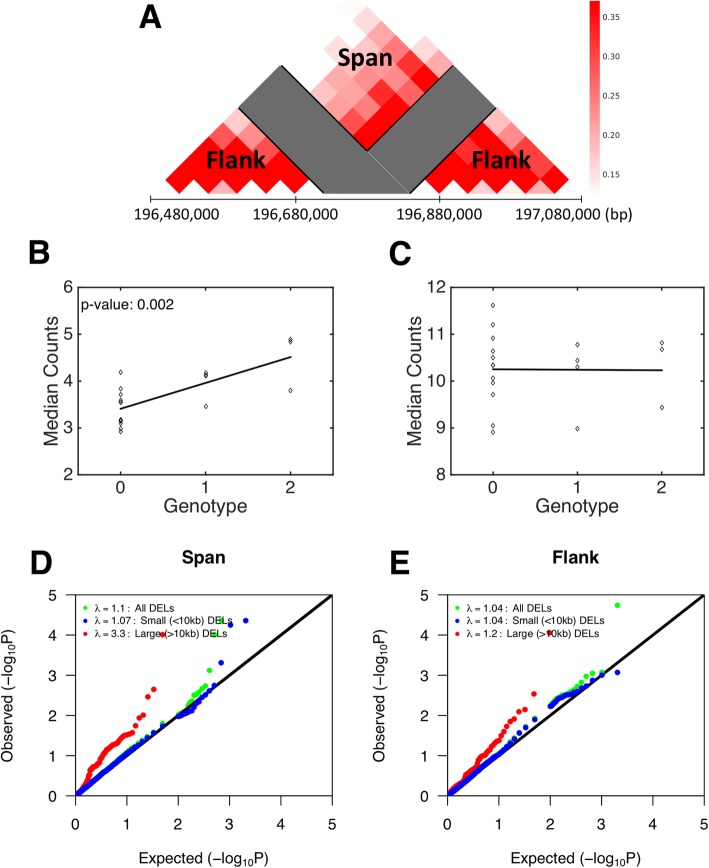
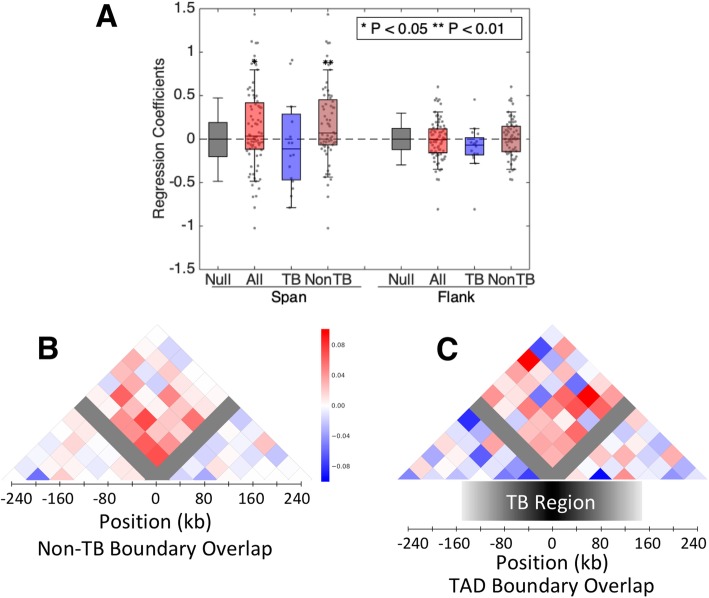
Three-dimensional spatial organization of chromosomes is defined by highly self-interacting regions 0.1-1 Mb in size termed Topological Associating Domains (TADs). Genetic factors that explain dynamic variation in TAD structure are not understood. We hypothesize that common structural variation (SV) in the human population can disrupt regulatory sequences and thereby influence TAD formation. To determine the effects of SVs on 3D chromatin organization, we performed chromosome conformation capture sequencing (Hi-C) of lymphoblastoid cell lines from 19 subjects for which SVs had been previously characterized in the 1000 genomes project. We tested the effects of common deletion polymorphisms on TAD structure by linear regression analysis of nearby quantitative chromatin interactions (contacts) within 240 kb of the deletion, and we specifically tested the hypothesis that deletions at TAD boundaries (TBs) could result in large-scale alterations in chromatin conformation.
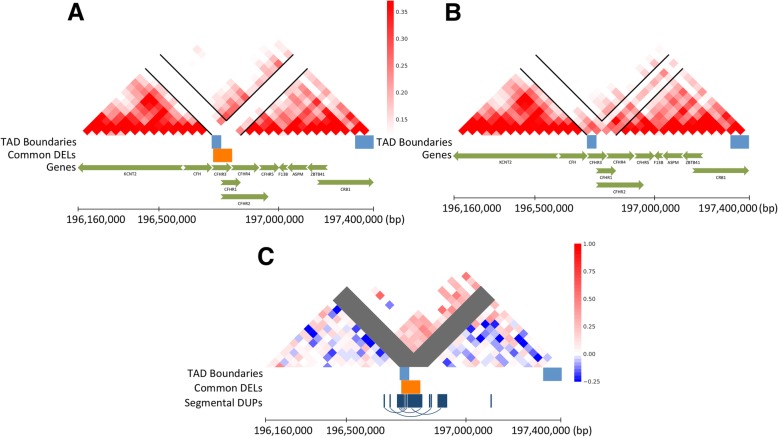
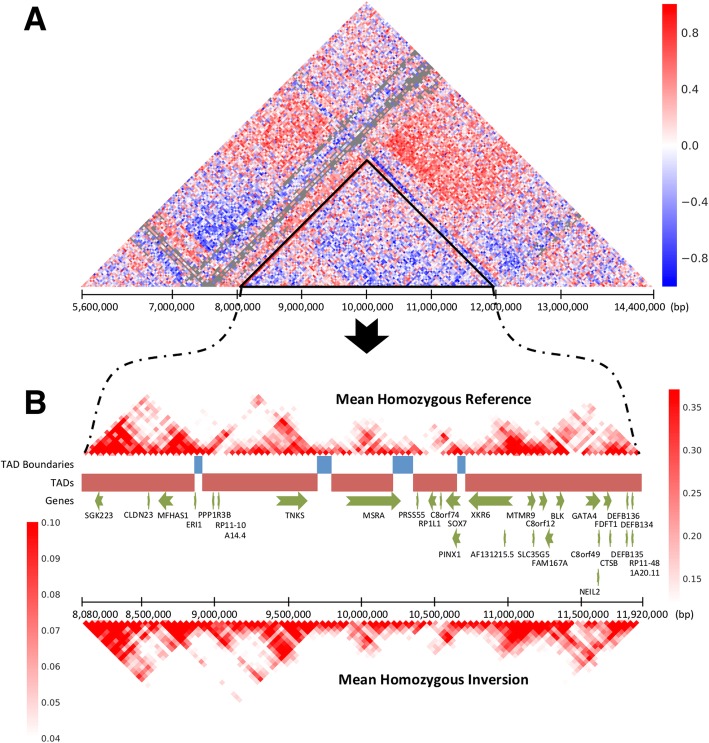
Large (> 10 kb) deletions had significant effects on long-range chromatin interactions. Deletions were associated with increased contacts that span the deleted region and this effect was driven by large deletions that were not located within a TAD boundary (nonTB). Some deletions at TBs, including a 80 kb deletion of the genes CFHR1 and CFHR3, had detectable effects on chromatin contacts. However for TB deletions overall, we did not detect a pattern of effects that was consistent in magnitude or direction. Large inversions in the population had a distinguishable signature characterized by a rearrangement of contacts that span its breakpoints.
Our study demonstrates that common SVs in the population impact long-range chromatin structure, and deletions and inversions have distinct signatures. However, the effects that we observe are subtle and variable between loci. Genome-wide analysis of chromatin conformation in large cohorts will be needed to quantify the influence of common SVs on chromatin structure.
染色体的三维空间组织由大小为 0.1-1 Mb 的高度自我相互作用区域定义,这些区域称为拓扑关联结构域(TADs)。解释 TAD 结构动态变化的遗传因素尚不清楚。我们假设人群中的常见结构变异(SV)可以破坏调节序列,从而影响 TAD 的形成。为了确定 SV 对 3D 染色质组织的影响,我们对 19 个个体的淋巴母细胞系进行了染色体构象捕获测序(Hi-C),这些个体的 SV 先前已经在 1000 基因组计划中进行了特征描述。我们通过线性回归分析 240 kb 内附近的定量染色质相互作用(接触)来测试常见缺失多态性对 TAD 结构的影响,并且我们专门测试了 TAD 边界(TBs)处的缺失可能导致染色质构象的大规模改变的假设。
10 kb 的大缺失对长距离染色质相互作用有显著影响。缺失与跨越缺失区域的接触增加有关,这种效应是由不位于 TAD 边界(非 TB)内的大缺失驱动的。TB 处的一些缺失,包括 CFHR1 和 CFHR3 基因的 80 kb 缺失,对染色质接触有可检测的影响。然而,对于 TB 缺失总体而言,我们没有检测到在幅度或方向上一致的效应模式。人群中的大倒位具有可区分的特征,其特征是跨越其断点的接触重新排列。
我们的研究表明,人群中的常见 SV 会影响长距离染色质结构,缺失和倒位具有不同的特征。然而,我们观察到的效应是微妙的,并且在不同的基因座之间是可变的。需要在大的队列中进行全基因组染色质构象分析,以量化常见 SV 对染色质结构的影响。