da Silva Francesca Aparecida Ramos, Pascoal Lívia Bitencourt, Dotti Isabella, Setsuko Ayrizono Maria de Lourdes, Aguilar Daniel, Rodrigues Bruno Lima, Arroyes Montserrat, Ferrer-Picon Elena, Milanski Marciane, Velloso Lício Augusto, Fagundes João José, Salas Azucena, Leal Raquel Franco
IBD Research Laboratory, Colorectal Surgery Unit, Department of Surgery, School of Medical Sciences, University of Campinas (UNICAMP), Carlos Chagas Street, 420, Cidade Universitária Zeferino Vaz, Campinas, São Paulo, 13083-878, Brazil.
Department of Gastroenterology, IDIBAPS, Hospital Clínic, Barcelona, Spain.
J Transl Med. 2020 Jan 30;18(1):44. doi: 10.1186/s12967-020-02220-3.
Crohn's disease (CD) is a multifactorial disease characterized by chronic intestinal inflammation. The increased visceral adiposity near the affected intestinal area, of which mesenteric adipose tissue (MAT) is the main component, is a feature of CD. Both protective and pathological roles have been attributed to this disease-associated tissue in CD. To understand the contribution of MAT to CD pathophysiology, a molecular and cellular signature of disease-associated MAT in CD patients was provided.
We performed an observational study with whole transcriptional analysis by RNA sequencing (RNA-seq) of MAT and ileal mucosa from CD patients with active disease and controls. qPCR and immunohistology were performed for validation analysis.
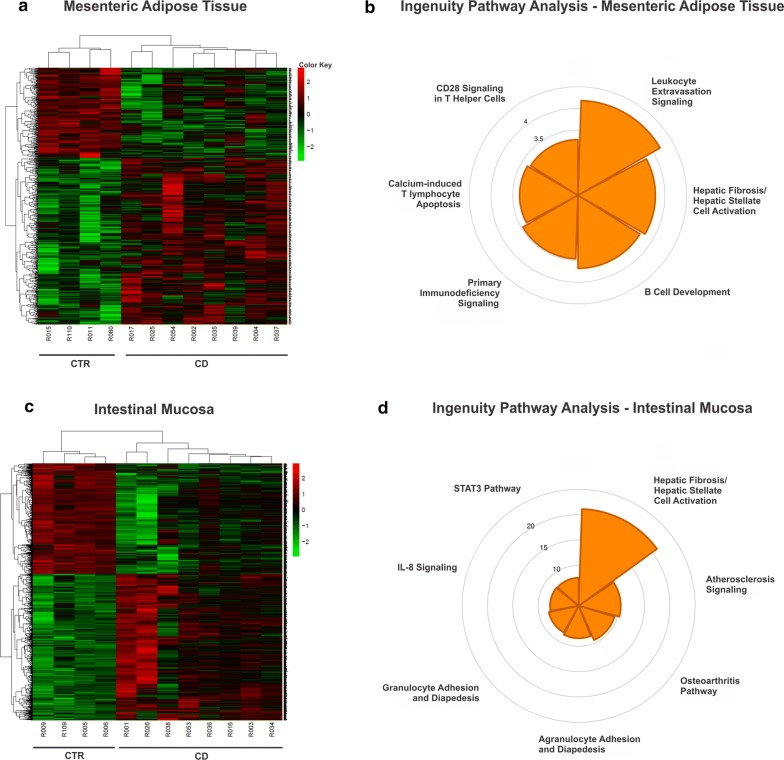
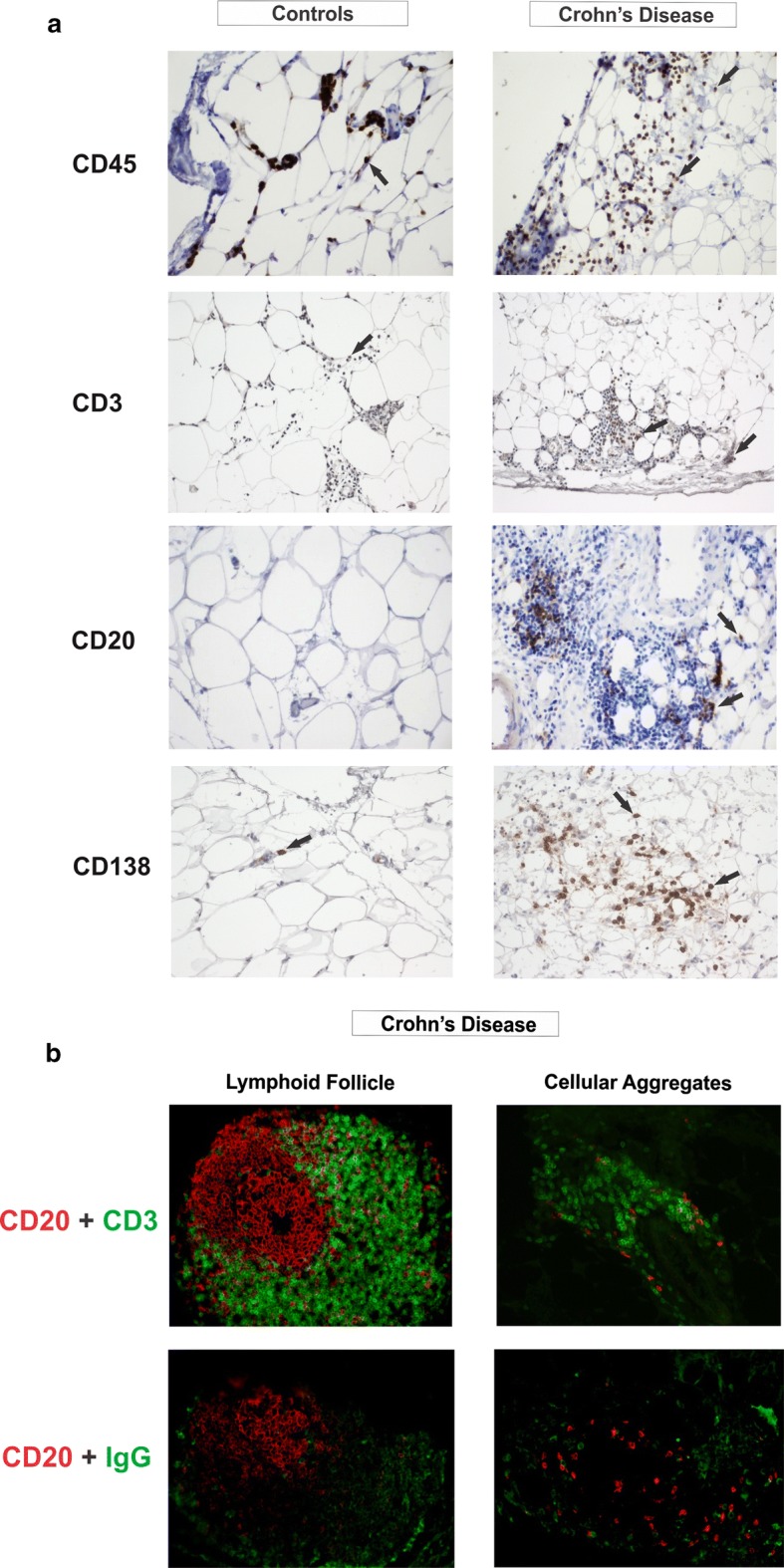
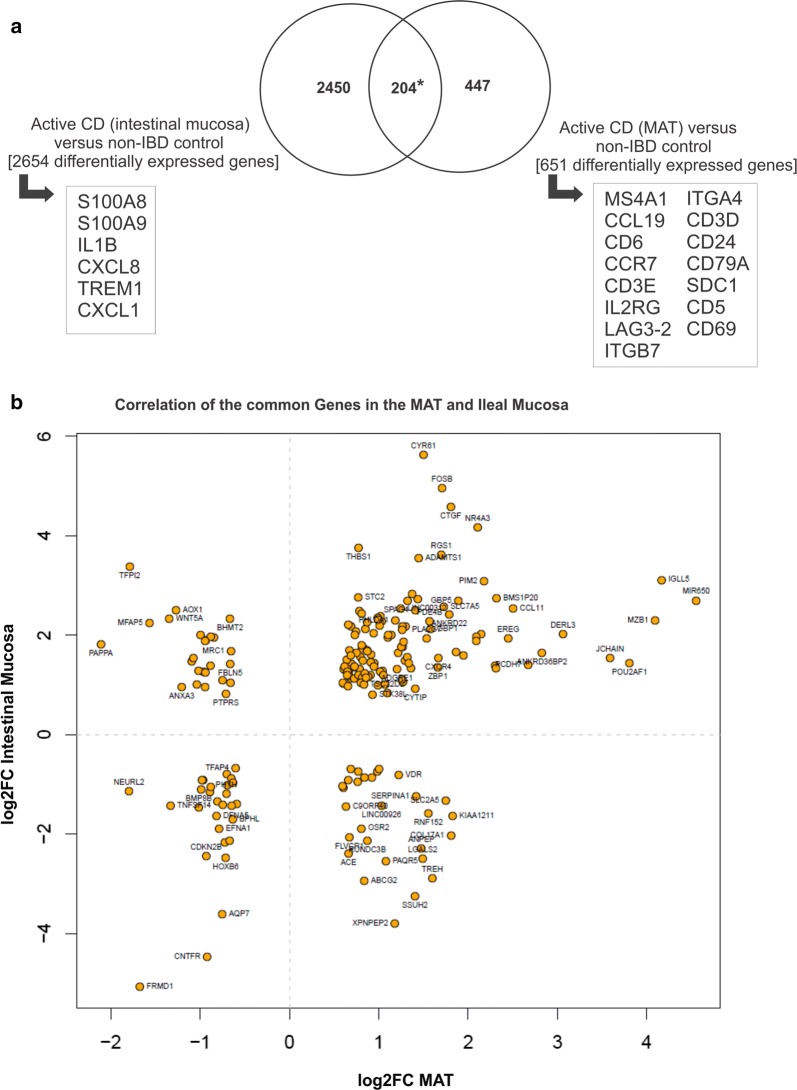
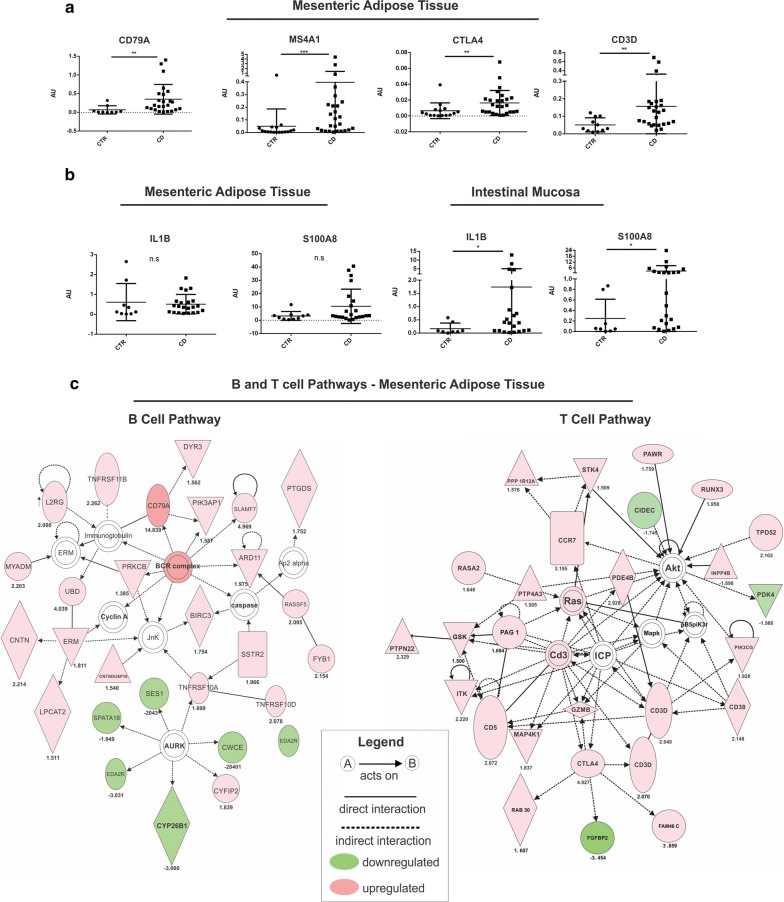
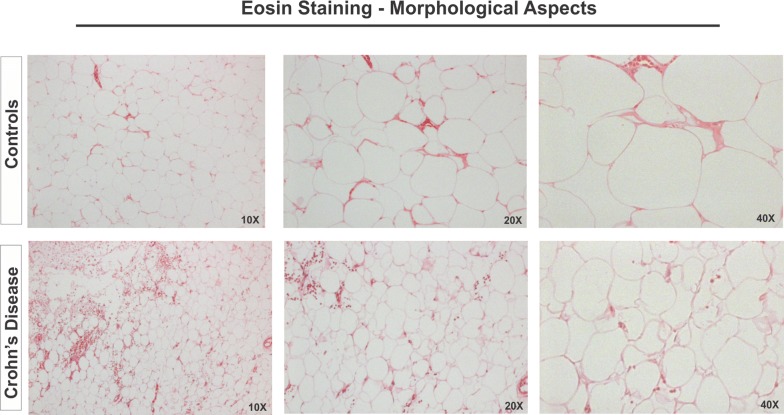
RNA-seq identified 17 significantly regulated genes (|FC| > 1.5; FDR < 0.05) in CD-MAT compared to non-IBD controls, with a marked upregulation of plasma cell genes (i.e., IGLL5, MZB1, CD79A, POU2AF1, FCRL5, JCHAIN, DERL3, SDC1, PIM2). A less strict statistical cutoff value (|FC| > 1.5, nominal p ≤ 0.05) yielded a larger list of 651 genes in CD-MAT compared to controls. CD ileum showed the significant regulation compared to control ileum of 849 genes (|FC| > 1.5; FDR < 0.05) or 2654 genes (|FC| > 1.5, nominal p ≤ 0.05). Ingenuity Pathway Analysis revealed the significant regulation of pathways related to T- and B cell functionality in the MAT of CD patients. Despite the differences between the MAT and ileal signatures of CD patients, we identified a subset of 204 genes significantly modulated in both tissues compared to controls. This common signature included genes related to the plasma cell signature. Genes such as S100A8, S100A9 (calprotectin) and IL1B, which are associated with acute inflammatory response, were exclusively regulated in the ileal mucosa of CD disease. In contrast, some genes encoding for lymphocyte receptors such as MS4A1, CD3D and CD79A were exclusively regulated in CD-MAT, exhibiting a different pattern of immune cell activation compared to the ileal mucosa in CD patients. qPCR and immunohistology confirmed the presence of large infiltrates of CD3 CD20 lymphocytes and CD138 plasma cells in CD-MAT.
Our data strongly supports the role of CD-associated MAT as a site for T-, B- and plasma cell activation, and suggests that it could also act as a reservoir of memory immune responses.
克罗恩病(CD)是一种以慢性肠道炎症为特征的多因素疾病。受影响肠道区域附近内脏脂肪增多,其中肠系膜脂肪组织(MAT)是主要成分,是CD的一个特征。这种与疾病相关的组织在CD中既具有保护作用又具有病理作用。为了解MAT对CD病理生理学的贡献,我们提供了CD患者中与疾病相关的MAT的分子和细胞特征。
我们进行了一项观察性研究,对活动期疾病的CD患者和对照组的MAT及回肠黏膜进行RNA测序(RNA-seq)全转录分析。进行qPCR和免疫组织学分析以进行验证。
与非IBD对照组相比,RNA-seq在CD-MAT中鉴定出17个显著调控的基因(|FC|>1.5;FDR<0.05),浆细胞基因(即IGLL5、MZB1、CD79A、POU2AF1、FCRL5、JCHAIN、DERL3、SDC1、PIM2)显著上调。与对照组相比,采用不太严格的统计临界值(|FC|>1.5,名义p≤0.05)时,CD-MAT中有651个基因的列表更大。与对照回肠相比,CD回肠中849个基因(|FC|>1.5;FDR<0.05)或2654个基因(|FC|>1.5,名义p≤0.05)有显著调控。 Ingenuity通路分析显示CD患者MAT中与T细胞和B细胞功能相关的通路有显著调控。尽管CD患者的MAT和回肠特征存在差异,但我们鉴定出与对照组相比在两种组织中均显著调节的204个基因的子集。这个共同特征包括与浆细胞特征相关的基因。与急性炎症反应相关的基因如S100A8、S100A9(钙卫蛋白)和IL1B仅在CD疾病的回肠黏膜中受到调控。相反,一些编码淋巴细胞受体的基因如MS4A1、CD3D和CD79A仅在CD-MAT中受到调控,与CD患者的回肠黏膜相比,呈现出不同的免疫细胞激活模式。qPCR和免疫组织学证实CD-MAT中存在大量CD3+CD20+淋巴细胞和CD138+浆细胞浸润。
我们的数据有力地支持了与CD相关的MAT作为T细胞、B细胞和浆细胞激活位点的作用,并表明它也可能作为记忆免疫反应的储存库。