Instituto Gonçalo Moniz, Fundação Oswaldo Cruz (FIOCRUZ), Salvador, Bahia, Brazil.
Escola Bahiana de Medicina e Saúde Pública, Salvador, Bahia, Brazil.
Parasit Vectors. 2020 Jan 30;13(1):44. doi: 10.1186/s13071-020-3914-9.
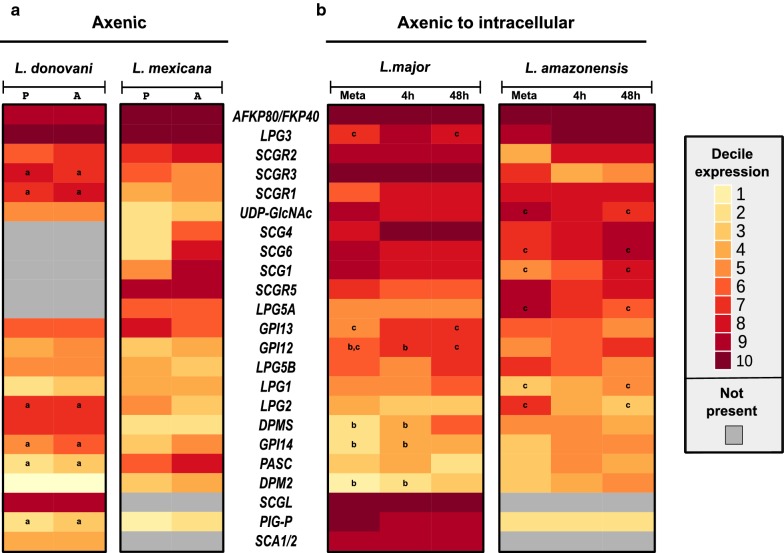
Leishmania spp. are digenetic parasites capable of infecting humans and causing a range of diseases collectively known as leishmaniasis. The main mechanisms involved in the development and permanence of this pathology are linked to evasion of the immune response. Crosstalk between the immune system and particularities of each pathogenic species is associated with diverse disease manifestations. Lipophosphoglycan (LPG), one of the most important molecules present on the surface of Leishmania parasites, is divided into four regions with high molecular variability. Although LPG plays an important role in host-pathogen and vector-parasite interactions, the distribution and phylogenetic relatedness of the genes responsible for its synthesis remain poorly explored. The recent availability of full genomes and transcriptomes of Leishmania parasites offers an opportunity to leverage insight on how LPG-related genes are distributed and expressed by these pathogens.
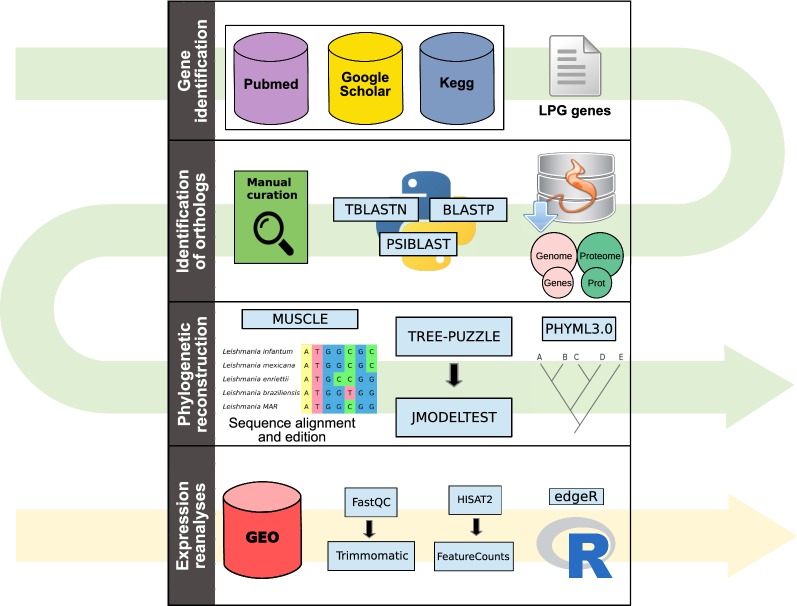
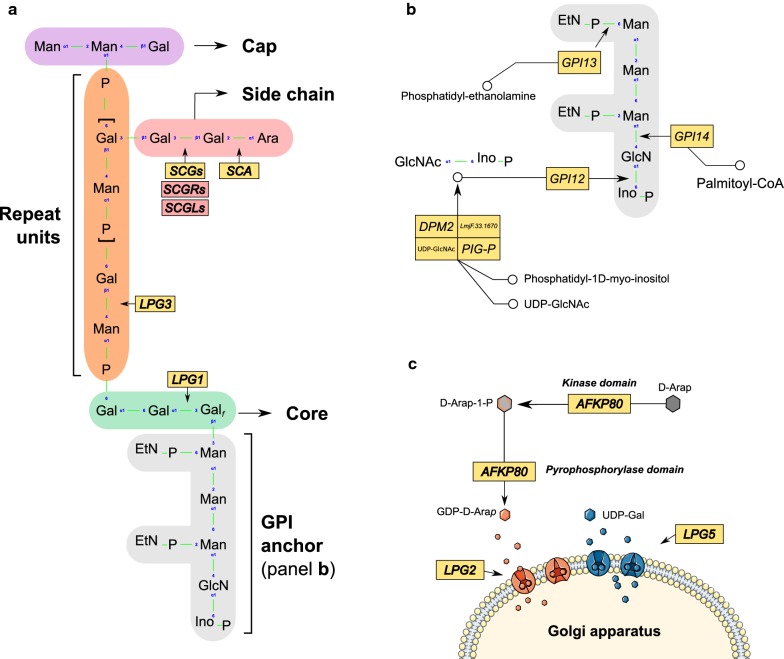
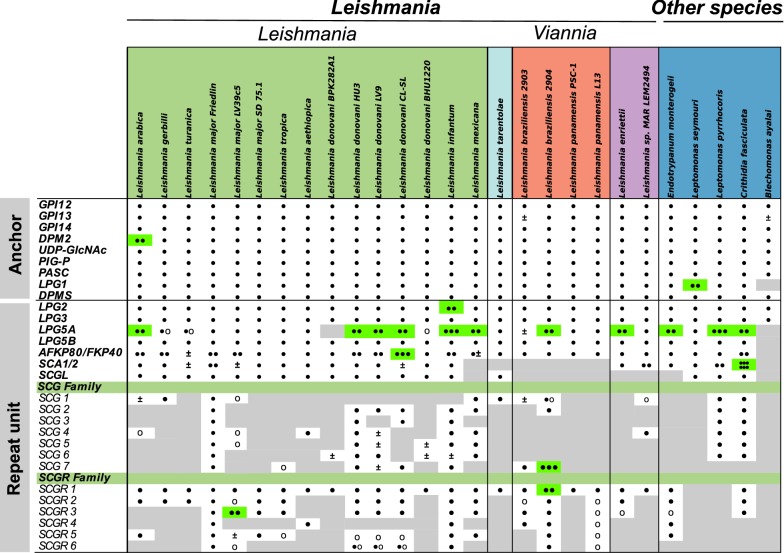
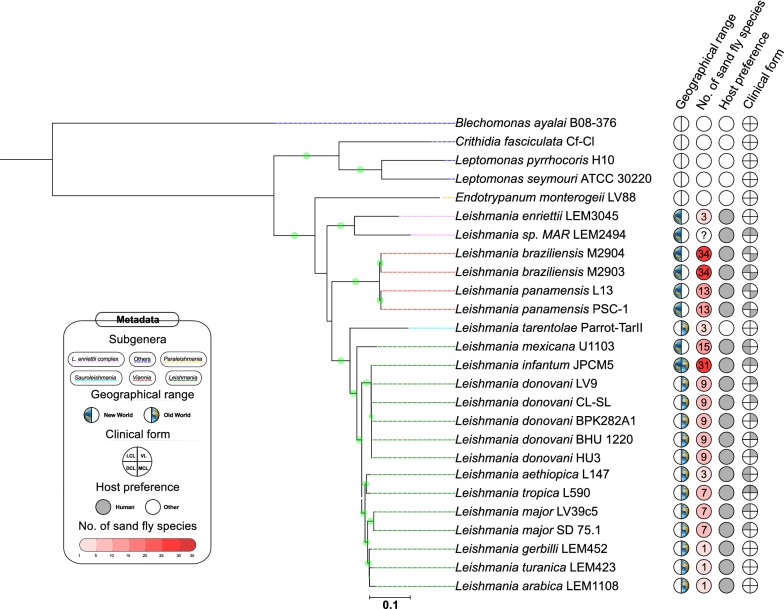
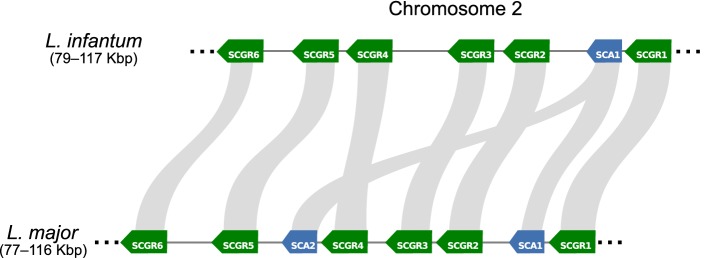
Using a phylogenomics-based framework, we identified a catalog of genes involved in LPG biosynthesis across 22 species of Leishmania from the subgenera Viannia and Leishmania, as well as 5 non-Leishmania trypanosomatids. The evolutionary relationships of these genes across species were also evaluated. Nine genes related to the production of the glycosylphosphatidylinositol (GPI)-anchor were highly conserved among compared species, whereas 22 genes related to the synthesis of the repeat unit presented variable conservation. Extensive gain/loss events were verified, particularly in genes SCG1-4 and SCA1-2. These genes act, respectively, on the synthesis of the side chain attached to phosphoglycans and in the transfer of arabinose residues. Phylogenetic analyses disclosed evolutionary patterns reflective of differences in host specialization, geographic origin and disease manifestation.
The multiple gene gain/loss events identified by genomic data mining help to explain some of the observed intra- and interspecies variation in LPG structure. Collectively, our results provide a comprehensive catalog that details how LPG-related genes evolved in the Leishmania parasite specialization process.
利什曼原虫是一种双细胞寄生虫,能够感染人类并导致一系列被称为利什曼病的疾病。这种病理学发展和持续的主要机制与逃避免疫反应有关。免疫系统与每种致病物种的特殊性之间的串扰与不同的疾病表现有关。脂磷壁酸(LPG)是利什曼原虫表面最重要的分子之一,它分为四个具有高度分子变异性的区域。尽管 LPG 在宿主-病原体和载体-寄生虫相互作用中起着重要作用,但负责其合成的基因的分布和系统发育相关性仍未得到充分探索。利什曼原虫寄生虫的全基因组和转录组的最新可用性提供了一个机会,可以深入了解 LPG 相关基因在这些病原体中的分布和表达方式。
使用基于系统发育基因组学的框架,我们在 22 种属于 Viannia 和 Leishmania 亚属的利什曼物种以及 5 种非利什曼原虫锥虫中鉴定了参与 LPG 生物合成的基因目录。还评估了这些基因在物种间的进化关系。在比较物种中,与产生糖基磷脂酰肌醇(GPI)锚定有关的 9 个基因高度保守,而与重复单元合成有关的 22 个基因则表现出可变的保守性。验证了广泛的获得/丢失事件,特别是在 SCG1-4 和 SCA1-2 基因中。这些基因分别作用于与磷酸聚糖连接的侧链的合成以及阿拉伯糖残基的转移。系统发育分析揭示了反映宿主特化、地理起源和疾病表现差异的进化模式。
基因组数据挖掘中识别的多个基因获得/丢失事件有助于解释 LPG 结构中观察到的一些种内和种间变异。总的来说,我们的研究结果提供了一个详细的综合目录,详细说明了 LPG 相关基因在利什曼寄生虫特化过程中的进化方式。