Department of Medical Laboratory Science and Biotechnology, College of Medicine, National Cheng Kung University, 1 University Road, Tainan, 70101, Taiwan.
Institute of Basic Medical Sciences, College of Medicine, National Cheng Kung University, Tainan, Taiwan.
Acta Neuropathol Commun. 2020 Jan 30;8(1):6. doi: 10.1186/s40478-020-0883-3.
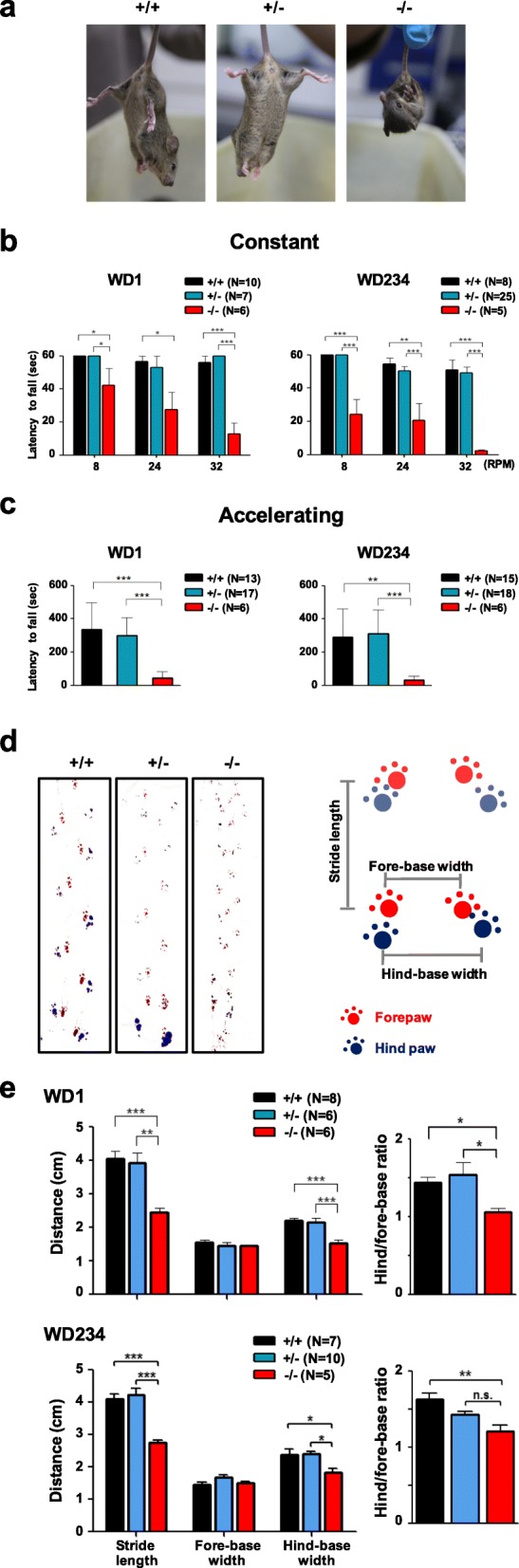
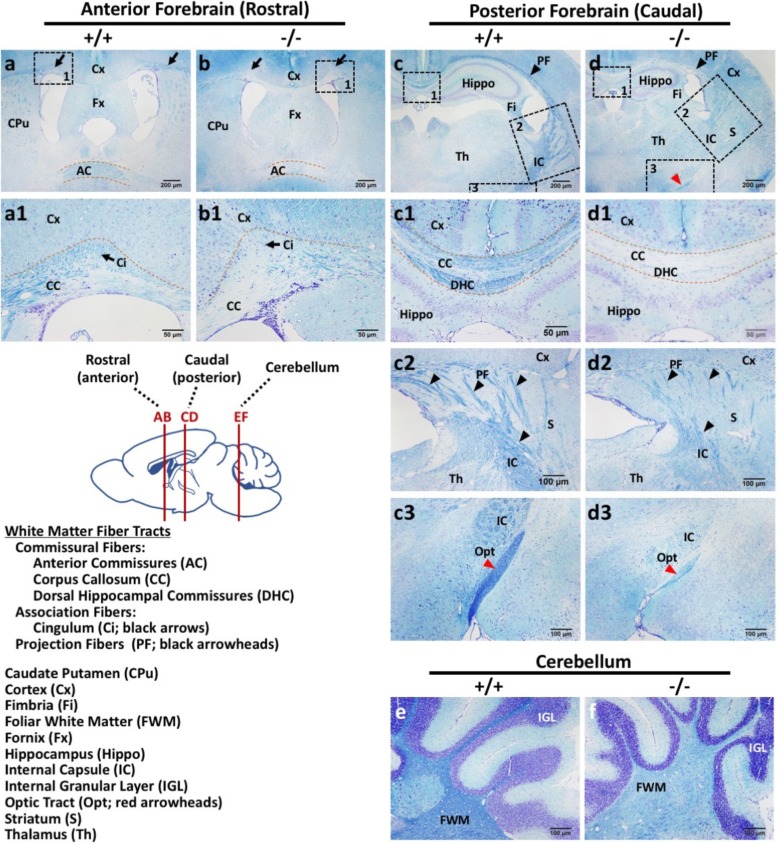
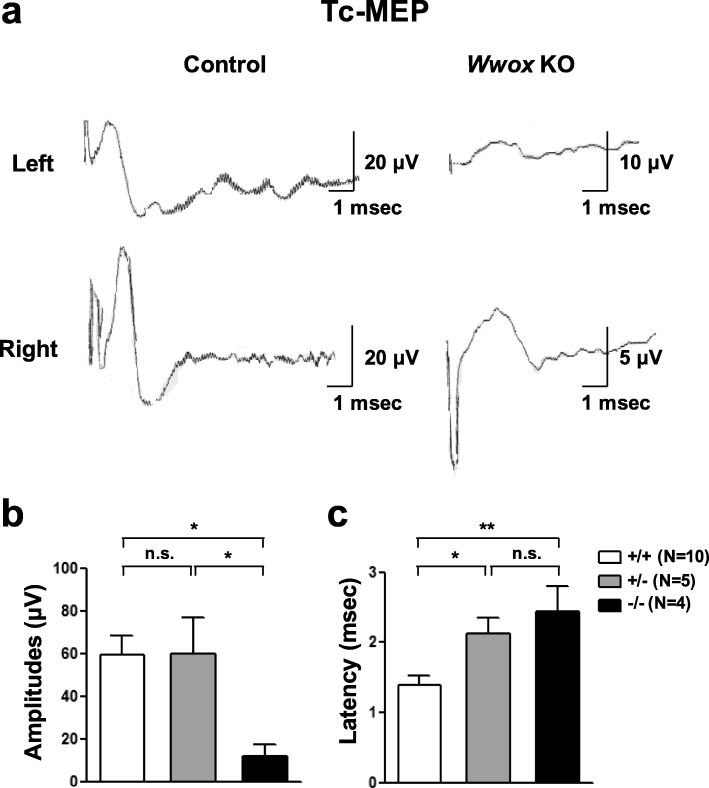
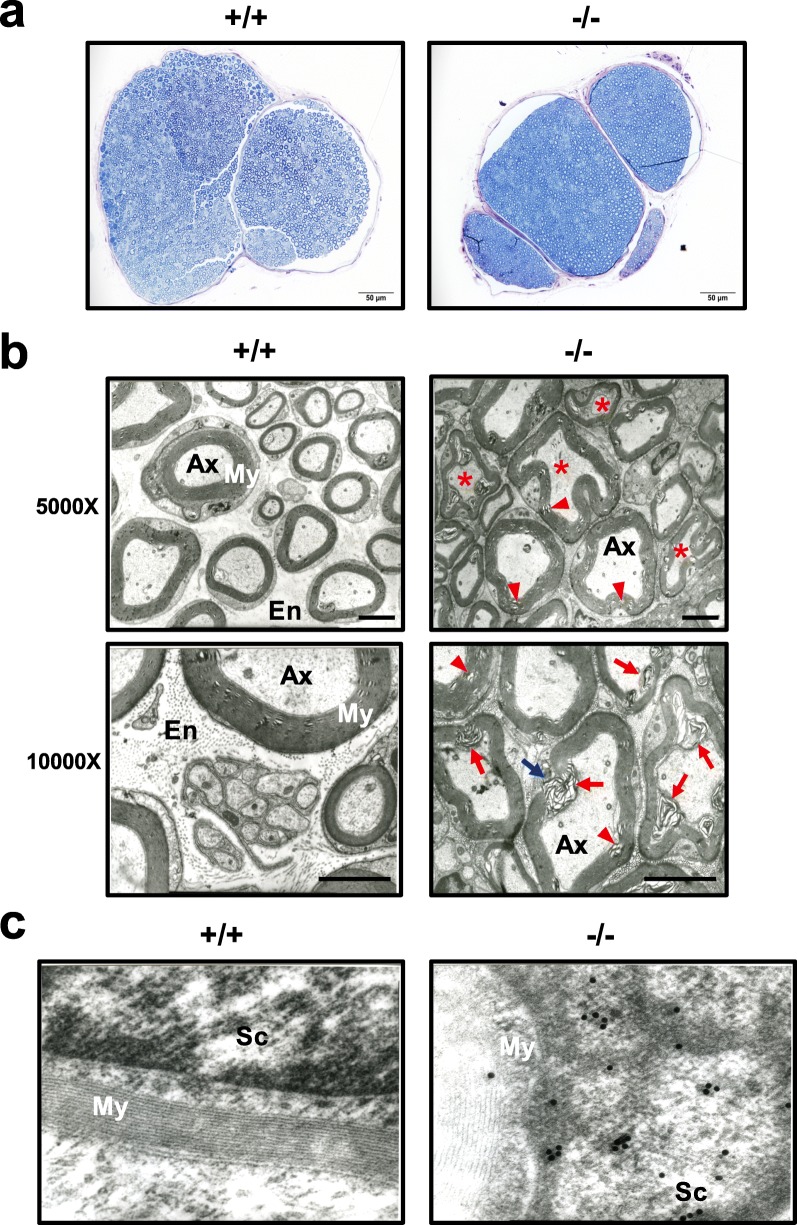
Human WWOX gene resides in the chromosomal common fragile site FRA16D and encodes a tumor suppressor WW domain-containing oxidoreductase. Loss-of-function mutations in both alleles of WWOX gene lead to autosomal recessive abnormalities in pediatric patients from consanguineous families, including microcephaly, cerebellar ataxia with epilepsy, mental retardation, retinal degeneration, developmental delay and early death. Here, we report that targeted disruption of Wwox gene in mice causes neurodevelopmental disorders, encompassing abnormal neuronal differentiation and migration in the brain. Cerebral malformations, such as microcephaly and incomplete separation of the hemispheres by a partial interhemispheric fissure, neuronal disorganization and heterotopia, and defective cerebellar midline fusion are observed in Wwox mice. Degenerative alterations including severe hypomyelination in the central nervous system, optic nerve atrophy, Purkinje cell loss and granular cell apoptosis in the cerebellum, and peripheral nerve demyelination due to Schwann cell apoptosis correspond to reduced amplitudes and a latency prolongation of transcranial motor evoked potentials, motor deficits and gait ataxia in Wwox mice. Wwox gene ablation leads to the occurrence of spontaneous epilepsy and increased susceptibility to pilocarpine- and pentylenetetrazol (PTZ)-induced seizures in preweaning mice. We determined that a significantly increased activation of glycogen synthase kinase 3β (GSK3β) occurs in Wwox mouse cerebral cortex, hippocampus and cerebellum. Inhibition of GSK3β by lithium ion significantly abolishes the onset of PTZ-induced seizure in Wwox mice. Together, our findings reveal that the neurodevelopmental and neurodegenerative deficits in Wwox knockout mice strikingly recapitulate the key features of human neuropathies, and that targeting GSK3β with lithium ion ameliorates epilepsy.
人类 WWOX 基因位于染色体普遍脆性位点 FRA16D 内,编码一种含有 WW 结构域的肿瘤抑制物氧化还原酶。WWOX 基因的两个等位基因丧失功能突变导致来自近亲家庭的儿科患者常染色体隐性异常,包括小头畸形、伴癫痫的小脑共济失调、智力障碍、视网膜变性、发育迟缓及早逝。在此,我们报告小鼠 Wwox 基因的靶向敲除导致神经发育障碍,包括大脑中神经元分化和迁移异常。在 Wwox 小鼠中观察到脑畸形,如小头畸形和半球间不完全分离(部分半球间裂)、神经元排列紊乱和异位、小脑中线融合缺陷。中枢神经系统严重脱髓鞘、视神经萎缩、小脑浦肯野细胞丢失和颗粒细胞凋亡以及施万细胞凋亡导致的周围神经脱髓鞘等退行性改变,对应于 Wwox 小鼠颅运动诱发电位幅度降低和潜伏期延长、运动功能障碍和步态共济失调。Wwox 基因缺失导致自发性癫痫发生,并增加了幼鼠对匹鲁卡品和戊四氮(PTZ)诱导的癫痫发作的易感性。我们确定 Wwox 小鼠大脑皮质、海马和小脑中糖原合酶激酶 3β(GSK3β)的激活显著增加。通过锂离子抑制 GSK3β 可显著消除 Wwox 小鼠 PTZ 诱导的癫痫发作。综上,我们的研究结果揭示了 Wwox 基因敲除小鼠的神经发育和神经退行性缺陷显著重现了人类神经病变的关键特征,并且使用锂离子靶向 GSK3β 可改善癫痫。