University of Greifswald, Department of Physiological and Clinical Psychology/Psychotherapy, Franz-Mehring-Strasse 47, 17487, Greifswald, Germany.
University of Potsdam, Department of Biological Psychology and Affective Science, Karl-Liebknecht Strasse 24/25, 14476, Potsdam, Germany.
Sci Rep. 2020 Jan 30;10(1):1529. doi: 10.1038/s41598-020-58412-w.
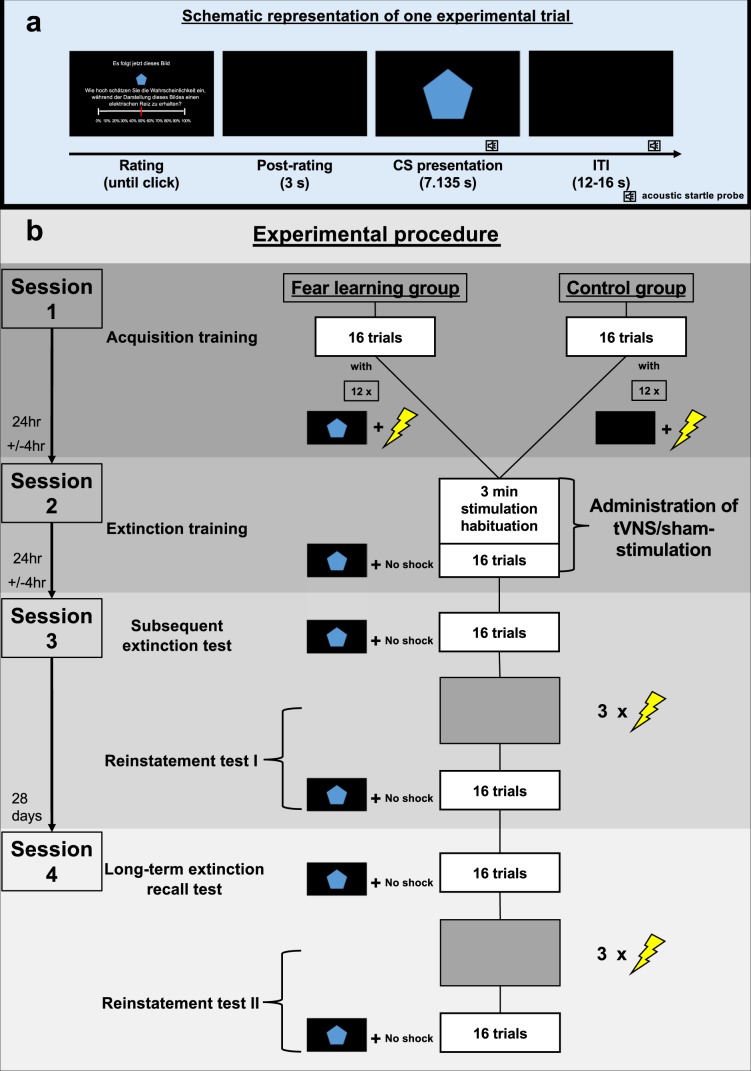
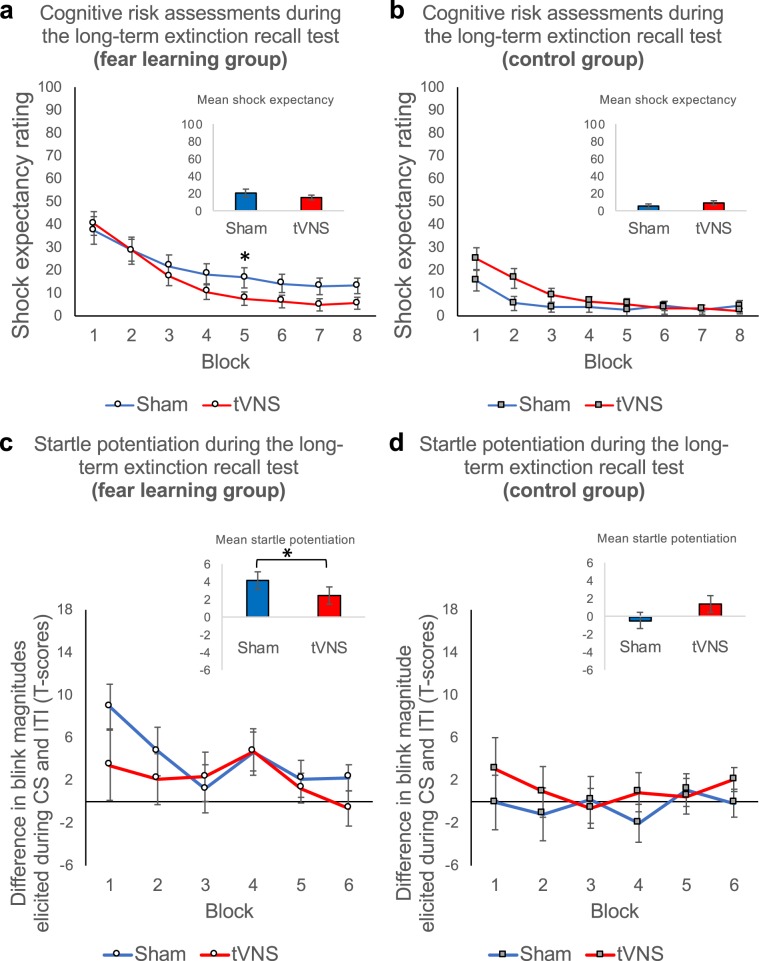
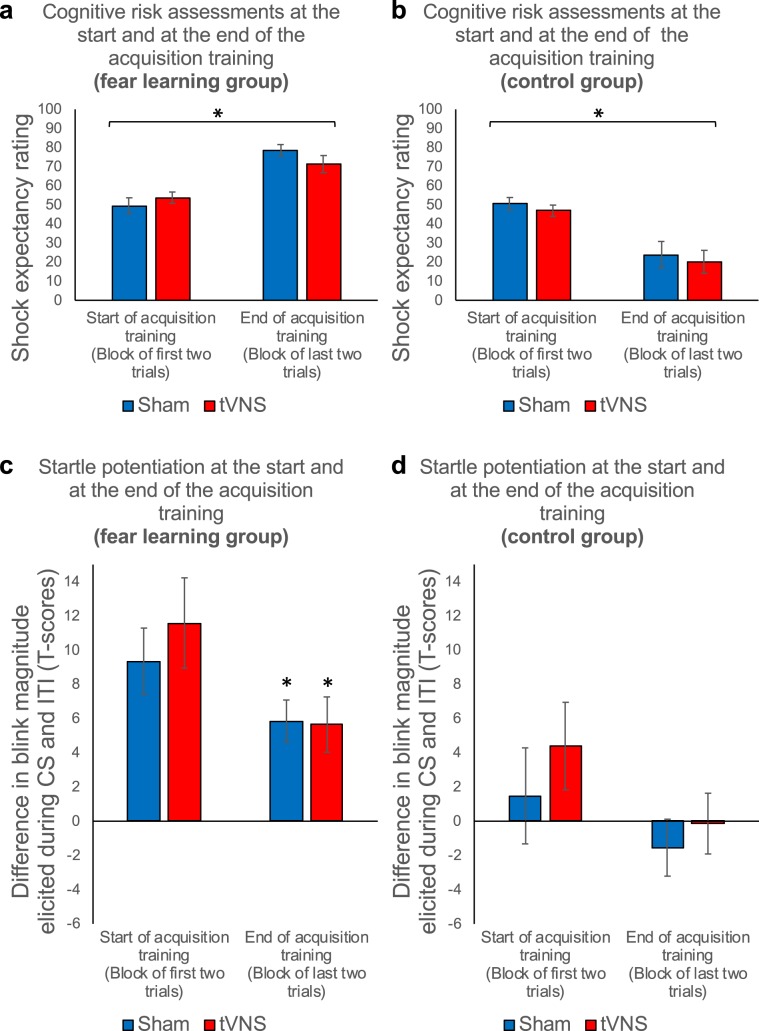
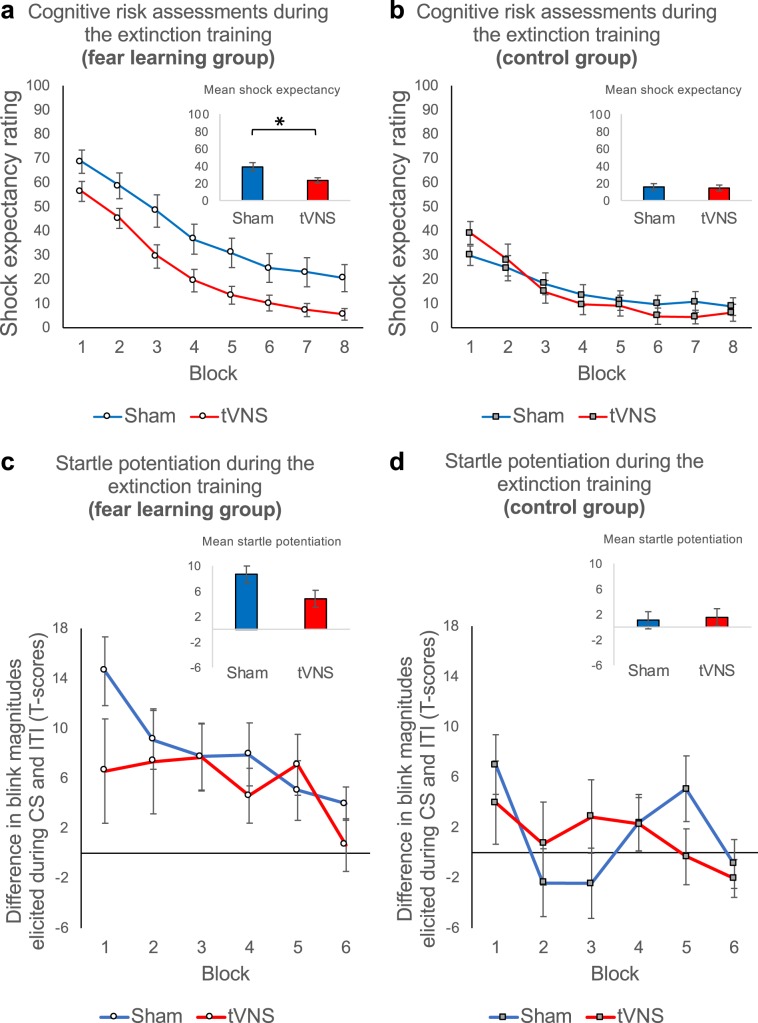
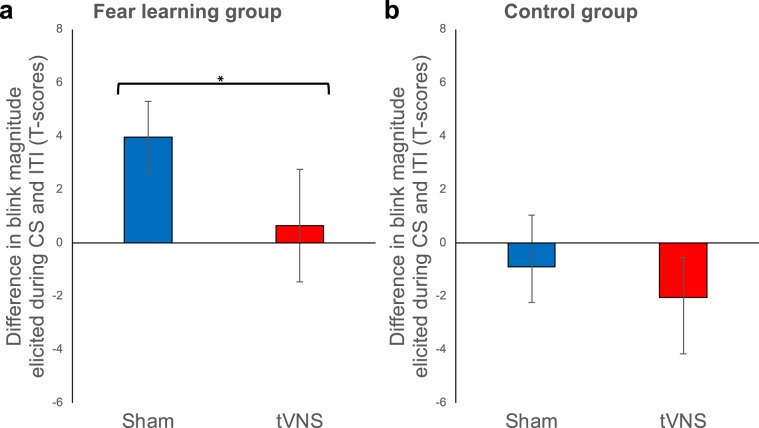
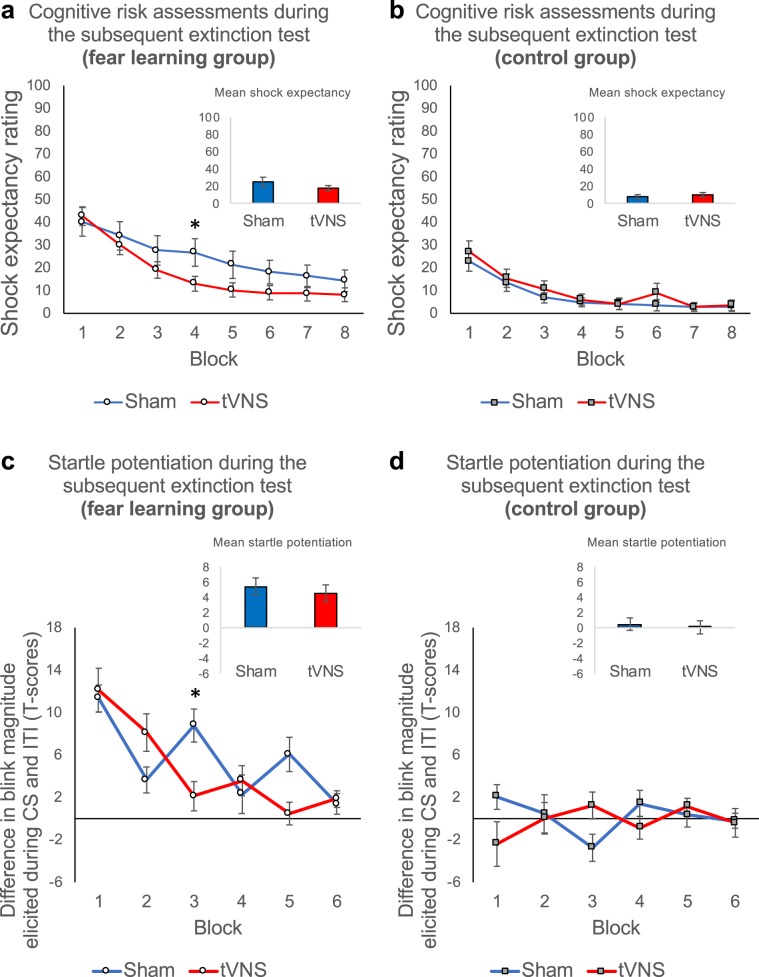
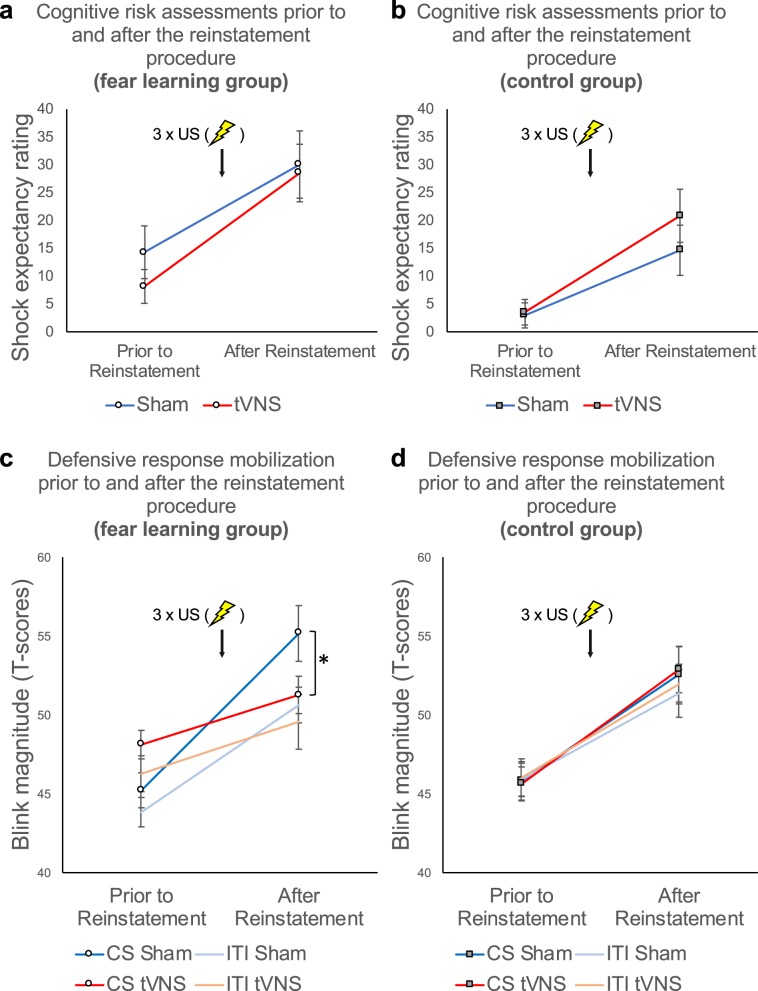
Inhibiting fear-related thoughts and defensive behaviors when they are no longer appropriate to the situation is a prerequisite for flexible and adaptive responding to changing environments. Such inhibition of defensive systems is mediated by ventromedial prefrontal cortex (vmPFC), limbic basolateral amygdala (BLA), and brain stem locus-coeruleus noradrenergic system (LC-NAs). Non-invasive, transcutaneous vagus nerve stimulation (tVNS) has shown to activate this circuit. Using a multiple-day single-cue fear conditioning and extinction paradigm, we investigated long-term effects of tVNS on inhibition of low-level amygdala modulated fear potentiated startle and cognitive risk assessments. We found that administration of tVNS during extinction training facilitated inhibition of fear potentiated startle responses and cognitive risk assessments, resulting in facilitated formation, consolidation and long-term recall of extinction memory, and prevention of the return of fear. These findings might indicate new ways to increase the efficacy of exposure-based treatments of anxiety disorders.
当恐惧相关的想法和防御行为不再适应当前情况时,抑制这些想法和行为是灵活适应不断变化的环境的前提。这种防御系统的抑制是由腹内侧前额叶皮层(vmPFC)、边缘基底外侧杏仁核(BLA)和脑干蓝斑去甲肾上腺素能系统(LC-NAs)介导的。非侵入性、经皮迷走神经刺激(tVNS)已被证明可以激活该回路。使用多日单线索恐惧条件反射和消退范式,我们研究了 tVNS 对抑制低水平杏仁核调节的恐惧增强性惊跳反应和认知风险评估的长期影响。我们发现,在消退训练期间给予 tVNS 有助于抑制恐惧增强性惊跳反应和认知风险评估,从而促进消退记忆的形成、巩固和长期记忆,并防止恐惧的回归。这些发现可能表明增加基于暴露的焦虑障碍治疗效果的新方法。