Hamy Anne-Sophie, Derosa Lisa, Valdelièvre Constance, Yonekura Satoru, Opolon Paule, Priour Maël, Guerin Julien, Pierga Jean-Yves, Asselain Bernard, De Croze Diane, Pinheiro Alice, Lae Marick, Talagrand Laure-Sophie, Laas Enora, Darrigues Lauren, Grandal Beatriz, Marangoni Elisabetta, Montaudon Elodie, Kroemer Guido, Zitvogel Laurence, Reyal Fabien
Residual Tumor & Response to Treatment Laboratory, RT2Lab, Translational Research Department, U932, Immunity and Cancer, Institut Curie, PSL Research University, Paris, France.
Department of Medical Oncology, Institut Curie, Saint-Cloud, France.
Oncoimmunology. 2019 Nov 14;9(1):1677427. doi: 10.1080/2162402X.2019.1677427. eCollection 2020.
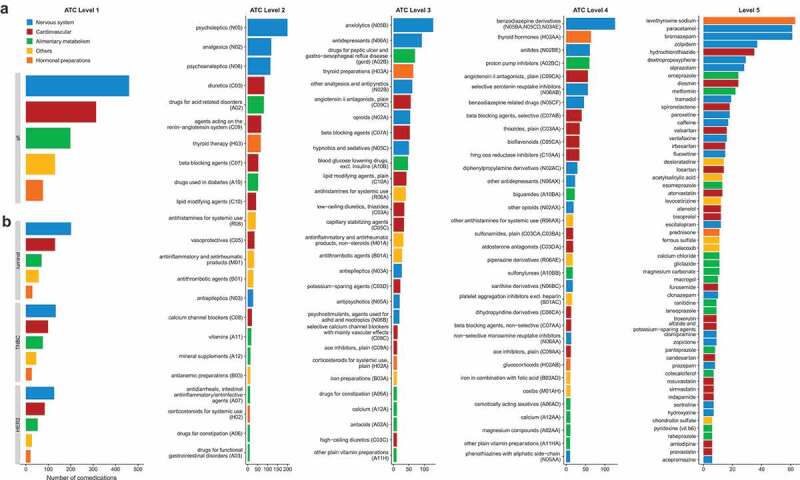
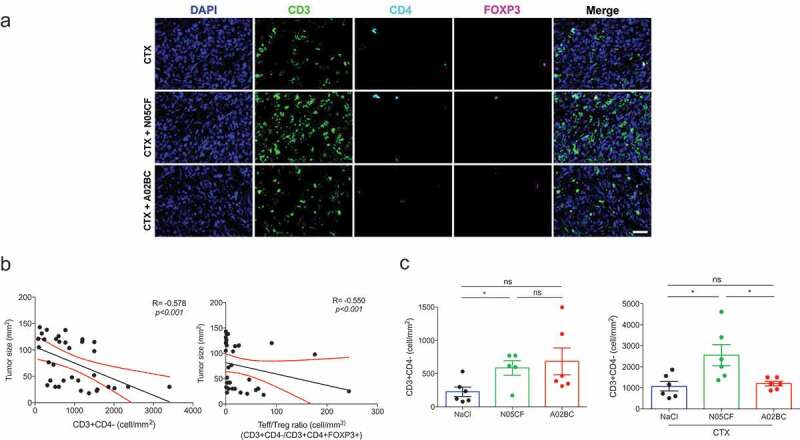
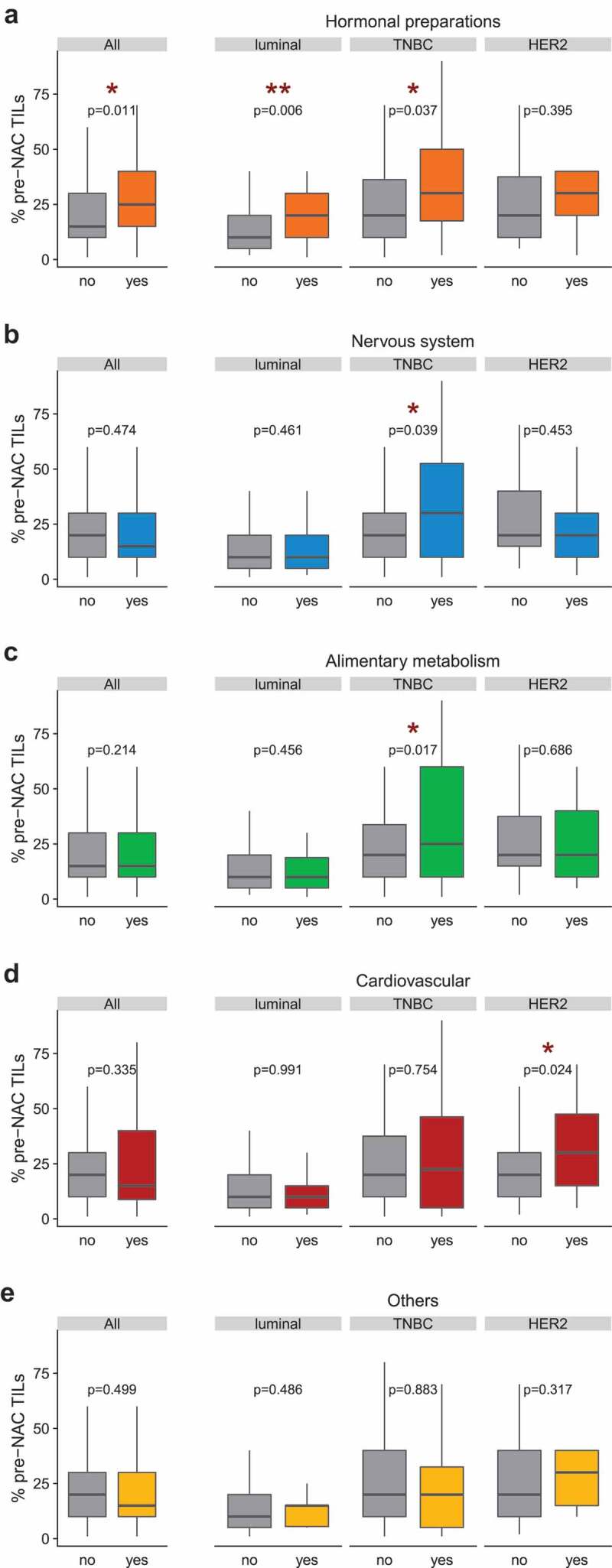
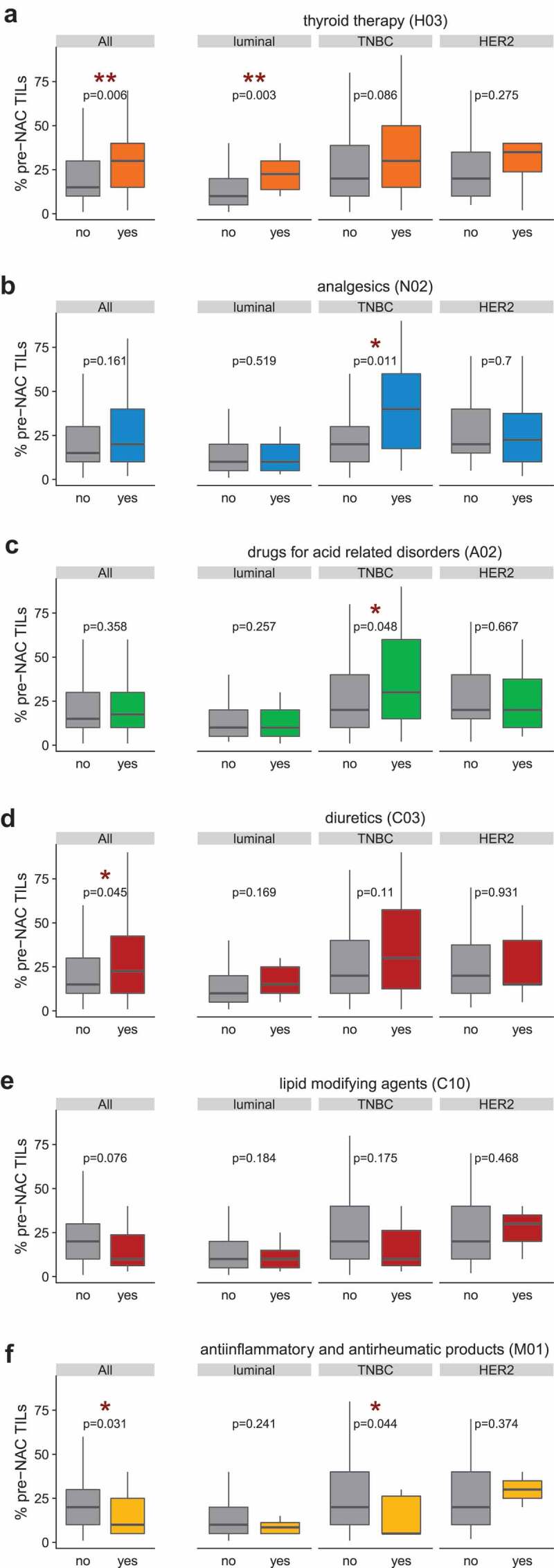
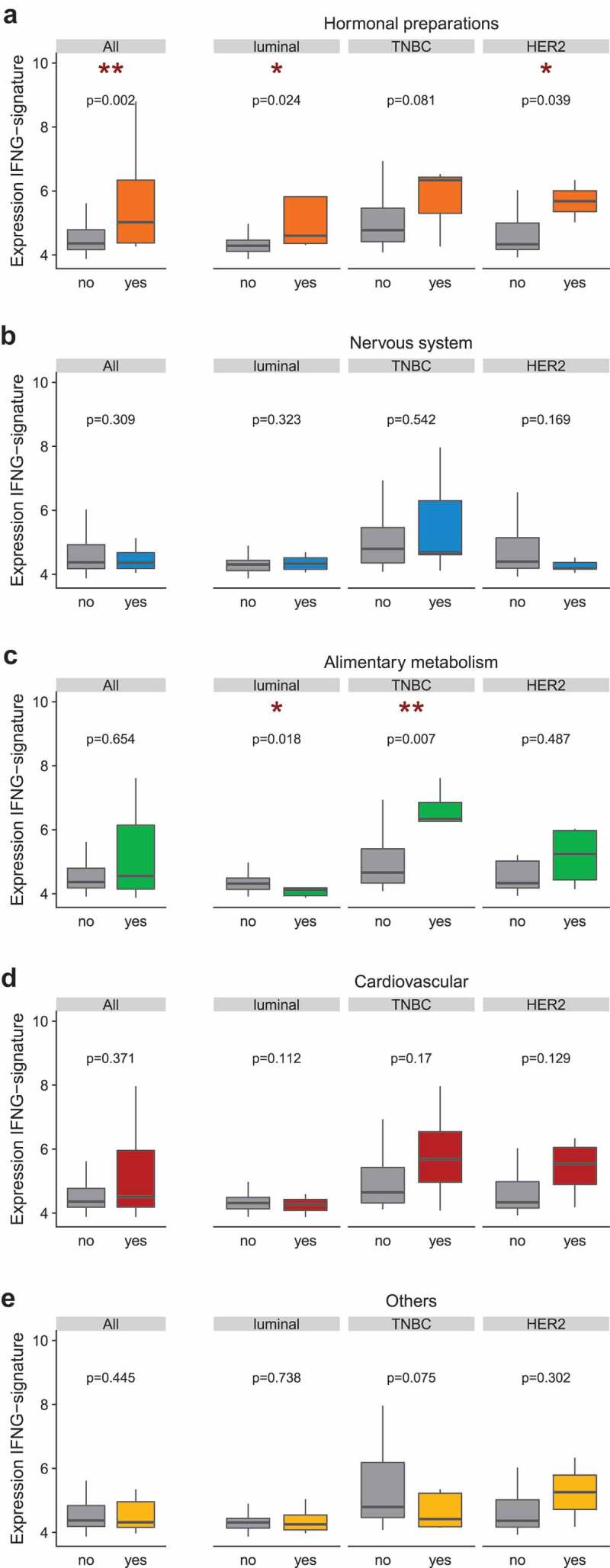
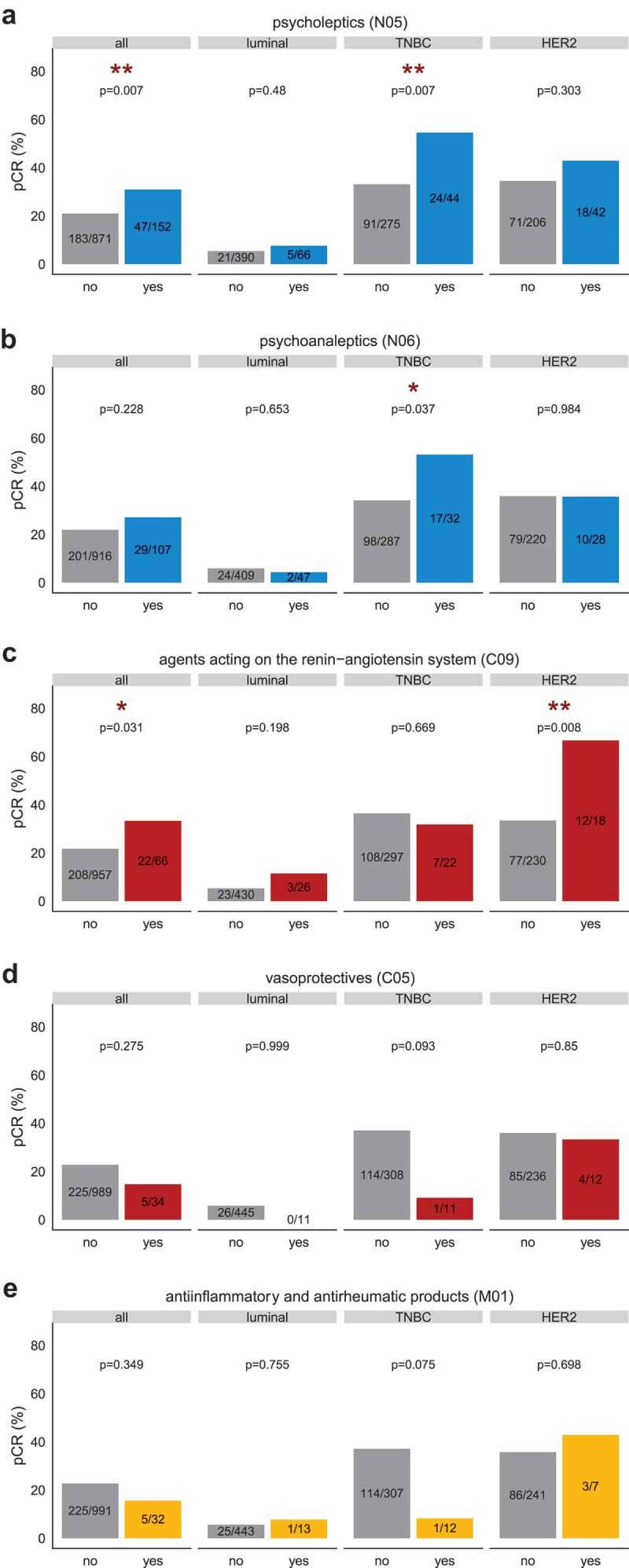
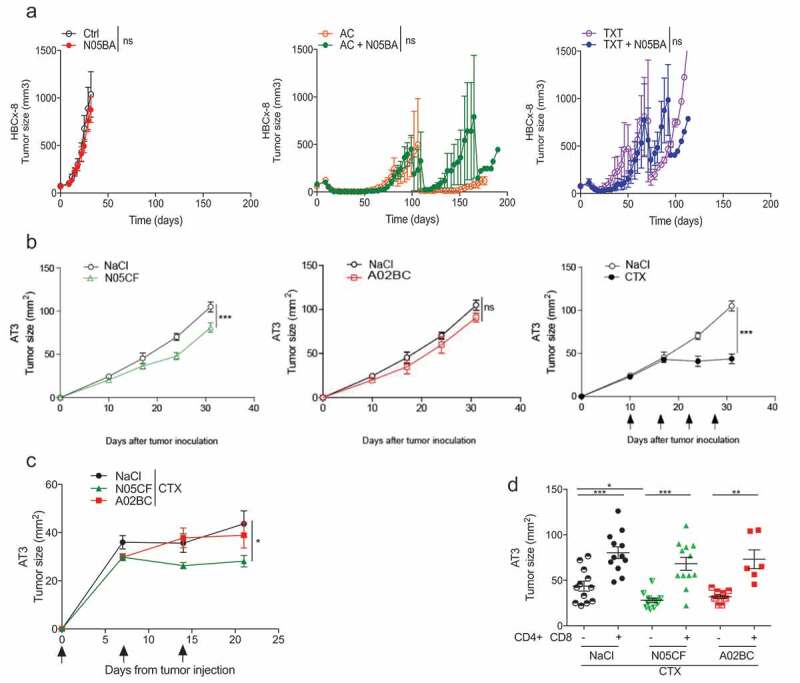
Immunosurveillance plays an important role in breast cancer (BC) prognosis and progression, and can be geared by immunogenic chemotherapy. In a cohort of 1023 BC patients treated with neoadjuvant chemotherapy (NAC), 40% of the individuals took comedications mostly linked to aging and comorbidities. We systematically analyzed the off-target effects of 1178 concurrent comedications (classified according to the Anatomical Therapeutic Chemical (ATC) Classification System) on the density of tumor-infiltrating lymphocytes (TILs) and pathological complete responses (pCR). At level 1 of the ATC system, the main anatomical classes of drugs were those targeting the nervous system (class N, 39.1%), cardiovascular disorders (class C, 26.6%), alimentary and metabolism (class A, 16.9%), or hormonal preparations (class H, 6.5%). At level 2, the most frequent therapeutic classes were psycholeptics (N05), analgesics (N02), and psychoanaleptics (N06). Pre-NAC TIL density in triple-negative BC (TNBC) was influenced by medications from class H, N, and A, while TIL density in HER2 BC was associated with the use of class C. Psycholeptics (N05) and agents acting on the renin-angiotensin system (C09) were independently associated with pCR in the whole population of BC or TNBC, and in -positive BC, respectively. Importantly, level 3 hypnotics (N05C) alone were able to reduce tumor growth in BC bearing mice and increased the anti-cancer activity of cyclophosphamide in a T cell-dependent manner. These findings prompt for further exploration of drugs interactions in cancer, and for prospective drug-repositioning strategies to improve the efficacy of NAC in BC.
免疫监视在乳腺癌(BC)的预后和进展中起着重要作用,并且可以通过免疫原性化疗来调节。在一组接受新辅助化疗(NAC)的1023例BC患者中,40%的个体同时服用了主要与衰老和合并症相关的辅助药物。我们系统地分析了1178种同时服用的辅助药物(根据解剖治疗化学(ATC)分类系统分类)对肿瘤浸润淋巴细胞(TILs)密度和病理完全缓解(pCR)的脱靶效应。在ATC系统的第1级,药物的主要解剖学类别是针对神经系统的药物(N类,39.1%)、心血管疾病的药物(C类,26.6%)、消化和代谢的药物(A类,16.9%)或激素制剂(H类,6.5%)。在第2级,最常见的治疗类别是抗精神病药(N05)、镇痛药(N02)和精神振奋药(N06)。三阴性乳腺癌(TNBC)新辅助化疗前的TIL密度受H类、N类和A类药物的影响,而HER2阳性乳腺癌的TIL密度与C类药物的使用有关。抗精神病药(N05)和作用于肾素-血管紧张素系统的药物(C09)分别在BC或TNBC的全人群以及HER2阳性乳腺癌中与pCR独立相关。重要的是,仅3级催眠药(N05C)就能降低荷瘤小鼠的肿瘤生长,并以T细胞依赖的方式增强环磷酰胺的抗癌活性。这些发现促使人们进一步探索癌症中的药物相互作用,并探索前瞻性的药物重新定位策略,以提高NAC在BC中的疗效。