Department of Anesthesiology, Stony Brook University Health Science Center, Stony Brook, NY, 11794-8480, USA.
School of Dental Medicine, Stony Brook University, Stony Brook, NY, 11794, USA.
Nat Commun. 2020 Jan 31;11(1):642. doi: 10.1038/s41467-019-14065-6.
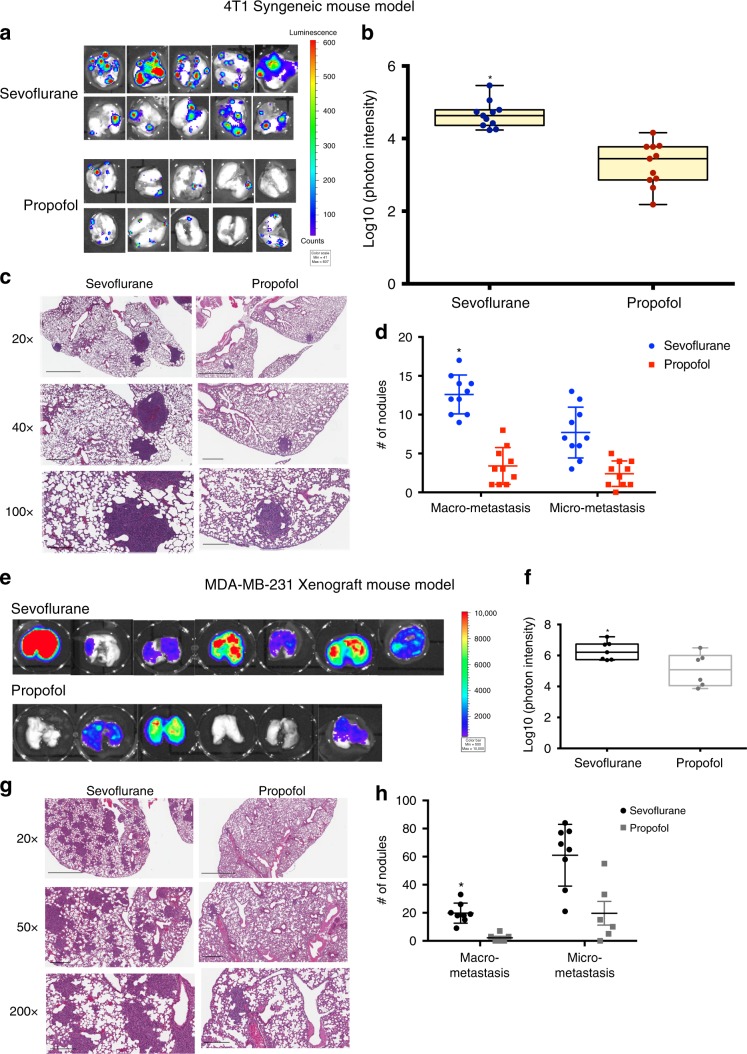
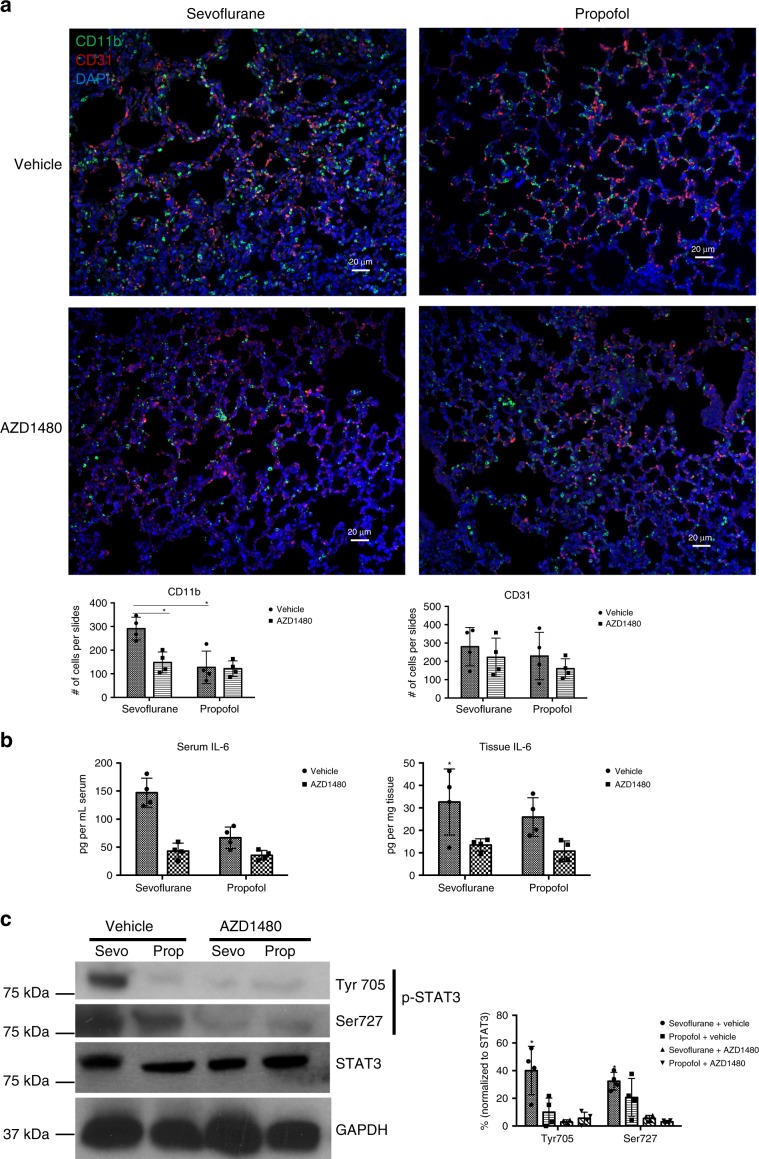
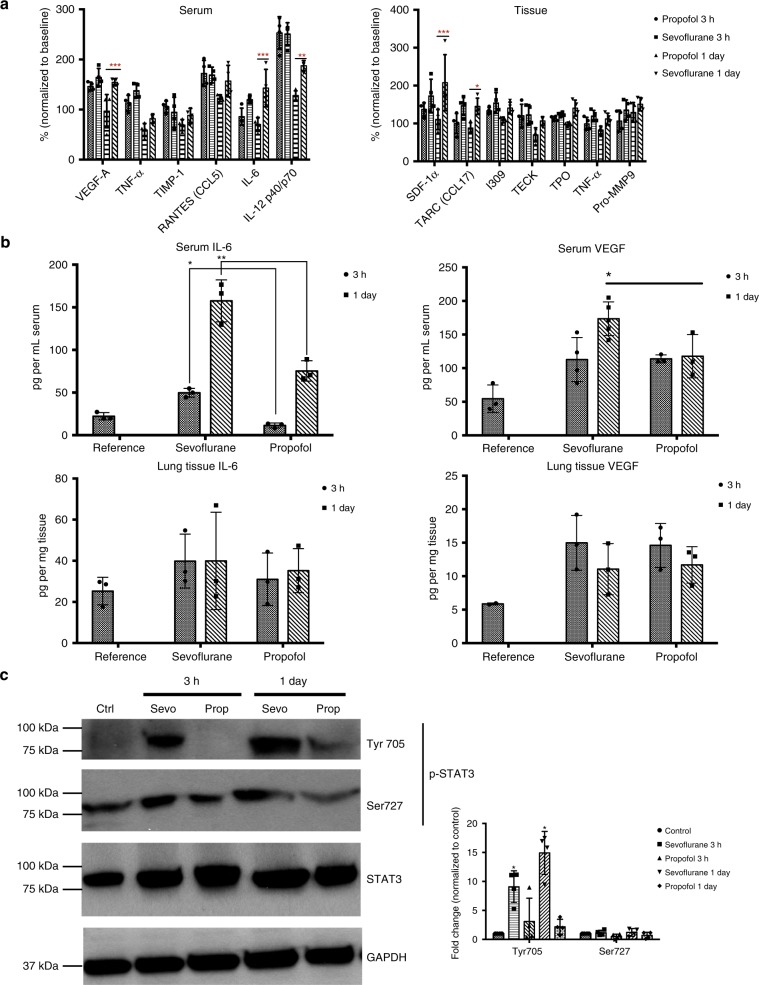
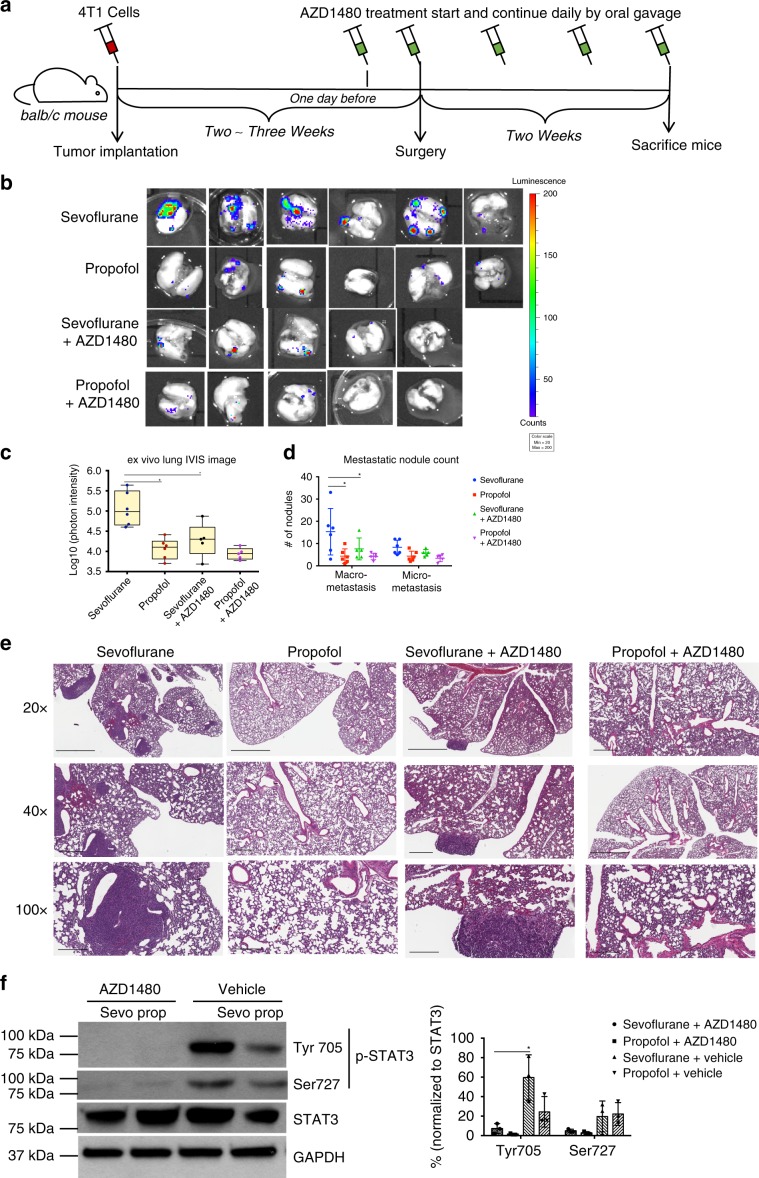
Metastasis can occur following surgical resection of solid tumors and metastasis is the main cause of cancer death. The role of anesthetics used during surgery in cancer metastasis and the underlying mechanism remains largely unknown. Here we show that surgical dissection of primary tumors in mice under anesthesia with sevoflurane leads to significantly more lung metastasis than with propofol in both syngeneic murine 4T1 and xenograft human MDA-MB-231 breast cancer models. Sevoflurane increases the level of serum IL-6, which activates STAT3 and the infiltration of CD11b+ myeloid cells into the lung. Interruption of IL-6/JAK/STAT3 pathway by a JAK inhibitor AZD1480 reverses the pro-metastatic effect of sevoflurane and the associated increase of both activated STAT3 and infiltrated CD11b+ cells in 4T1 model. Our study provides the preclinical evidence informing the distinct effects of anesthetics on metastasis of breast cancers through change of cytokines and the tumor microenvironment.
转移可以在实体瘤的手术切除后发生,转移是癌症死亡的主要原因。手术过程中使用的麻醉剂在癌症转移中的作用及其潜在机制在很大程度上尚不清楚。在这里,我们发现在全身麻醉下用七氟醚进行小鼠原发性肿瘤的手术切除比在同种异体小鼠 4T1 和异种移植人 MDA-MB-231 乳腺癌模型中用异丙酚导致更多的肺转移。七氟醚增加了血清 IL-6 的水平,IL-6 激活了 STAT3 并使 CD11b+髓样细胞浸润到肺部。用 JAK 抑制剂 AZD1480 阻断 IL-6/JAK/STAT3 通路可逆转七氟醚的促转移作用以及在 4T1 模型中激活的 STAT3 和浸润的 CD11b+细胞的增加。我们的研究提供了临床前证据,表明通过改变细胞因子和肿瘤微环境,麻醉剂对乳腺癌转移有不同的影响。