Institute of Molecular Biology (IMB), Mainz, Germany.
German Cancer Research Center (DKFZ), Division of Molecular Embryology, DKFZ-ZMBH Alliance, Heidelberg, Germany.
Nat Rev Mol Cell Biol. 2020 Mar;21(3):167-178. doi: 10.1038/s41580-019-0206-3. Epub 2020 Jan 31.
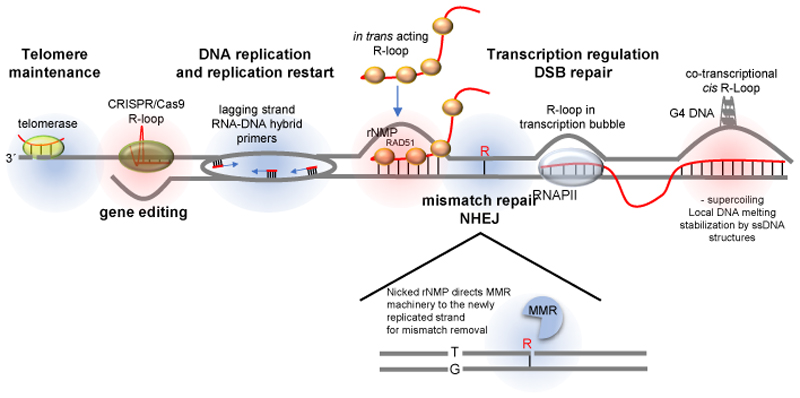
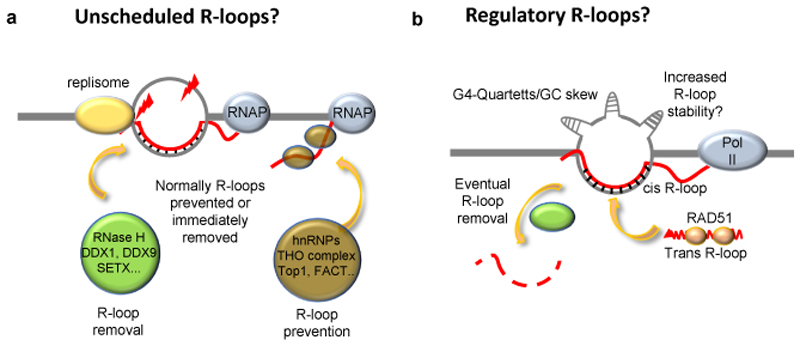
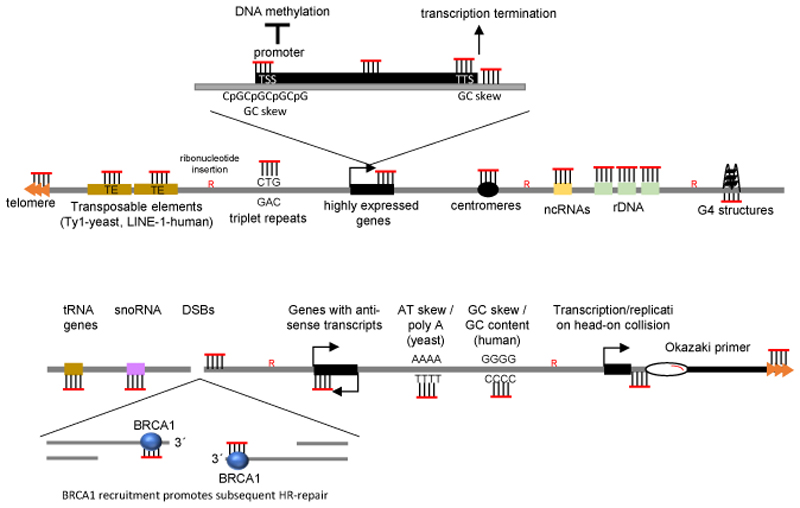
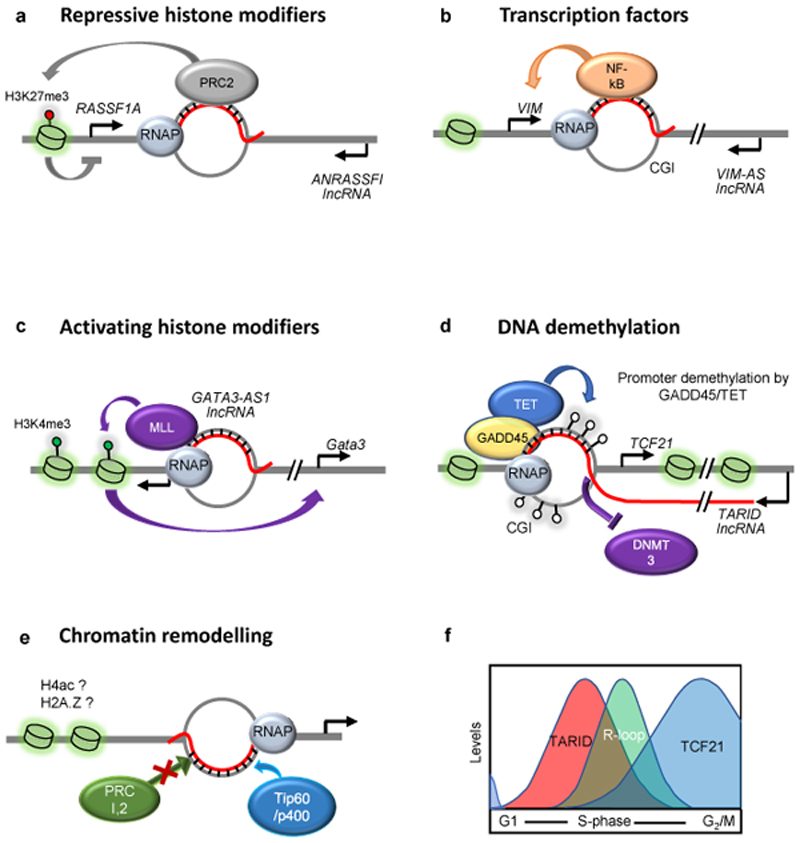
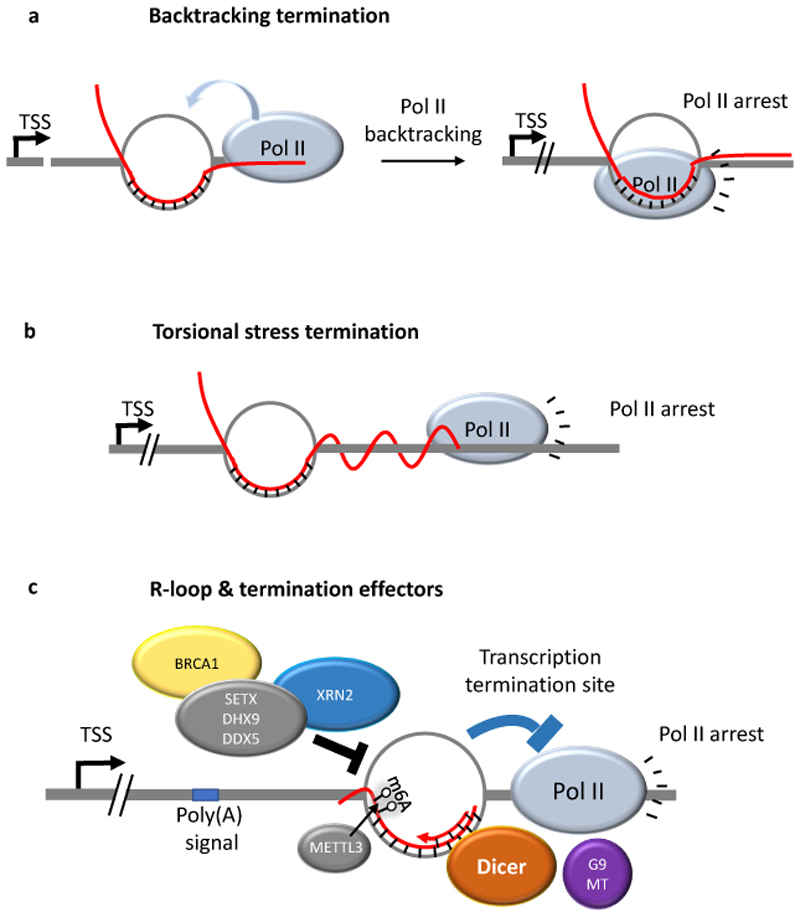
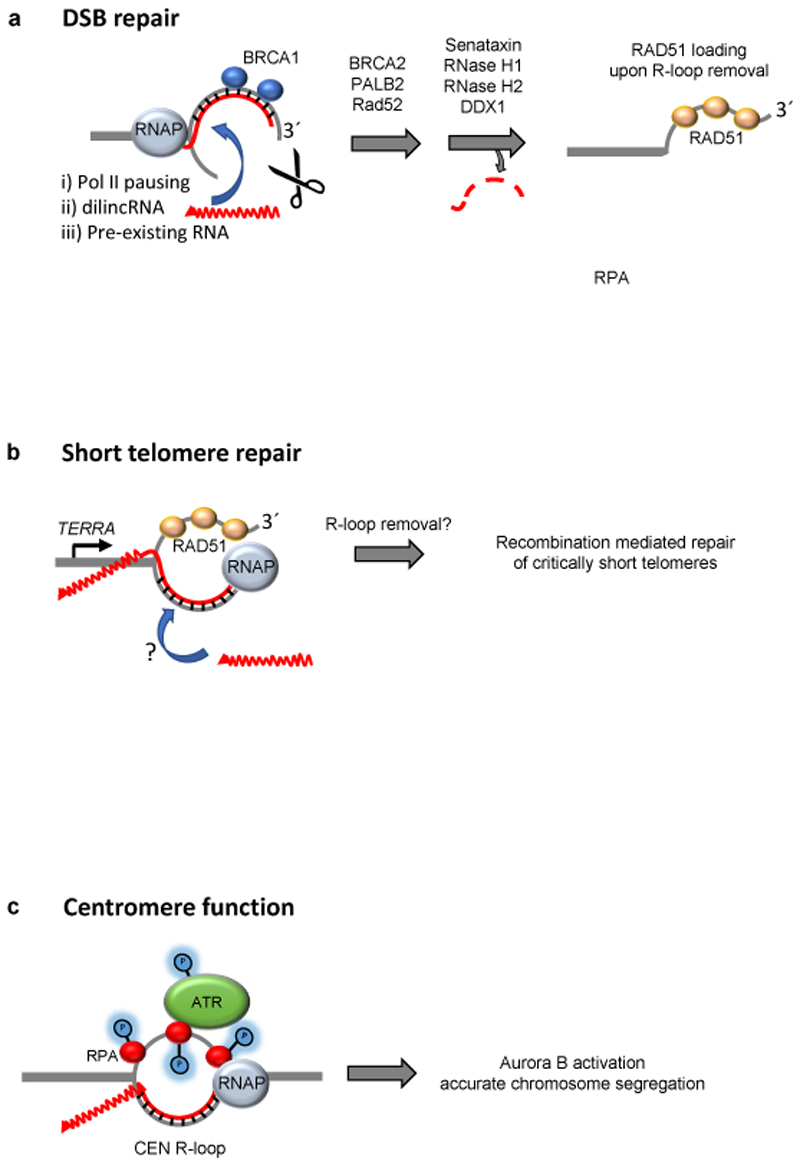
R-loops are three-stranded structures that harbour an RNA-DNA hybrid and frequently form during transcription. R-loop misregulation is associated with DNA damage, transcription elongation defects, hyper-recombination and genome instability. In contrast to such 'unscheduled' R-loops, evidence is mounting that cells harness the presence of RNA-DNA hybrids in scheduled, 'regulatory' R-loops to promote DNA transactions, including transcription termination and other steps of gene regulation, telomere stability and DNA repair. R-loops formed by cellular RNAs can regulate histone post-translational modification and may be recognized by dedicated reader proteins. The two-faced nature of R-loops implies that their formation, location and timely removal must be tightly regulated. In this Perspective, we discuss the cellular processes that regulatory R-loops modulate, the regulation of R-loops and the potential differences that may exist between regulatory R-loops and unscheduled R-loops.
R 环是一种三链结构,包含 RNA-DNA 杂合体,通常在转录过程中形成。R 环的失调与 DNA 损伤、转录延伸缺陷、超重组和基因组不稳定性有关。与这种“非计划”的 R 环相反,越来越多的证据表明,细胞利用 RNA-DNA 杂合体在计划的“调节”R 环中促进 DNA 转化,包括转录终止和基因调控的其他步骤、端粒稳定性和 DNA 修复。细胞 RNA 形成的 R 环可以调节组蛋白的翻译后修饰,可能被专门的阅读蛋白识别。R 环的两面性意味着它们的形成、位置和及时去除必须受到严格的调控。在这篇观点文章中,我们讨论了调节 R 环调节的细胞过程、R 环的调节以及调节 R 环和非计划 R 环之间可能存在的潜在差异。