Rodger Andrew, Labrosse Nicolas
SUPA, School of Physics & Astronomy, University of Glasgow, Glasgow, G12 8QQ Scotland UK.
Sol Phys. 2017;292(9):130. doi: 10.1007/s11207-017-1161-9. Epub 2017 Sep 4.
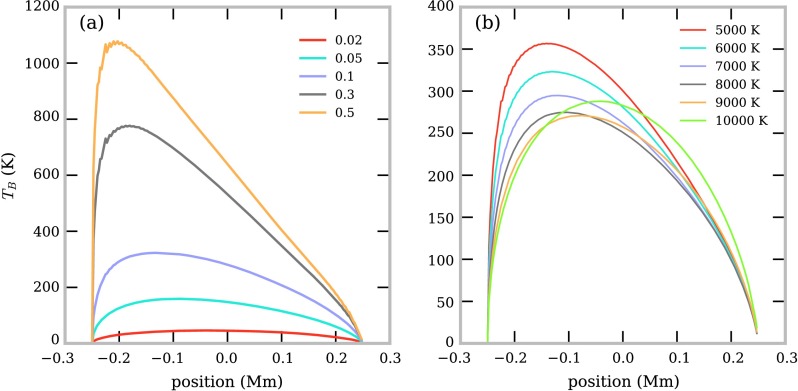
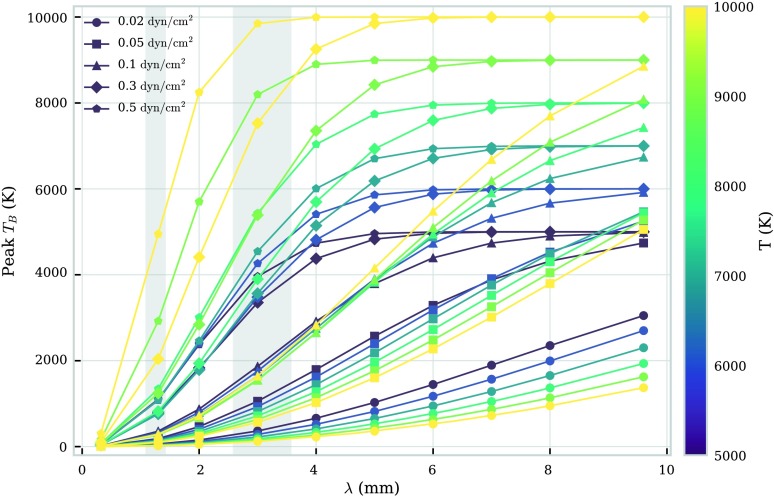
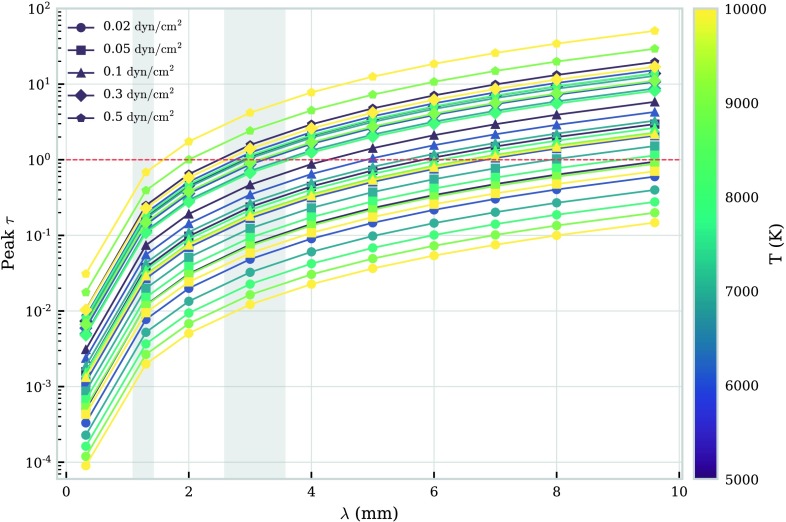
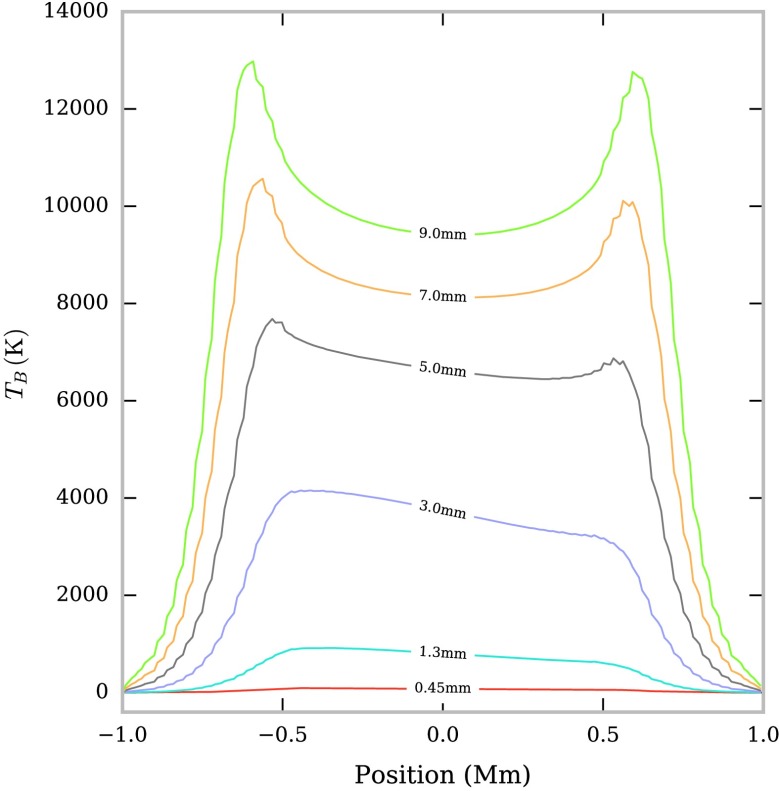
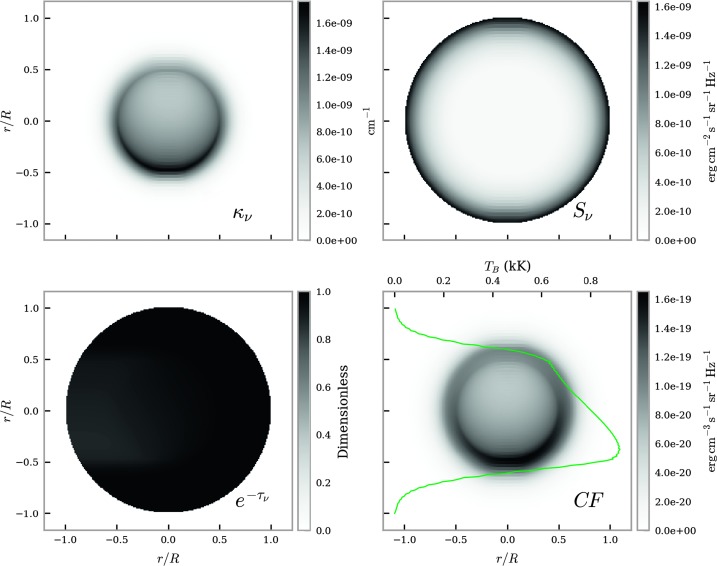
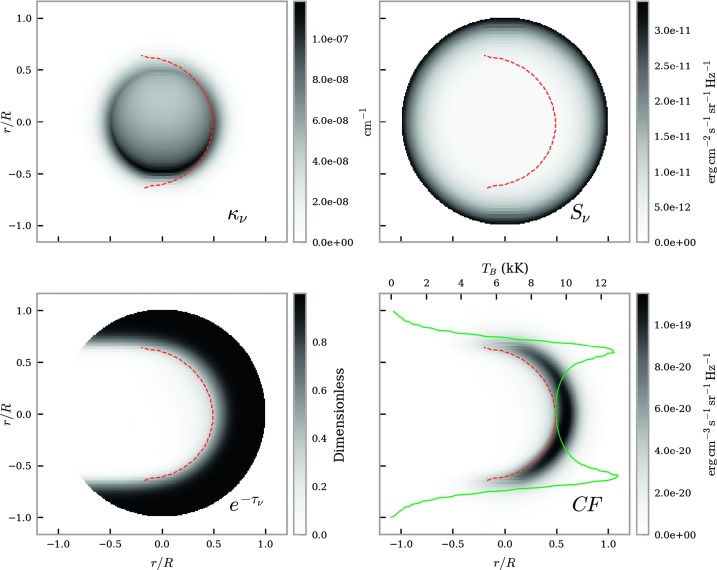
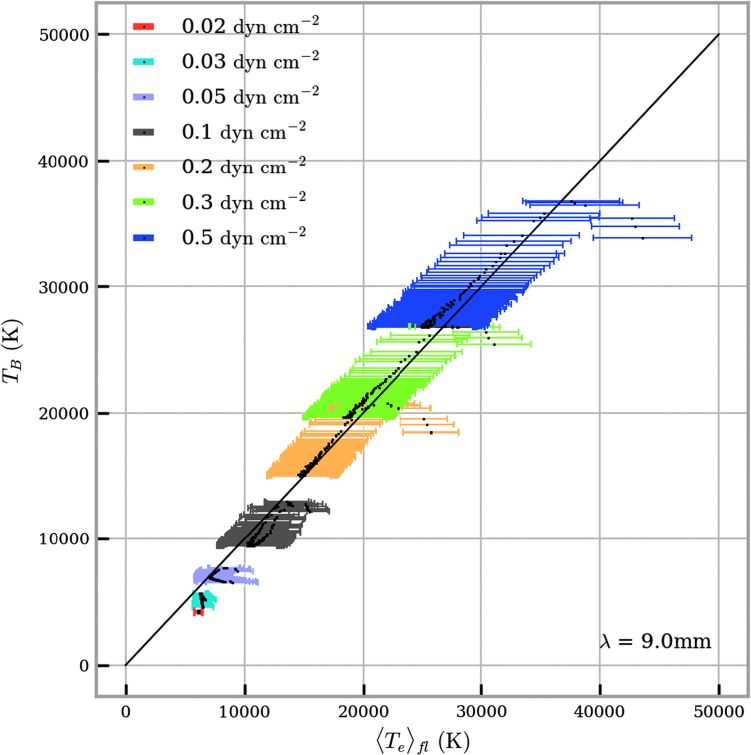
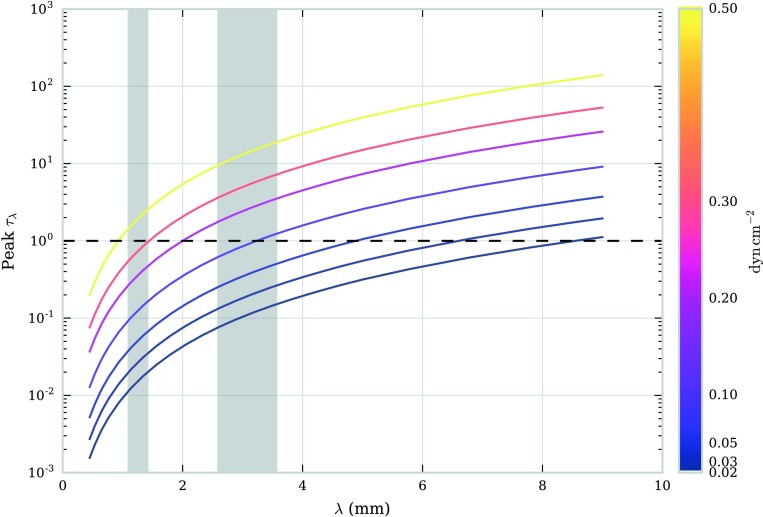
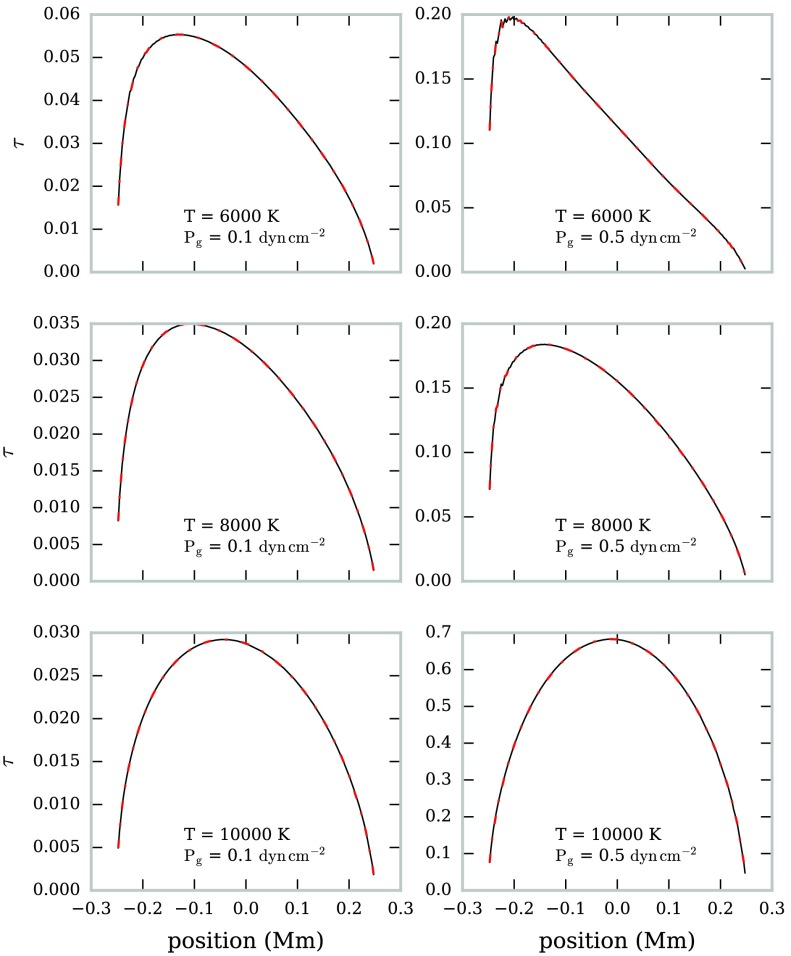
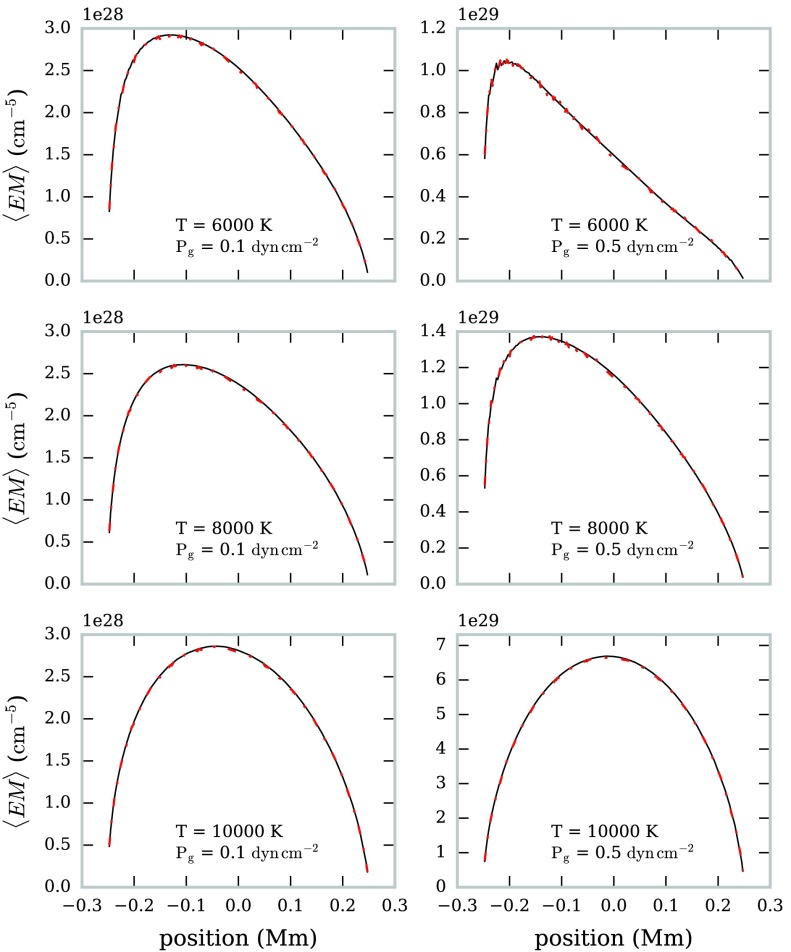
Our aim is to test potential solar prominence plasma diagnostics as obtained with the new solar capability of the (ALMA). We investigate the thermal and plasma diagnostic potential of ALMA for solar prominences through the computation of brightness temperatures at ALMA wavelengths. The brightness temperature, for a chosen line of sight, is calculated using the densities of electrons, hydrogen, and helium obtained from a radiative transfer code under non-local thermodynamic equilibrium (non-LTE) conditions, as well as the input internal parameters of the prominence model in consideration. Two distinct sets of prominence models were used: isothermal-isobaric fine-structure threads, and large-scale structures with radially increasing temperature distributions representing the prominence-to-corona transition region. We compute brightness temperatures over the range of wavelengths in which ALMA is capable of observing (0.32 - 9.6 mm), however, we particularly focus on the bands available to solar observers in ALMA cycles 4 and 5, namely 2.6 - 3.6 mm (Band 3) and 1.1 - 1.4 mm (Band 6). We show how the computed brightness temperatures and optical thicknesses in our models vary with the plasma parameters (temperature and pressure) and the wavelength of observation. We then study how ALMA observables such as the ratio of brightness temperatures at two frequencies can be used to estimate the optical thickness and the emission measure for isothermal and non-isothermal prominences. From this study we conclude that for both sets of models, ALMA presents a strong thermal diagnostic capability, provided that the interpretation of observations is supported by the use of non-LTE simulation results.
我们的目标是测试利用(阿塔卡马大型毫米/亚毫米波阵列,ALMA)的新型太阳观测能力所获得的潜在日珥等离子体诊断方法。我们通过计算ALMA波长下的亮度温度,研究了ALMA对日珥的热诊断和等离子体诊断潜力。对于选定的视线方向,亮度温度是根据在非局部热力学平衡(非LTE)条件下从辐射传输代码获得的电子、氢和氦的密度,以及所考虑的日珥模型的输入内部参数来计算的。使用了两组不同的日珥模型:等温 - 等压精细结构细丝,以及代表日珥到日冕过渡区域的温度径向增加分布的大规模结构。我们在ALMA能够观测的波长范围内(0.32 - 9.6毫米)计算亮度温度,不过,我们特别关注ALMA第4和第5周期中可供太阳观测者使用的波段,即2.6 - 3.6毫米(波段3)和1.1 - 1.4毫米(波段6)。我们展示了模型中计算出的亮度温度和光学厚度如何随等离子体参数(温度和压力)以及观测波长而变化。然后,我们研究了如何利用ALMA可观测值,例如两个频率下亮度温度的比值,来估计等温及非等温日珥的光学厚度和发射量。通过这项研究,我们得出结论,对于这两组模型,只要观测结果的解释得到非LTE模拟结果的支持,ALMA就具有强大的热诊断能力。