Department of Veterinary and Animal Sciences, University of Massachusetts, Amherst, MA, United States.
Department of Chemical Engineering, University of Massachusetts, Amherst, MA, United States.
Front Immunol. 2020 Jan 17;10:3125. doi: 10.3389/fimmu.2019.03125. eCollection 2019.
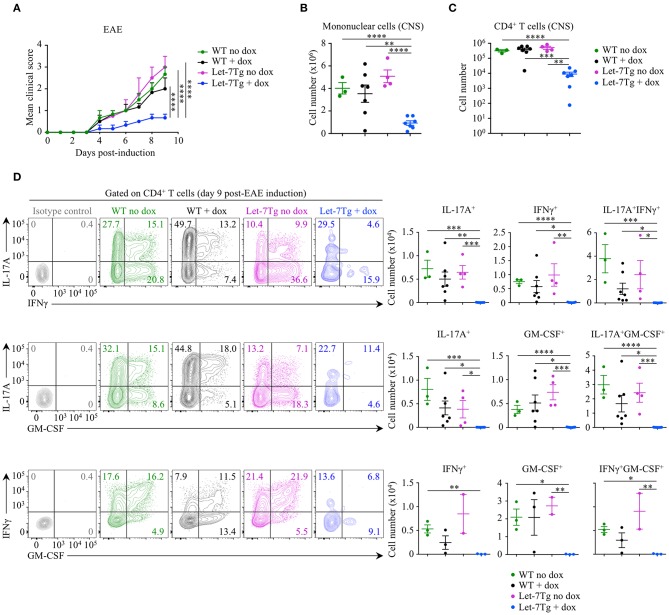
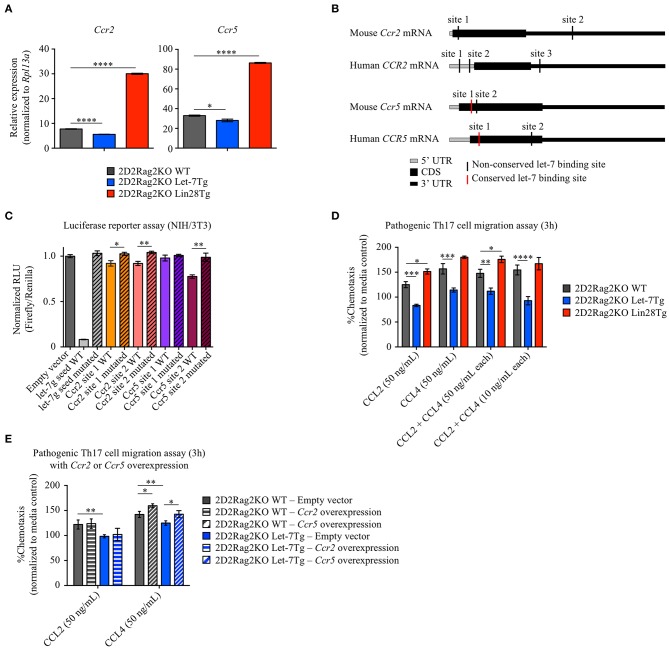
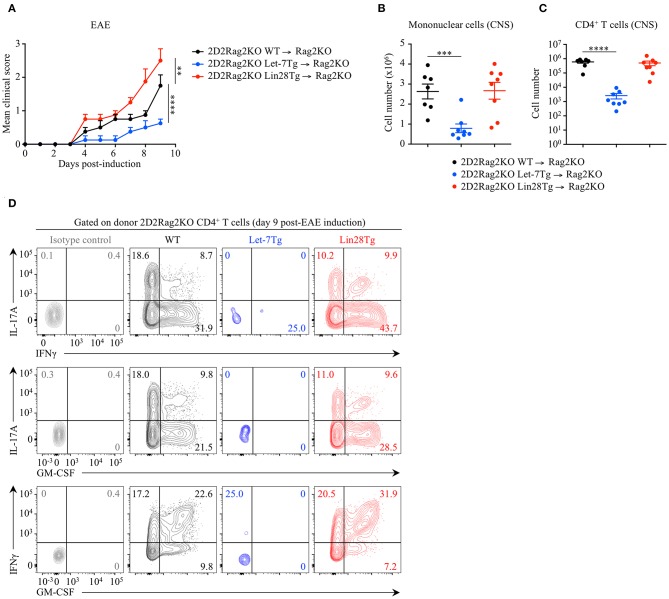
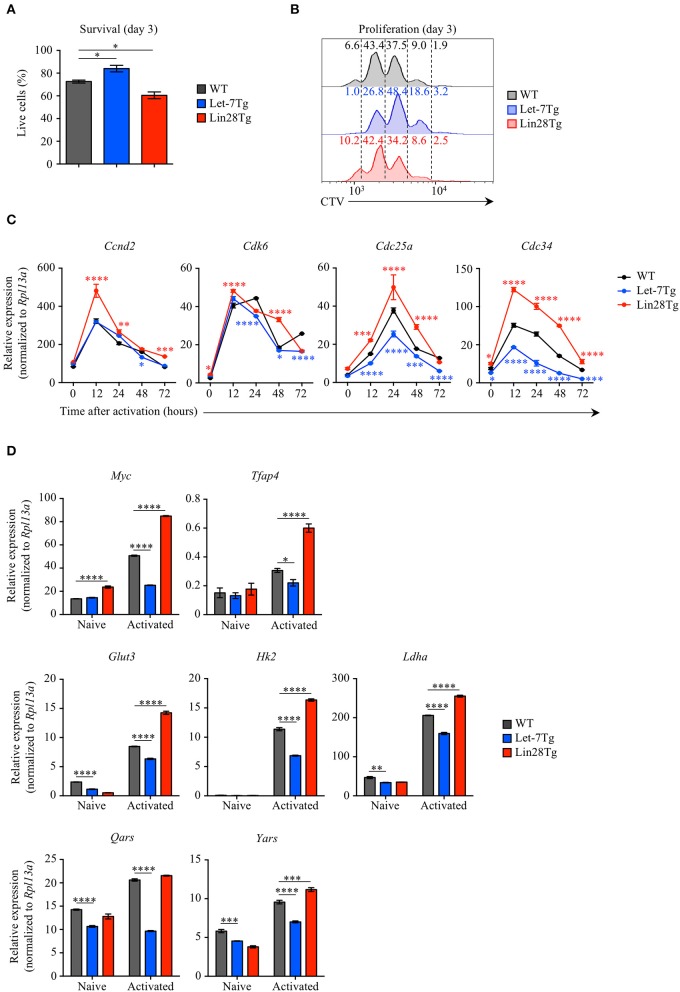
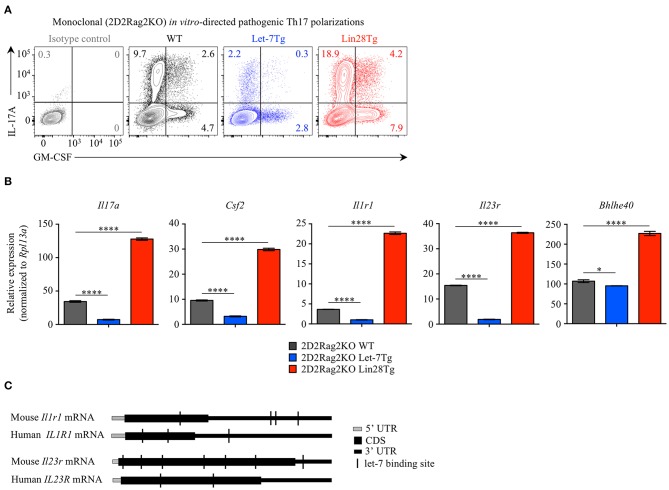
Multiple sclerosis (MS) is a disabling demyelinating autoimmune disorder of the central nervous system (CNS) which is driven by IL-23- and IL-1β-induced autoreactive Th17 cells that traffic to the CNS and secrete proinflammatory cytokines. Th17 pathogenicity in MS has been correlated with the dysregulation of microRNA (miRNA) expression, and specific miRNAs have been shown to promote the pathogenic Th17 phenotype. In the present study, we demonstrate, using the animal model of MS, experimental autoimmune encephalomyelitis (EAE), that let-7 miRNAs confer protection against EAE by negatively regulating the proliferation, differentiation and chemokine-mediated migration of pathogenic Th17 cells to the CNS. Specifically, we found that let-7 miRNAs may directly target the cytokine receptors and , as well as the chemokine receptors and . Therefore, our results identify a novel regulatory role for let-7 miRNAs in pathogenic Th17 differentiation during EAE development, suggesting a promising therapeutic application for disease treatment.
多发性硬化症(MS)是一种中枢神经系统(CNS)的脱髓鞘自身免疫性疾病,由 IL-23 和 IL-1β 诱导的自身反应性 Th17 细胞驱动,这些细胞迁移到 CNS 并分泌促炎细胞因子。MS 中的 Th17 致病性与 microRNA(miRNA)表达的失调有关,并且已经表明特定的 miRNA 可以促进致病性 Th17 表型。在本研究中,我们使用 MS 的动物模型实验性自身免疫性脑脊髓炎(EAE)证明,let-7 miRNAs 通过负调控致病性 Th17 细胞向 CNS 的增殖、分化和趋化因子介导的迁移,对 EAE 提供保护。具体而言,我们发现 let-7 miRNAs 可能直接靶向细胞因子受体 和 ,以及趋化因子受体 和 。因此,我们的结果确定了 let-7 miRNAs 在 EAE 发展过程中致病性 Th17 分化中的新的调节作用,为疾病治疗提供了有希望的治疗应用。