Boškoski Ivo, Pontecorvi Valerio, Gallo Camilla, Bove Vincenzo, Laterza Lucrezia, Costamagna Guido
Fondazione Policlinico Universitario Agostino Gemelli IRCSS, Largo A. Gemelli, 8 Rome 00168, Italy.
Digestive Endoscopy Unit, Fondazione Policlinico Universitario Agostino Gemelli IRCSS, Rome, Italy.
Therap Adv Gastroenterol. 2020 Jan 20;13:1756284819896179. doi: 10.1177/1756284819896179. eCollection 2020.
Endoscopic sleeve gastroplasty (ESG) is a restrictive endoscopic bariatric procedure providing promising results. In this short case series, we analyze the technical aspects and short-term outcomes of the redo ESG.
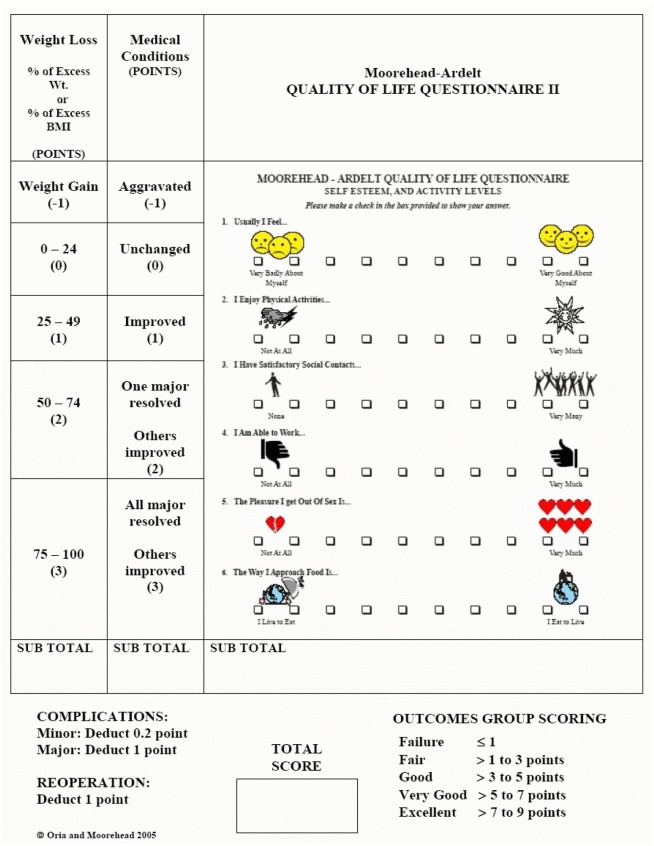
A retrospective analysis was done on a prospective database of all patients that were selected by a multidisciplinary team that underwent ESG between March 2017 and May 2019. Patients that underwent a redo ESG because of a progressive loss of satiety, weight regain, or insufficient weight loss due to high baseline body mass index were included. Percentage of excess weight loss (%EWL), percentage of total body weight loss (%TBWL), and the Bariatric Analysis and Reporting Outcome System (BAROS) questionnaire were evaluated during follow-up.
A total of 120 ESG procedures were performed with mean %EWL of 44.4% (± 19.5), mean %TBWL of 18.3% (± 6.7), and mean BAROS of 4.5 (± 1.7) at 12 months. Of those, four patients that underwent a redo ESG were identified. A total of three of them had a redo ESG after 12 months from the first ESG, whereas one of them had a redo ESG after 7 months. During the second procedure, old threads were removed with scissors and new stitches were positioned following a triangular pattern and avoiding overlap with the previous stitches. No adverse events were reported during the redo ESG. Six month follow-up was available for three patients, mean %EWL and %TBWL were 44.2% and 20.4%, respectively; BAROS questionnaire mean score was 6.3. One patient had only 1 month follow-up with a mean %EWL and %TBWL of 33.3% and 12.2%, respectively; BAROS questionnaire reported score was 6. All included patients reported excellent satiety feeling after redo ESG.
The redo ESG short-term outcomes are completely satisfying in terms of safety and efficacy. The need to perform a redo ESG should not be considered as a failure of the previous procedure, but it can be considered as a second step of the endoscopic treatment strategy.
内镜袖状胃成形术(ESG)是一种限制性内镜减肥手术,已取得了令人鼓舞的成果。在这个简短的病例系列中,我们分析了再次ESG的技术要点和短期疗效。
对一个前瞻性数据库进行回顾性分析,该数据库纳入了2017年3月至2019年5月间由多学科团队筛选出的所有接受ESG手术的患者。纳入因饱腹感逐渐丧失、体重反弹或因基线体重指数过高导致体重减轻不足而接受再次ESG的患者。随访期间评估超重体重减轻百分比(%EWL)、总体重减轻百分比(%TBWL)以及减肥分析与报告结果系统(BAROS)问卷。
共进行了120例ESG手术,术后12个月时平均%EWL为44.4%(±19.5),平均%TBWL为18.3%(±6.7),平均BAROS评分为4.5(±1.7)。其中,确定有4例患者接受了再次ESG手术。其中3例在首次ESG术后12个月进行了再次ESG,而1例在7个月后进行了再次ESG。在第二次手术中,用剪刀拆除旧缝线,并按照三角形模式放置新缝线,避免与先前的缝线重叠。再次ESG手术期间未报告不良事件。3例患者有6个月的随访数据,平均%EWL和%TBWL分别为44.2%和20.4%;BAROS问卷平均评分为6.3。1例患者只有1个月的随访数据,平均%EWL和%TBWL分别为33.3%和12.2%;BAROS问卷报告评分为6分。所有纳入患者在再次ESG术后均报告饱腹感良好。
再次ESG的短期疗效在安全性和有效性方面完全令人满意。再次进行ESG不应被视为先前手术的失败,而可被视为内镜治疗策略的第二步。