Li Yinchao, Li Nana, Shi Jianxiang, Ahmed Tanzeel, Liu Hongmin, Guo Jiancheng, Tang Wenxue, Guo Yongjun, Zhang Qi
Key Laboratory of Technology of Drug Preparation, Ministry of Education of China, Zhengzhou, China.
School of Pharmaceutical Sciences, Zhengzhou University, Zhengzhou, China.
Front Oncol. 2020 Jan 15;9:1525. doi: 10.3389/fonc.2019.01525. eCollection 2019.
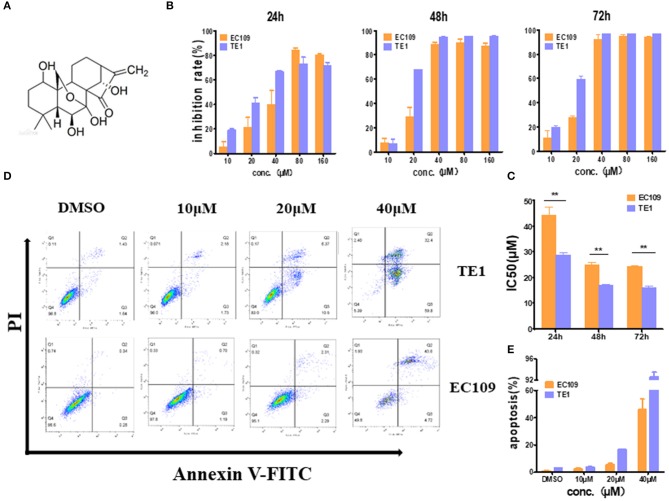
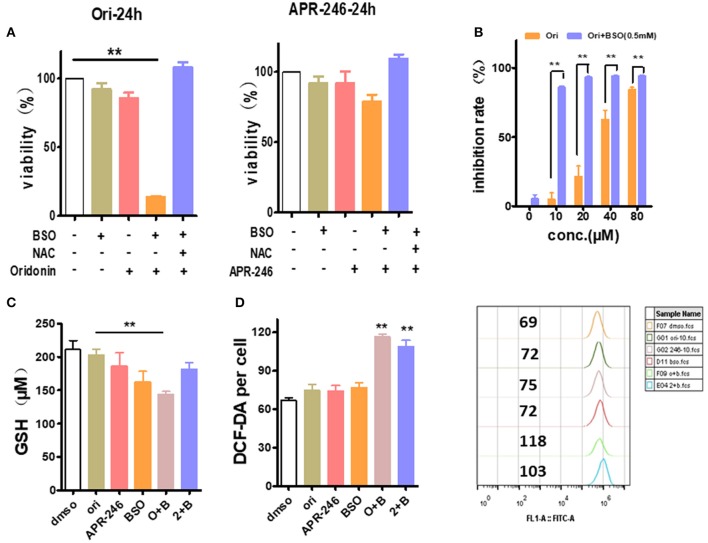
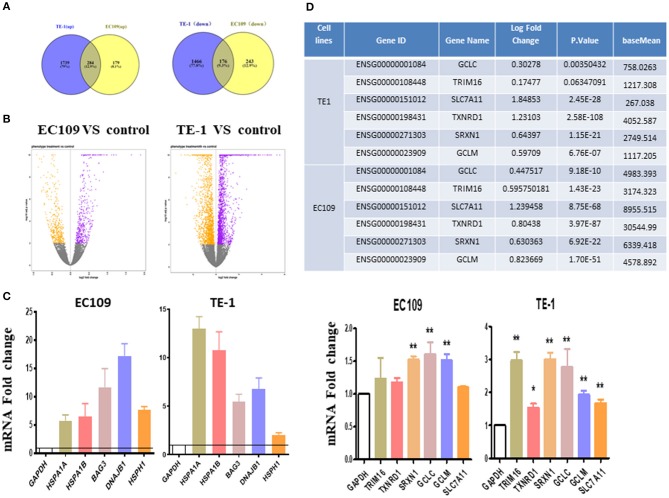
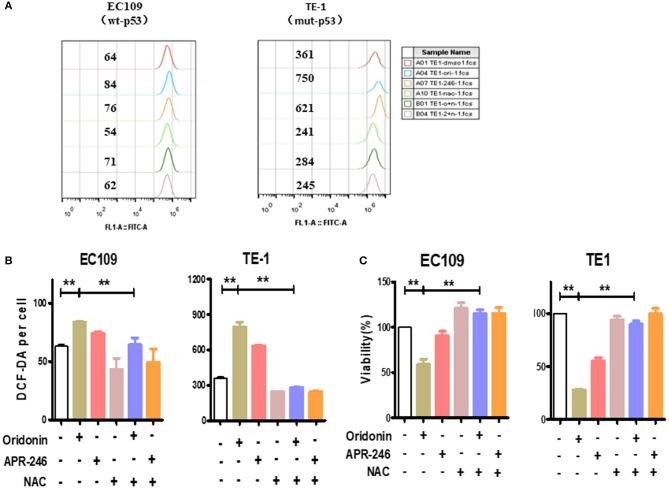
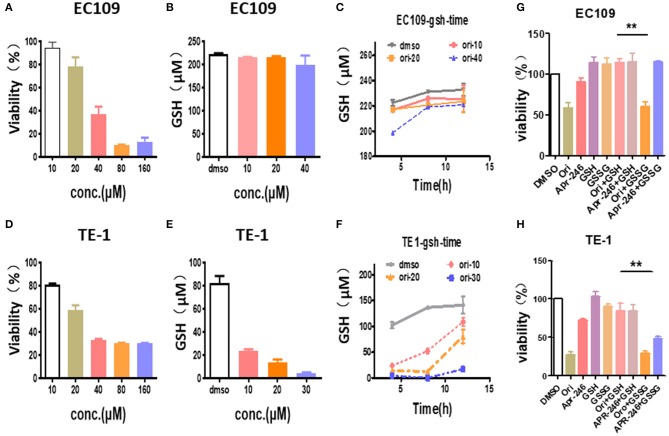
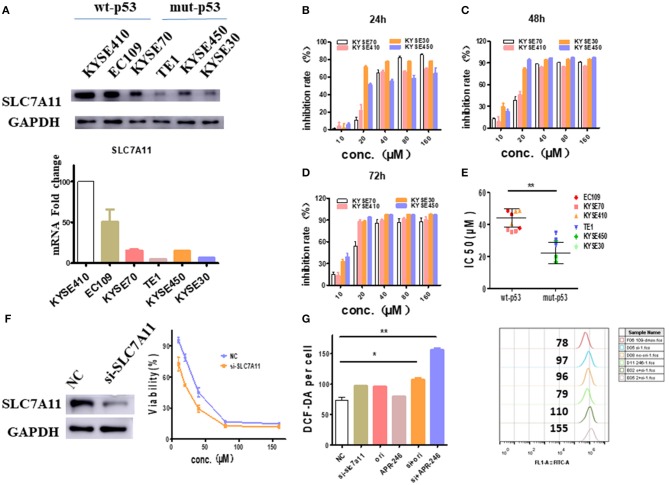
Oridonin, a diterpenoid compound isolated from traditional Chinese medicine Rabdosia rubescens, has shown antitumor effects to esophageal cancer. However, its molecular mechanism is not fully understood, which limits its clinical application. In the present study, we used RNA-seq analysis to check the transcriptome changes after oridonin treatment and we found genes controlling the GSH-ROS system were up-regulated, namely , and . Furthermore, our data suggest that oridonin significantly increased the production of ROS in EC109 and TE1 cells, which can be inhibited by NAC. Interestingly, oridonin can dramatically reduce intracellular GSH levels in TE1 cells in a concentration and time-dependent manner. In addition, cell death caused by oridonin was strongly inhibited by GSH (1 mM), while GSSG (1 mM) had little effect. At the same time, we also found that oridonin showed selective cytotoxicity to esophageal squamous carcinoma cell with p53 mutation since mut-p53 cells had lower expression, a component of the cystine/glutamate antiporter. We also found that γ-glutamyl cysteine synthetase inhibitor (BSO) synergizes with oridonin to strongly inhibit EC109 cells at a low dose. These results suggested that the antitumor effects of oridonin are based on its -SH reactivity and glutathione depletion. Esophageal squamous carcinoma cells with p53-mutation showed hypersensitivity to oridonin because of the suppression of SLC7A11 expression by p53 mutation.
冬凌草甲素是从传统中药冬凌草中分离得到的一种二萜类化合物,已显示出对食管癌的抗肿瘤作用。然而,其分子机制尚未完全明确,这限制了其临床应用。在本研究中,我们使用RNA测序分析来检测冬凌草甲素处理后的转录组变化,发现控制谷胱甘肽-活性氧系统的基因上调,即 、 和 。此外,我们的数据表明,冬凌草甲素显著增加了EC109和TE1细胞中活性氧的产生,而NAC可抑制这种增加。有趣的是,冬凌草甲素能以浓度和时间依赖性方式显著降低TE1细胞内的谷胱甘肽水平。此外,谷胱甘肽(1 mM)可强烈抑制冬凌草甲素引起的细胞死亡,而氧化型谷胱甘肽(1 mM)作用甚微。同时,我们还发现冬凌草甲素对具有p53突变的食管鳞状癌细胞表现出选择性细胞毒性,因为突变型p53细胞中胱氨酸/谷氨酸反向转运体的一个组成部分 表达较低。我们还发现,γ-谷氨酰半胱氨酸合成酶抑制剂(BSO)与冬凌草甲素协同作用,在低剂量时就能强烈抑制EC109细胞。这些结果表明,冬凌草甲素的抗肿瘤作用基于其对 -SH的反应性和谷胱甘肽耗竭。具有p53突变的食管鳞状癌细胞由于p53突变对SLC7A11表达的抑制而对冬凌草甲素表现出超敏感性。