Osteoarthritis Research Unit, University of Montreal Hospital Research Centre (CRCHUM), Montréal, Québec, Canada.
Aging (Albany NY). 2020 Feb 1;12(3):2880-2896. doi: 10.18632/aging.102784.
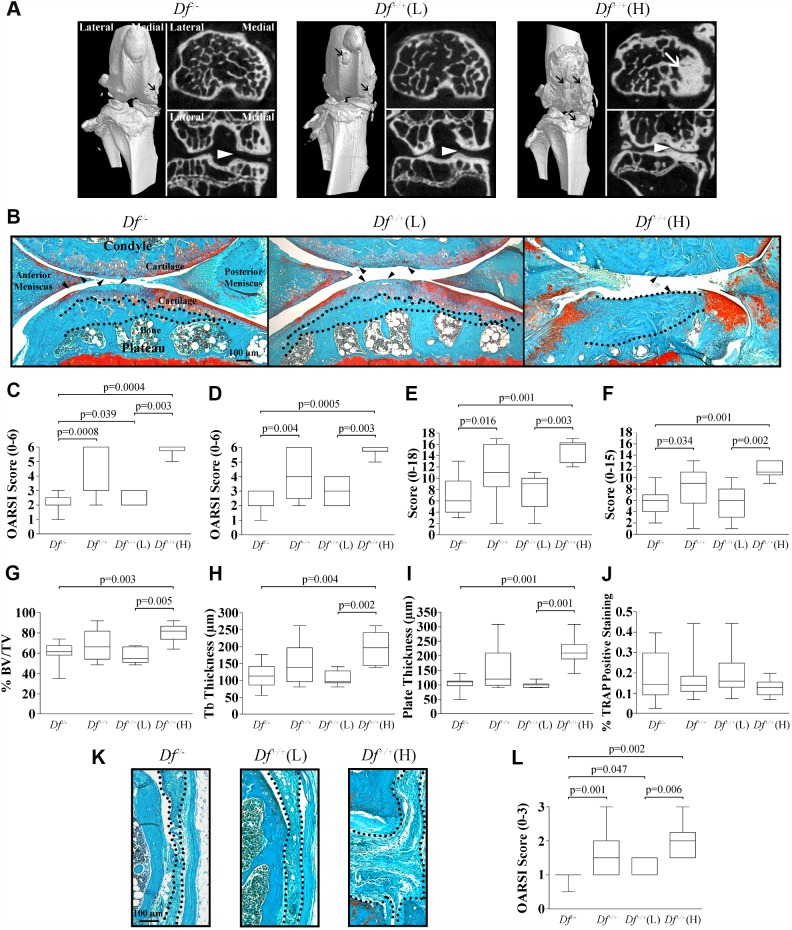
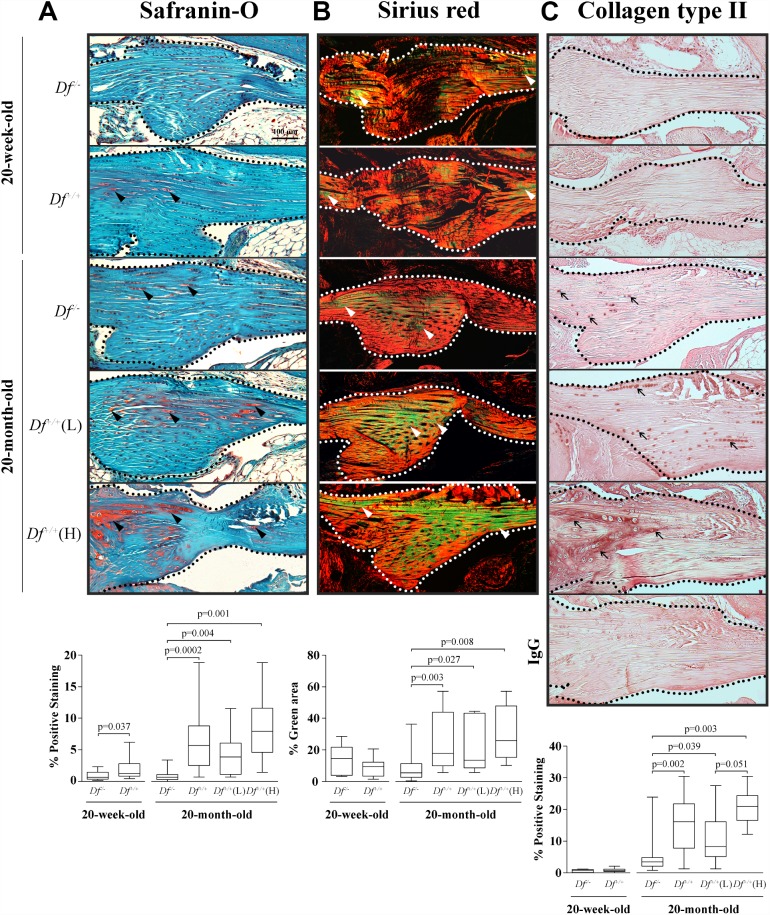
The adipokine adipsin is an emerging mediator of human osteoarthritis (OA) progression. Here, we investigated its in vivo role in the development of spontaneous OA in aging mice. We compared articular knee joint morphology, histology in knee cartilage, synovial membrane, subchondral bone, meniscus, and anterior cruciate ligament (ACL); and chondrogenesis in the ACL from adipsin-deficient () and wild-type () 20-week- and 20-month-old mice. Serum levels of a panel of adipokines, inflammatory factors, and metalloproteases known to be implicated in OA were investigated. Data first revealed that the early manifestation of OA appeared in the ACL of 20-week-old mice, progressing to severe alterations in the 20 month-old wild-type mice. Further results demonstrated that adipsin-deficiency protected the articular tissues from spontaneous OA progression and triggered significantly higher serum levels of the adipokines adiponectin and FGF-21 while lowering levels of the inflammatory factor interleukin 6 (IL-6) in both young and old mice. This work further underlines the clinical relevance of adipsin as a novel therapeutic approach of human OA. Moreover, this study shows the potential beneficial effect of the adipokine FGF-21 against OA, and provides support for this factor to be a new biomarker and/or target of primary OA therapeutic avenues.
脂肪因子 adiposin 是人类骨关节炎 (OA) 进展的一个新的介质。在这里,我们研究了它在衰老小鼠自发性 OA 发展中的体内作用。我们比较了膝关节关节形态、膝关节软骨、滑膜、软骨下骨、半月板和前交叉韧带 (ACL) 的组织学;以及来自 adiposin 缺陷型 () 和野生型 () 20 周龄和 20 月龄小鼠的 ACL 中的软骨生成。研究了一组已知与 OA 相关的脂肪因子、炎症因子和金属蛋白酶的血清水平。数据首先表明,OA 的早期表现出现在 20 周龄小鼠的 ACL 中,在 20 月龄野生型小鼠中进展为严重改变。进一步的结果表明,adipsin 缺陷型使关节组织免受自发性 OA 进展的影响,并在年轻和年老小鼠中显著提高了脂肪因子 adiponectin 和 FGF-21 的血清水平,同时降低了炎症因子白细胞介素 6 (IL-6) 的水平。这项工作进一步强调了 adiposin 作为人类 OA 新的治疗方法的临床相关性。此外,本研究表明脂肪因子 FGF-21 对 OA 具有潜在的有益作用,并为该因子作为原发性 OA 治疗途径的新生物标志物和/或靶点提供了支持。