Faculty of Chemistry, Biotechnology and Food Science, Norwegian University of Life Sciences, P.O. Box 5003, 1432, Ås, Norway.
Department of Animal and Aquacultural Sciences, Norwegian University of Life Sciences, P.O. Box 5003, 1432, Ås, Norway.
Microb Cell Fact. 2020 Feb 3;19(1):19. doi: 10.1186/s12934-020-1287-6.
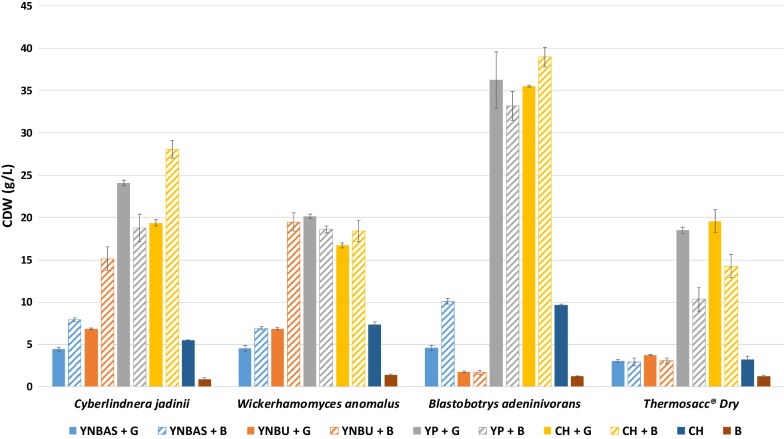
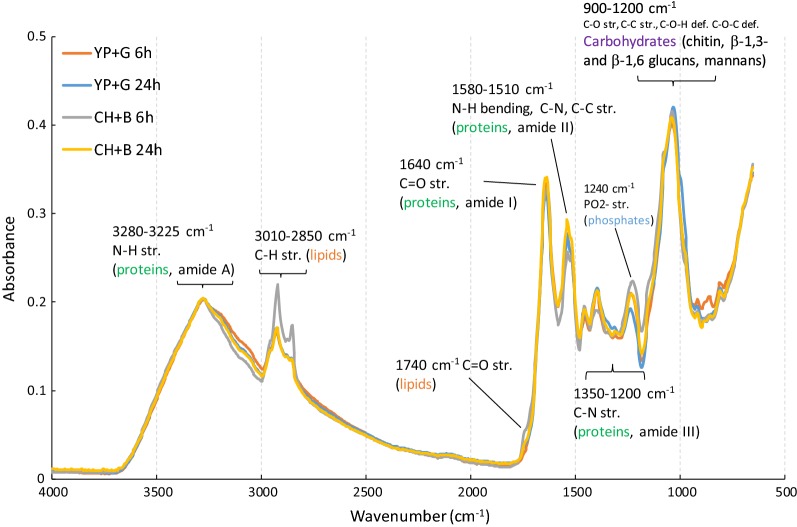
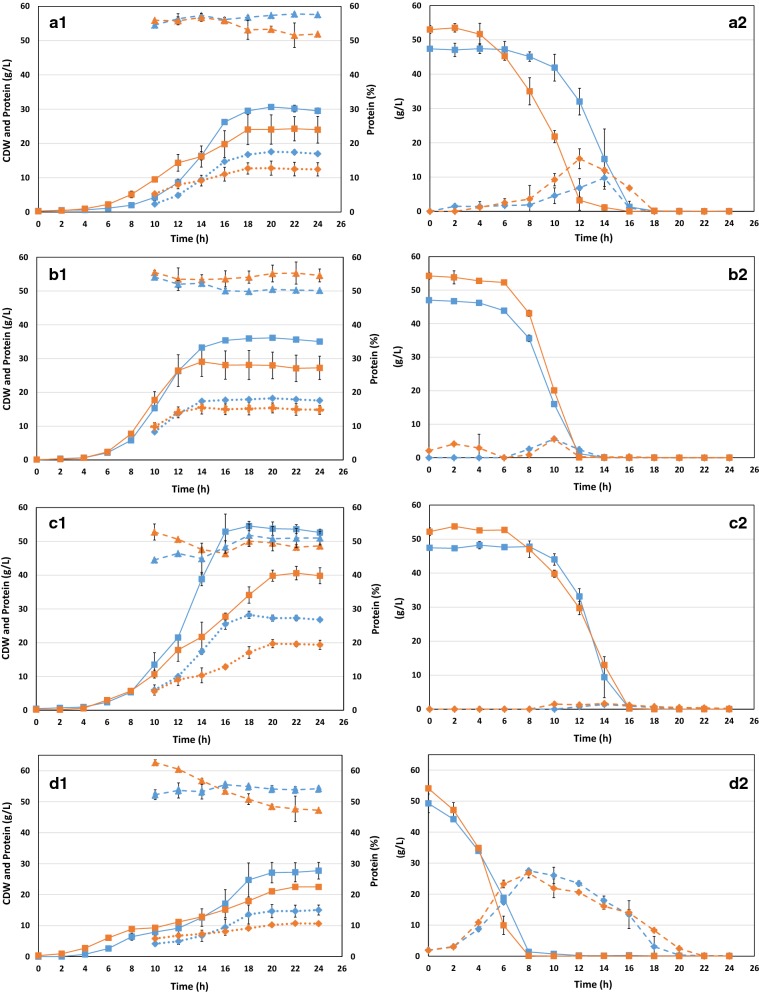
A possible future shortage of feed protein will force mankind to explore alternative protein sources that can replace conventional soymeal or fishmeal. Several large industrial organic side-streams could potentially be upgraded to feed protein using a fermentation process to generate single cell protein. Yeast is the most widely accepted microorganism for production of single cell protein, because of its superior nutritional quality and acceptability among consumers. Here, we have assessed the growth of four different yeasts, Cyberlindnera jadinii, Wickerhamomyces anomalus, Blastobotrys adeninivorans and Thermosacc Dry (Saccharomyces cerevisiae), on media composed of enzymatically saccharified sulfite-pulped spruce wood and hydrolysates of by-products from chicken, and we have characterized the resulting yeast biomass.
Generally, the yeast grew very well on the spruce- and chicken-based medium, with typical yields amounting to 0.4-0.5 g of cell dry weight and 0.2-0.3 g of protein per g of sugar. B. adeninivorans stood out as the most versatile yeast in terms of nutrient consumption and in this case yields were as high as 0.9 g cells and 0.5 g protein per g of sugar. The next best performing yeast in terms of yield was W. anomalus with up to 0.6 g cells and 0.3 g protein per g sugar. Comparative compositional analyses of the yeasts revealed favorable amino acid profiles that were similar to the profiles of soymeal, and even more so, fish meal, especially for essential amino acids.
The efficient conversion of industrial biomass streams to yeast biomass demonstrated in this study opens new avenues towards better valorization of these streams and development of sustainable feed ingredients. Furthermore, we conclude that production of W. anomalus or B. adeninivorans on this promising renewable medium may be potentially more efficient than production of the well-known feed ingredient C. jadinii. Further research should focus on medium optimization, development of semi-continuous and continues fermentation protocols and exploration of downstream processing methods that are beneficial for the nutritional values of the yeast for animal feed.
未来饲料蛋白可能出现短缺,这将迫使人类探索可替代的常规豆粕或鱼粉的蛋白质来源。几种大型工业有机副产物可通过发酵过程升级为饲料蛋白,生成单细胞蛋白。酵母是生产单细胞蛋白最广泛使用的微生物,因为它在消费者中的营养价值和可接受性更高。在这里,我们评估了四种不同酵母——Cyberlindnera jadinii、Wickerhamomyces anomalus、Blastobotrys adeninivorans 和 Thermosacc Dry(酿酒酵母)在由酶解亚硫酸盐浆化云杉木材和鸡副产品水解物组成的培养基中的生长情况,并对所得酵母生物质进行了表征。
通常,酵母在基于云杉和鸡肉的培养基中生长得非常好,典型的产率达到 0.4-0.5 g 细胞干重和 0.2-0.3 g 蛋白质/克糖。B. adeninivorans 在营养物质消耗方面表现出最广泛的通用性,在这种情况下,产率高达 0.9 g 细胞和 0.5 g 蛋白质/克糖。在产率方面表现第二好的酵母是 W. anomalus,最高可达 0.6 g 细胞和 0.3 g 蛋白质/克糖。对酵母的比较组成分析表明,氨基酸谱具有有利的特性,类似于豆粕,甚至更像鱼粉,尤其是对必需氨基酸。
本研究中证明的工业生物质流高效转化为酵母生物质为这些生物质的更好利用和可持续饲料成分的开发开辟了新途径。此外,我们得出结论,在这种有前途的可再生培养基上生产 W. anomalus 或 B. adeninivorans 可能比生产知名饲料成分 C. jadinii 更有效。进一步的研究应集中在培养基优化、半连续和连续发酵方案的开发以及探索有利于酵母营养价值的下游加工方法上,以用于动物饲料。