DAWES Centre for Future Crime at UCL, Jill Dando Institute for Security and Crime Science, 35 Tavistock Square, London, WC1H 9EZ, UK.
Department of Biochemical Engineering, University College London, Bernard Katz Building, London, WC1E 6BT, UK.
Syst Rev. 2020 Feb 3;9(1):22. doi: 10.1186/s13643-020-1284-1.
When new technologies are developed, it is common for their crime and security implications to be overlooked or given inadequate attention, which can lead to a 'crime harvest'. Potential methods for the criminal exploitation of biotechnology need to be understood to assess their impact, evaluate current policies and interventions and inform the allocation of limited resources efficiently. Recent studies have illustrated some of the security implications of biotechnology, with outcomes of misuse ranging from compromised computers using malware stored in synthesised DNA, infringement of intellectual property on biological matter, synthesis of new threatening viruses, 'genetic genocide,' and the exploitation of food markets with genetically modified crops. However, there exists no synthesis of this information, and no formal quality assessment of the current evidence. This review therefore aims to establish what current and/or predicted crimes have been reported as a result of biotechnology.
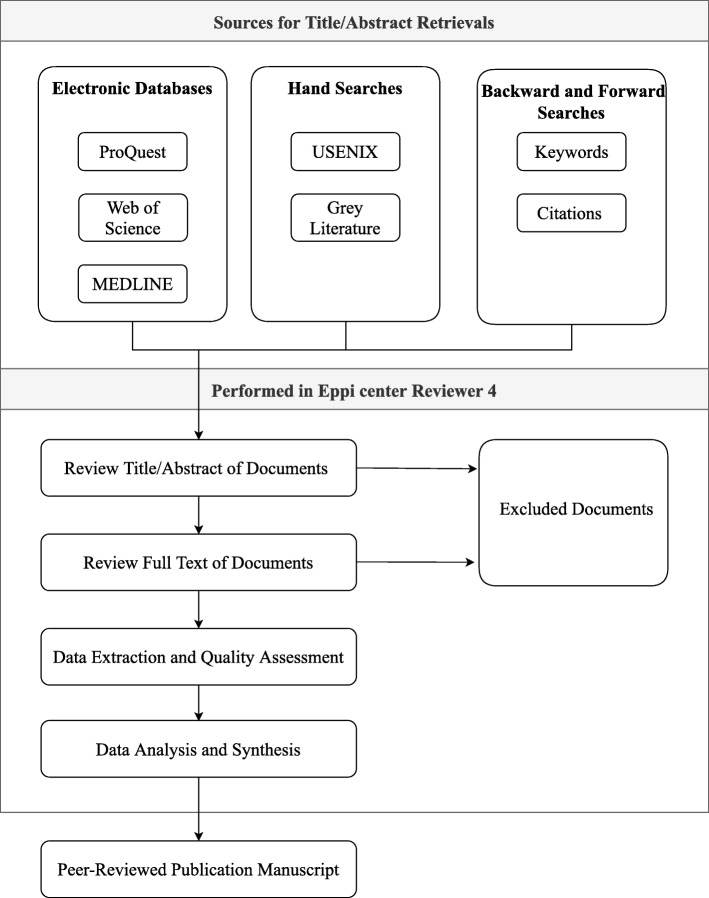
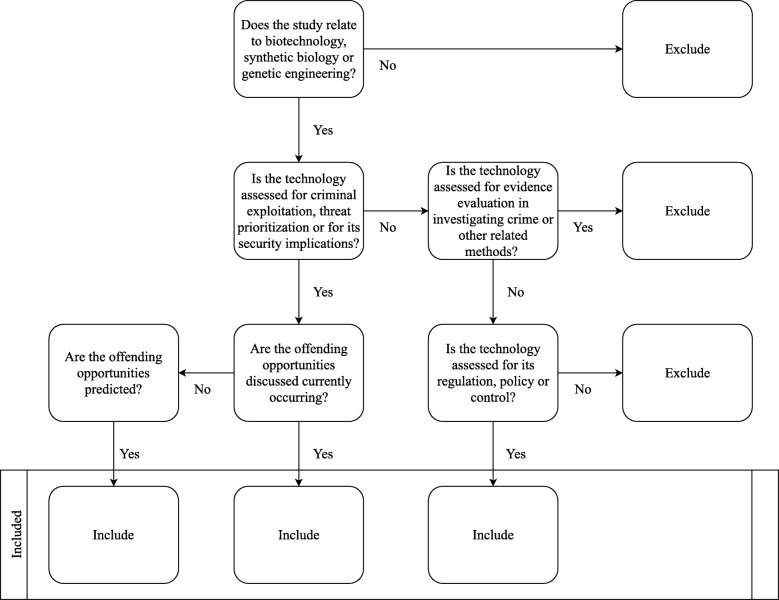
A systematic review will be conducted to identify relevant literature. ProQuest, Web of Science, MEDLINE and USENIX will be searched utilizing a predefined search string, and Backward and Forward searches. Grey literature will be identified by searching the official UK Government website (www.gov.uk) and the Global database of Dissertations and Theses. The review will be conducted by screening title/abstracts followed by full texts, utilising pre-defined inclusion and exclusion criteria. Papers will be managed using Eppi-center Reviewer 4 software, and data will be organised using a data extraction table using a descriptive coding tool. A predefined rating system (speculative, experimental or currently occurring) will be used to sort studies, and a thematic synthesis of the results will be presented.
Despite the concerns raised about the misuse of biotechnology, no previous work has been conducted from a Crime Science perspective to collate and assess the literature. This systematic review aims to identify the types of offending activity facilitated by biotechnology, including synthetic biology and genetic engineering. The objective of the review is to examine whether this offending activity can be prevented by assessing the conditions necessary for the crime events to occur. It is anticipated that evidence generated from this review will guide future research in this area and aid relevant stakeholders to prioritise and allocate limited resources to biotechnology crime prevention.
PROSPERO CRD42019131685.
当新技术被开发出来时,其犯罪和安全影响通常被忽视或没有得到充分重视,这可能导致“犯罪收益”。为了评估其影响、评估现行政策和干预措施并为有效分配有限资源提供信息,需要了解生物技术被犯罪分子滥用的潜在方法。最近的研究已经说明了生物技术的一些安全影响,滥用的结果从使用存储在合成 DNA 中的恶意软件的受感染计算机,到侵犯生物物质的知识产权、合成新的威胁性病毒、“基因种族灭绝”以及利用基因改造作物操纵粮食市场不等。然而,目前还没有对这些信息进行综合,也没有对现有证据进行正式的质量评估。因此,本综述旨在确定生物技术已报告的现有和/或预测的犯罪情况。
将进行系统综述以确定相关文献。将利用预定义的搜索字符串,通过 ProQuest、Web of Science、MEDLINE 和 USENIX 进行搜索,并进行回溯和前向搜索。通过搜索英国官方网站(www.gov.uk)和全球论文和论文数据库,确定灰色文献。将通过筛选标题/摘要,然后筛选全文,利用预定义的纳入和排除标准进行审查。将使用 Eppi-center Reviewer 4 软件管理论文,使用数据提取表和描述性编码工具对数据进行组织。将使用预定的评分系统(推测性、实验性或当前发生)对研究进行分类,并呈现结果的主题综合。
尽管人们对生物技术的滥用表示担忧,但以前没有从犯罪科学的角度进行过收集和评估文献的工作。本系统综述旨在确定生物技术(包括合成生物学和基因工程)促进的犯罪活动类型。审查的目的是通过评估犯罪事件发生的必要条件,检查这种犯罪活动是否可以预防。预计从本次审查中得出的证据将指导该领域的未来研究,并帮助相关利益相关者优先考虑和分配生物技术犯罪预防的有限资源。
PROSPERO CRD42019131685。