Markey Cancer Center, University of Kentucky, Lexington, KY 40536.
Department of Pharmacology and Nutritional Sciences, University of Kentucky, Lexington, KY 40536.
Proc Natl Acad Sci U S A. 2020 Feb 18;117(7):3748-3758. doi: 10.1073/pnas.1911951117. Epub 2020 Feb 3.
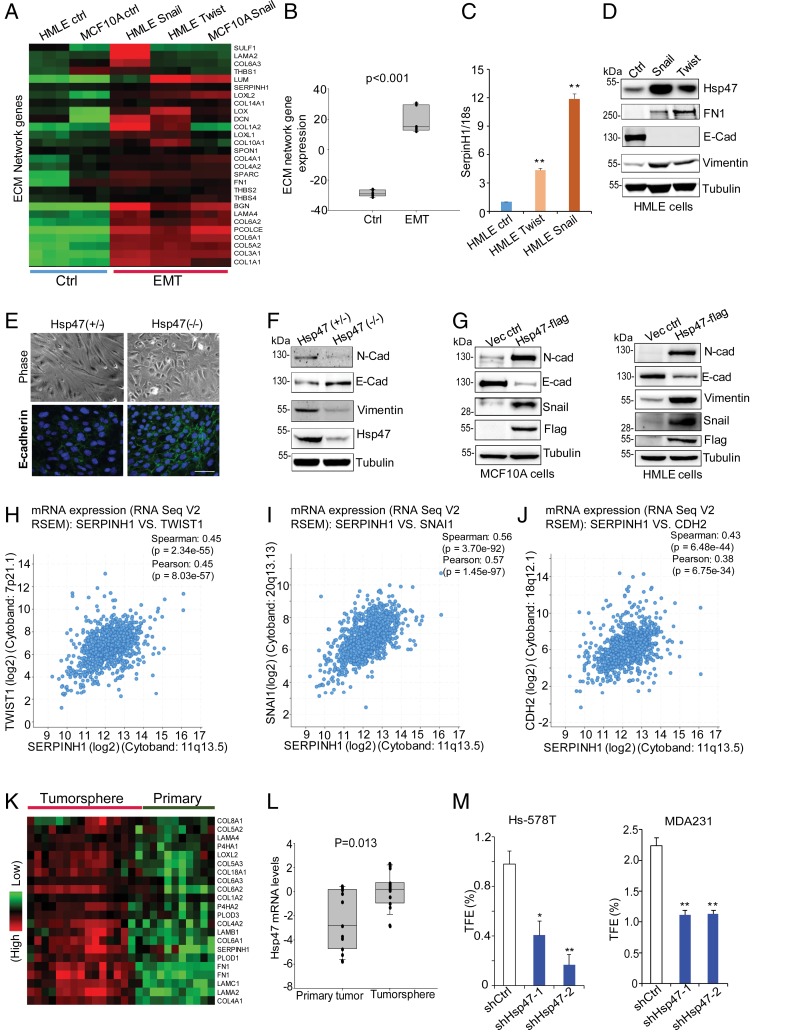
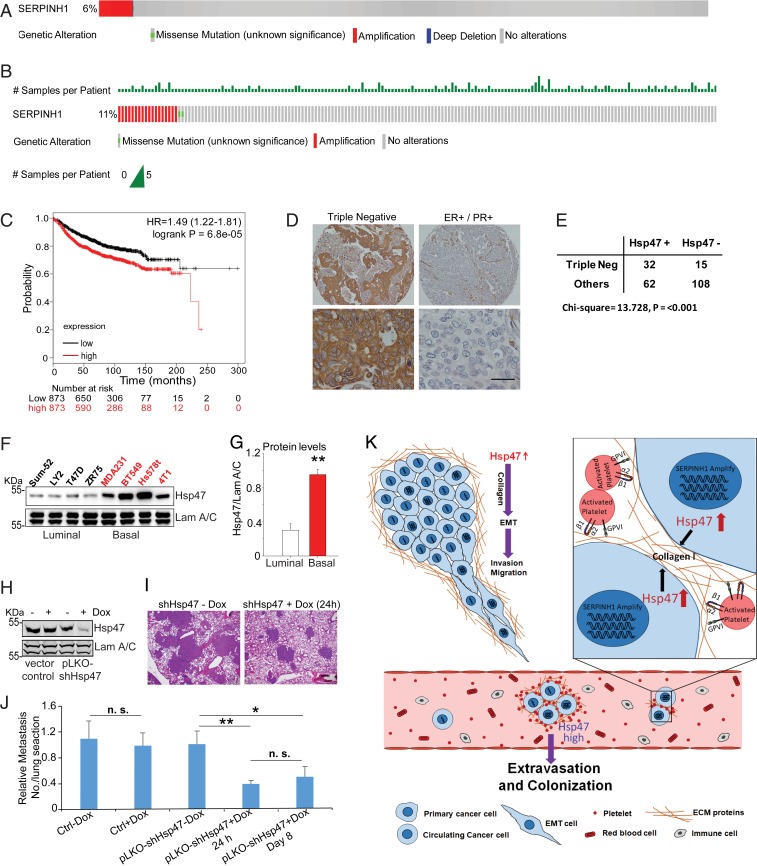
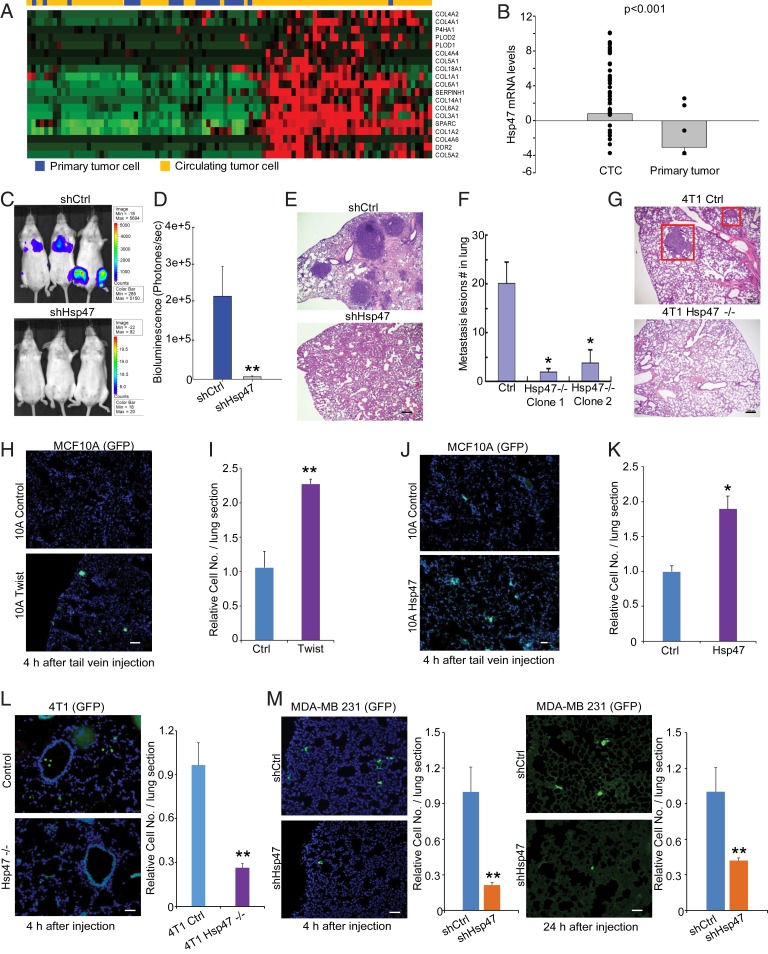
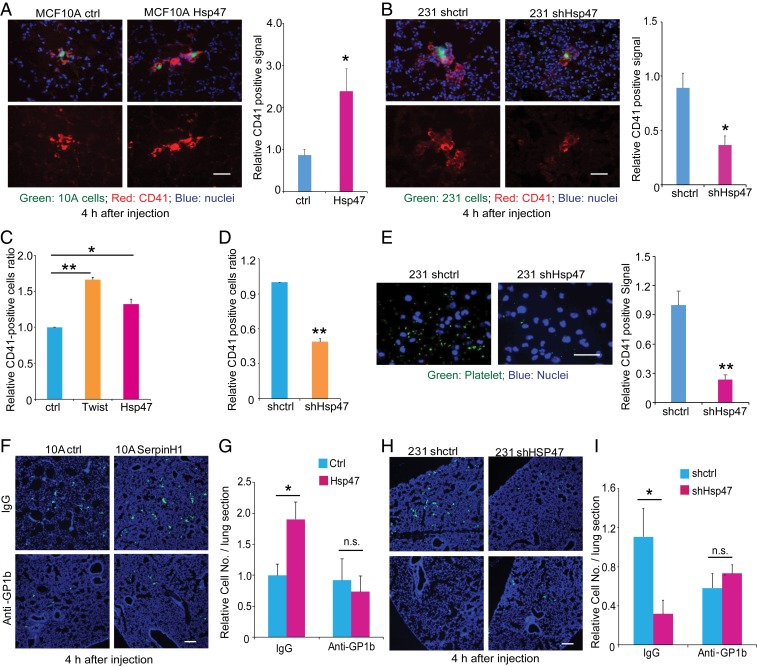
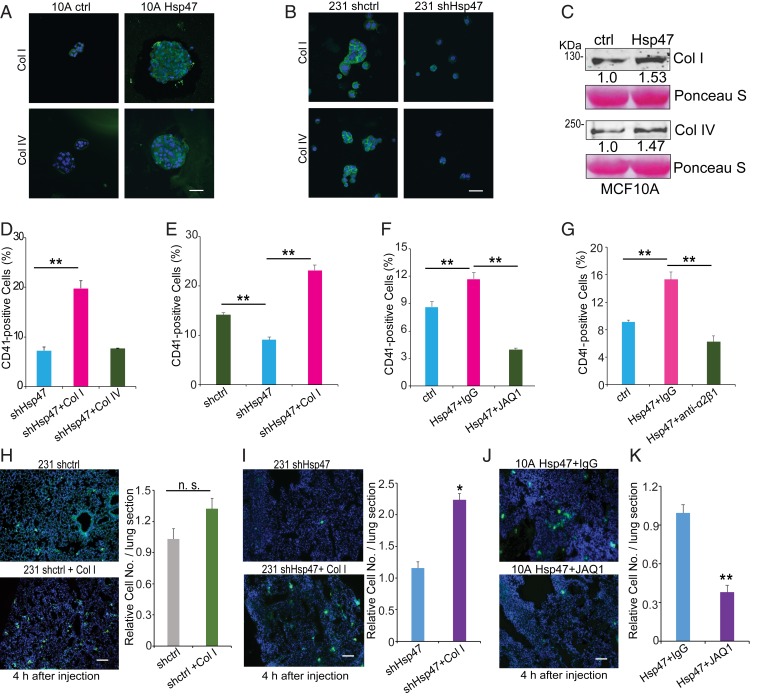
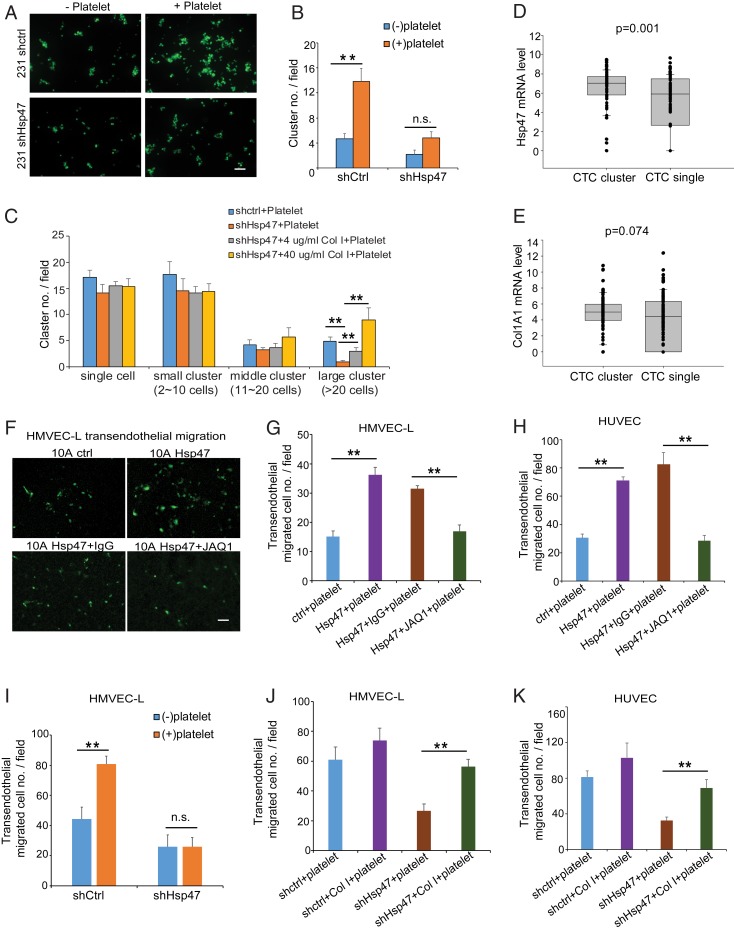
Increased expression of extracellular matrix (ECM) proteins in circulating tumor cells (CTCs) suggests potential function of cancer cell-produced ECM in initiation of cancer cell colonization. Here, we showed that collagen and heat shock protein 47 (Hsp47), a chaperone facilitating collagen secretion and deposition, were highly expressed during the epithelial-mesenchymal transition (EMT) and in CTCs. Hsp47 expression induced mesenchymal phenotypes in mammary epithelial cells (MECs), enhanced platelet recruitment, and promoted lung retention and colonization of cancer cells. Platelet depletion in vivo abolished Hsp47-induced cancer cell retention in the lung, suggesting that Hsp47 promotes cancer cell colonization by enhancing cancer cell-platelet interaction. Using rescue experiments and functional blocking antibodies, we identified type I collagen as the key mediator of Hsp47-induced cancer cell-platelet interaction. We also found that Hsp47-dependent collagen deposition and platelet recruitment facilitated cancer cell clustering and extravasation in vitro. By analyzing DNA/RNA sequencing data generated from human breast cancer tissues, we showed that gene amplification and increased expression of Hsp47 were associated with cancer metastasis. These results suggest that targeting the Hsp47/collagen axis is a promising strategy to block cancer cell-platelet interaction and cancer colonization in secondary organs.
循环肿瘤细胞(CTCs)中细胞外基质(ECM)蛋白表达增加表明癌细胞产生的 ECM 可能在癌细胞定植中发挥作用。在这里,我们表明胶原蛋白和热休克蛋白 47(Hsp47)在 EMT 期间和 CTC 中高度表达,Hsp47 是一种促进胶原蛋白分泌和沉积的伴侣蛋白。Hsp47 表达在乳腺上皮细胞(MEC)中诱导间充质表型,增强血小板募集,并促进癌细胞在肺部的滞留和定植。体内血小板耗竭消除了 Hsp47 诱导的癌细胞在肺部的滞留,表明 Hsp47 通过增强癌细胞-血小板相互作用促进癌细胞定植。通过挽救实验和功能阻断抗体,我们确定 I 型胶原蛋白是 Hsp47 诱导的癌细胞-血小板相互作用的关键介质。我们还发现 Hsp47 依赖性胶原蛋白沉积和血小板募集促进了体外癌细胞聚集和血管外渗。通过分析从人乳腺癌组织中生成的 DNA/RNA 测序数据,我们表明 Hsp47 的基因扩增和表达增加与癌症转移相关。这些结果表明,靶向 Hsp47/胶原蛋白轴是阻断次级器官中癌细胞-血小板相互作用和癌症定植的有前途的策略。