Instituto Biofisika (UPV/EHU, CSIC), 48080, Bilbao, Spain.
Instituto Biofisika (UPV/EHU, CSIC) and Departamento de Bioquímica, Universidad del País Vasco, Apdo. 644, 48080, Bilbao, Spain.
Sci Rep. 2020 Feb 3;10(1):1727. doi: 10.1038/s41598-020-58734-9.
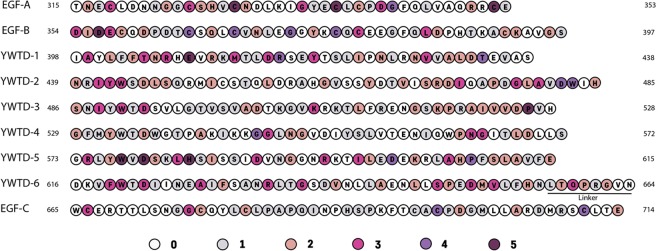
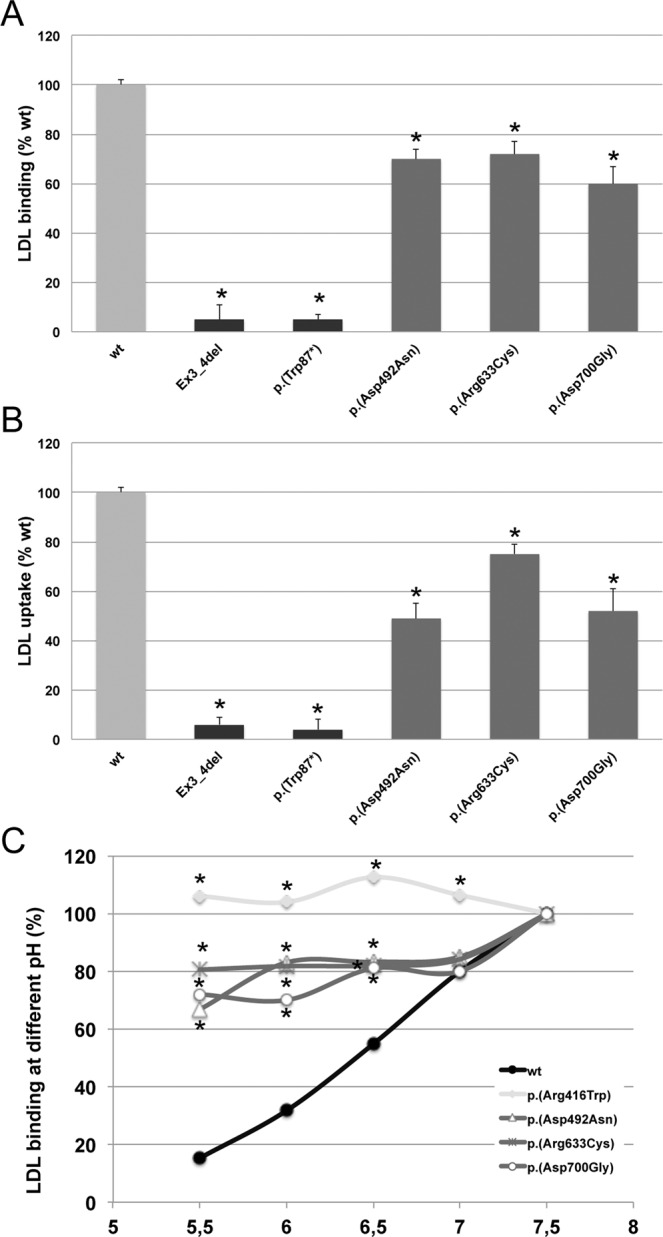
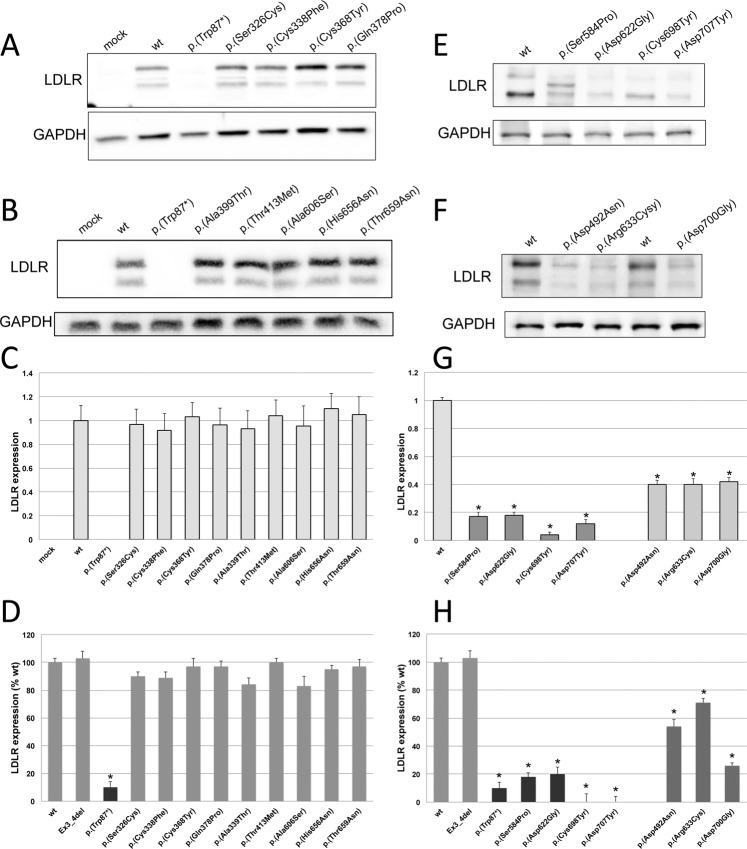
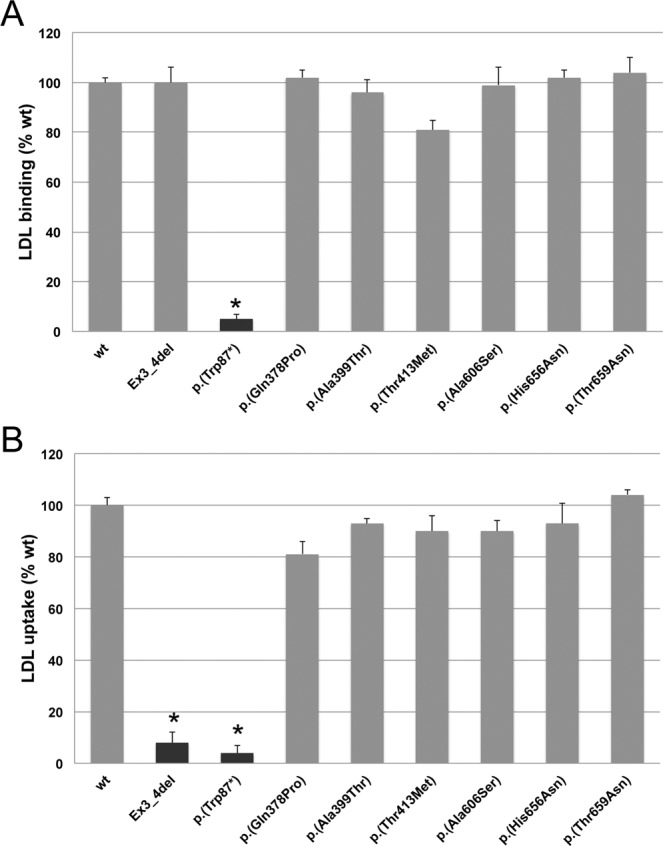
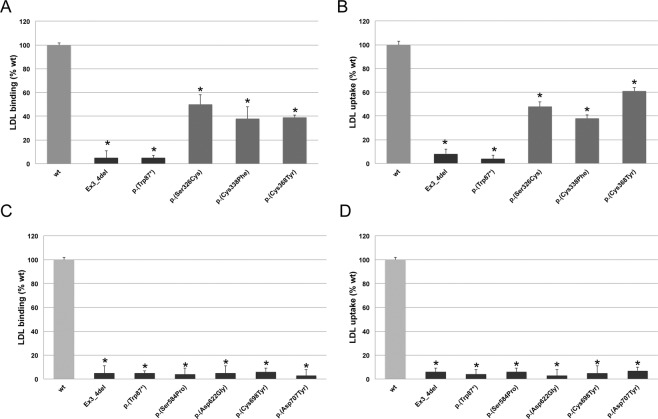
The primary genetic cause of familial hypercholesterolemia (FH) is related to mutations in the LDLR gene encoding the Low-density Lipoprotein Receptor. LDLR structure is organized in 5 different domains, including an EGF-precursor homology domain that plays a pivotal role in lipoprotein release and receptor recycling. Mutations in this domain constitute 51.7% of the total missense variants described in LDLR. The aim of the present work was to analyse how clinically significant variants in the EGF-precursor homology domain impact LDLR. The activity of sixteen LDLR variants was functionally characterized by determining LDLR expression by Western blot and LDLR expression, LDL binding capacity and uptake, and LDLR recycling activity by flow cytometry in transfected CHO-ldlA7 cells. Of the analysed variants, we found six non-pathogenic LDLR variants and ten pathogenic variants distributed as follow: three class 3 variants; four class 2 variants; and three class 5 variants. These results can be incorporated into clinical management of patients by helping guide the appropriate level of treatment intensity depending on the extent of loss of LDLR activity. This data can also contribute to cascade-screening for pathogenic FH variants.
家族性高胆固醇血症(FH)的主要遗传原因与 LDLR 基因编码的低密度脂蛋白受体(LDLR)突变有关。LDLR 结构分为 5 个不同的结构域,包括 EGF 前体同源结构域,在脂蛋白释放和受体再循环中起着关键作用。该结构域的突变构成了 LDLR 中描述的总错义变异的 51.7%。本研究旨在分析 EGF 前体同源结构域中的临床显著变异如何影响 LDLR。通过 Western blot 测定 LDLR 表达,用流式细胞术测定 LDLR 表达、LDL 结合能力和摄取以及 LDLR 再循环活性,对十六种 LDLR 变体进行了功能特征分析,这些变体在转染的 CHO-ldlA7 细胞中进行。在分析的变体中,我们发现了六个非致病性 LDLR 变体和十个致病性变体,分布如下:三个 3 类变体;四个 2 类变体;三个 5 类变体。这些结果可通过帮助指导根据 LDLR 活性丧失的程度确定适当的治疗强度水平,纳入患者的临床管理。这些数据还可以为致病性 FH 变体的级联筛查做出贡献。