Janssen Research & Development, Titusville, NJ, USA.
BabyCenter, San Francisco, CA, USA.
Arch Womens Ment Health. 2021 Feb;24(1):119-131. doi: 10.1007/s00737-020-01017-z. Epub 2020 Feb 4.
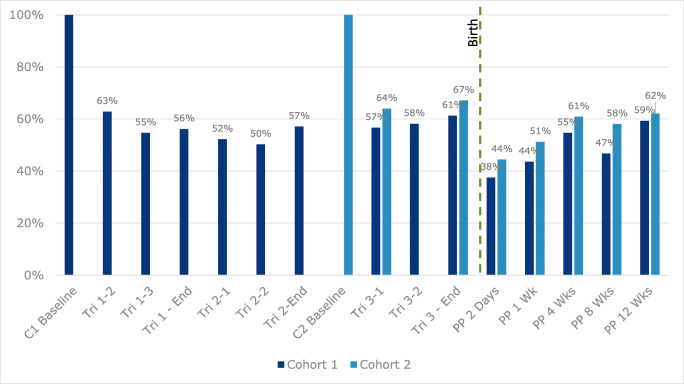
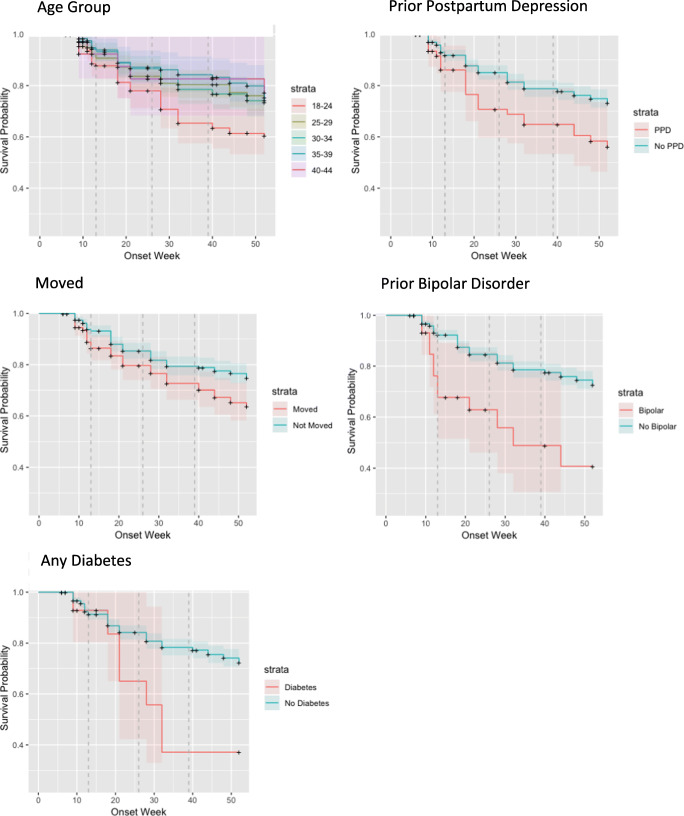
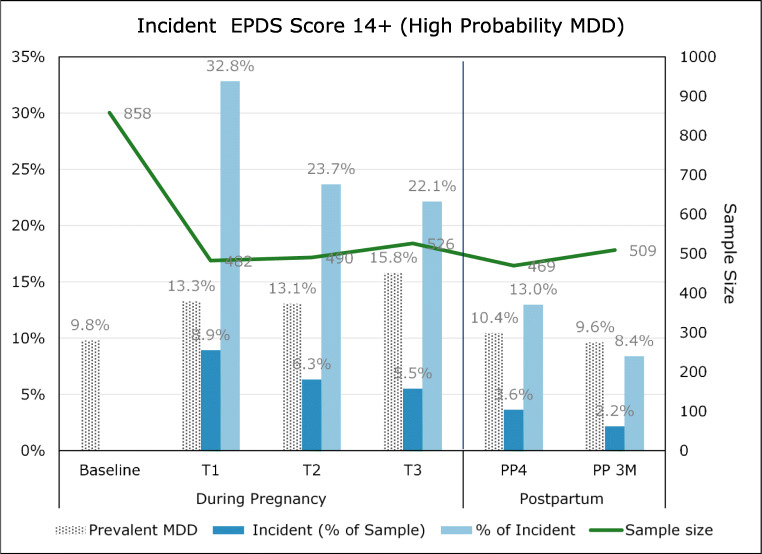
Depressive symptoms during and after pregnancy confer risks for adverse outcomes in both the mother and child. Postpartum depression is traditionally diagnosed after birth of the child. Perinatal depression is a serious, prevalent heterogeneous syndrome that can occur during the period from conception through several months after childbirth. Onset and course are not well understood. There is a paucity of longitudinal studies of the disorder that include the antenatal period in population-based samples. We used an Internet panel of pregnant women recruited in 2 cohorts; 858 ascertained in the first and 322 ascertained in the third trimesters of pregnancy. We recruited the second cohort in order to assure sufficient sample to examine depressive symptoms later in pregnancy and in the postpartum period. Assessments included standard psychometric measures, health history, and pregnancy experience. The Edinburgh Postnatal Depression Scale was used for the assessment of depressive symptoms. Nearly 10% of women entered the pregnancy with depressive symptoms. Prevalence was about the same at 4 weeks and 3 months postpartum. During pregnancy, prevalence increased to 16% in the third trimester. Among incident cases, 80% occurred during pregnancy, with 1/3 occurring in the first trimester. We describe predictors of incident depressive symptoms and covariates associated with time-to-onset which include health history (psychiatric and medical) and social support covariates. The majority of incident depressive symptoms occur during pregnancy rather than afterward. This finding underscores the mandate for mental health screening early in pregnancy and throughout gestation. It will be important to find safe and effective interventions that prevent, mitigate, or delay the onset of depressive symptoms that can be implemented during pregnancy.
孕期和产后的抑郁症状会给母婴双方带来不良后果的风险。产后抑郁症传统上是在孩子出生后诊断的。围产期抑郁症是一种严重、普遍存在的异质性综合征,可发生在受孕至分娩后数月期间。其发病和病程尚不清楚。在基于人群的样本中,对包括产前阶段在内的该疾病进行的纵向研究很少。我们使用了在两个队列中招募的孕妇互联网小组;第一个队列中有 858 人确定,第三个队列中有 322 人确定在妊娠第三个三个月。我们招募第二个队列是为了确保有足够的样本来检查妊娠后期和产后的抑郁症状。评估包括标准心理测量、病史和妊娠经历。使用爱丁堡产后抑郁量表评估抑郁症状。近 10%的女性在怀孕时就出现了抑郁症状。在怀孕 4 周和 3 个月后,患病率大致相同。怀孕期间,第三孕期的患病率上升到 16%。在新发病例中,80%发生在怀孕期间,其中 1/3发生在孕早期。我们描述了新发病例抑郁症状的预测因素和与发病时间相关的协变量,包括病史(精神和医学)和社会支持协变量。大多数新发病例的抑郁症状发生在怀孕期间,而不是产后。这一发现强调了在怀孕早期和整个孕期进行心理健康筛查的必要性。找到可以在怀孕期间实施的预防、减轻或延迟抑郁症状发作的安全有效的干预措施非常重要。