State Key Laboratory of Simulation and Regulation of Water Cycle in River Basin, Beijing 100038, China.
China Institute of Water Resources and Hydropower Research, Beijing 100038, China.
Int J Environ Res Public Health. 2020 Jan 30;17(3):868. doi: 10.3390/ijerph17030868.
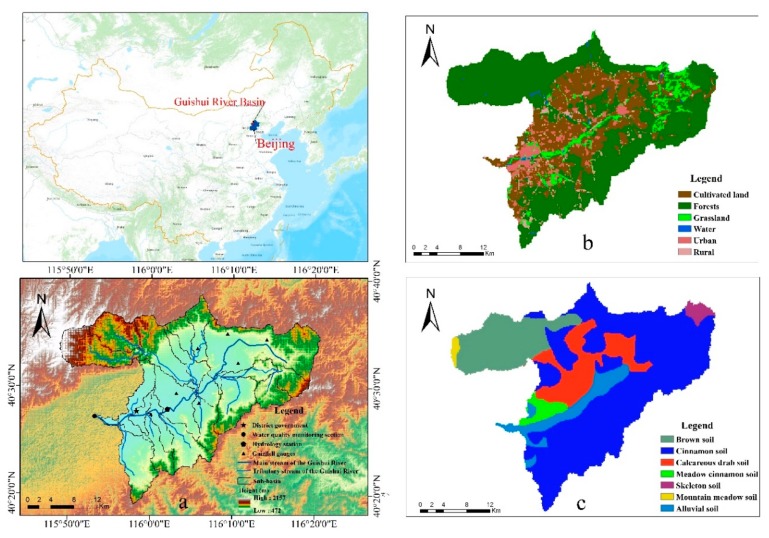
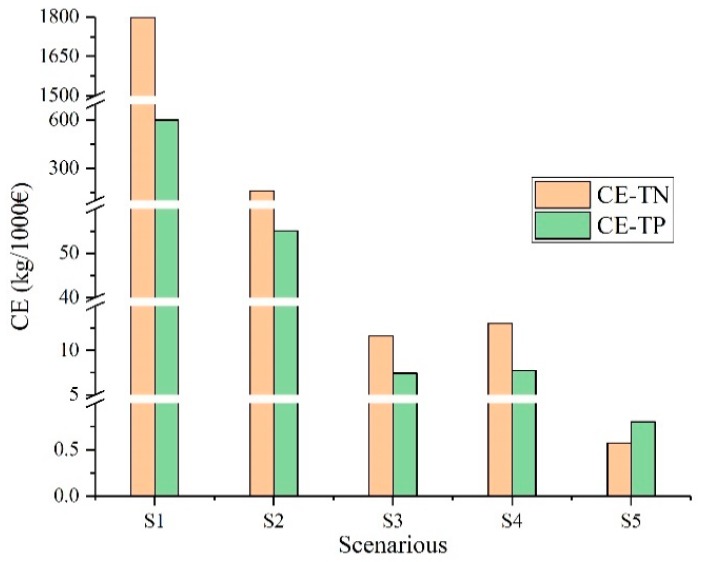
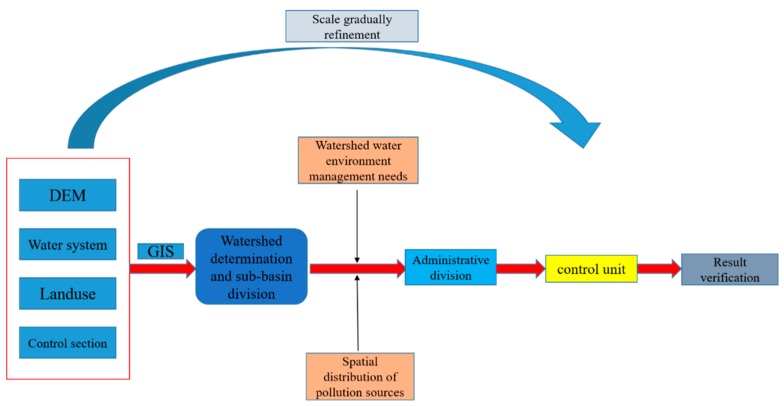
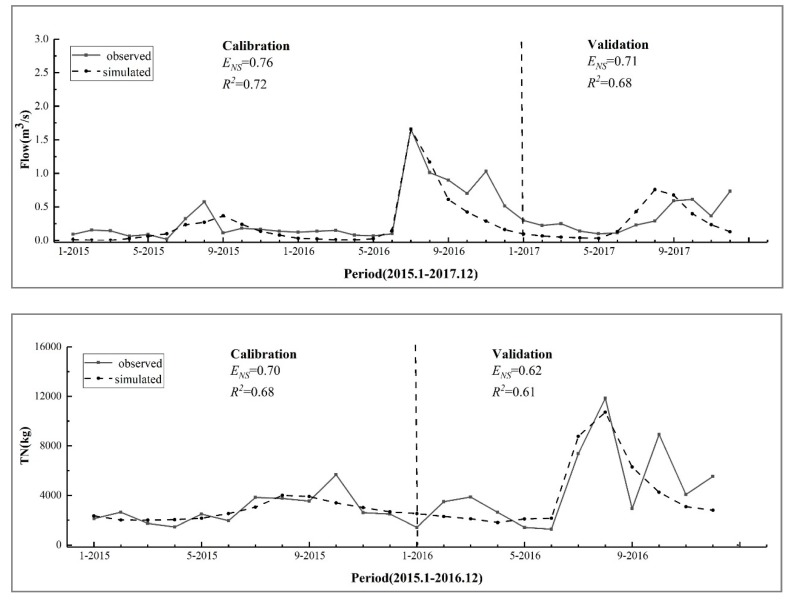
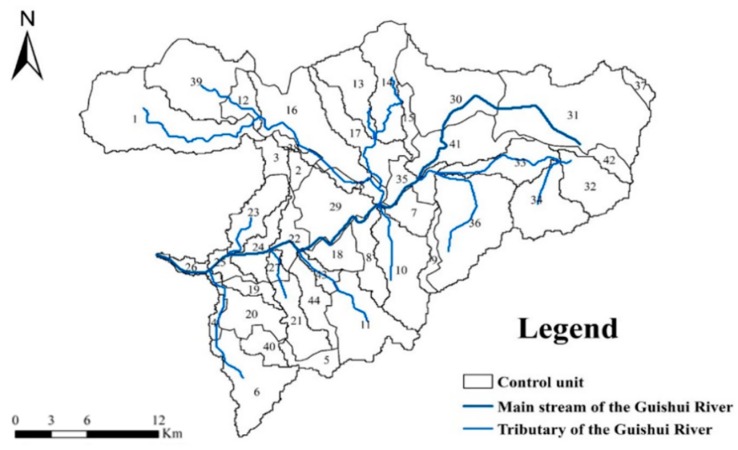
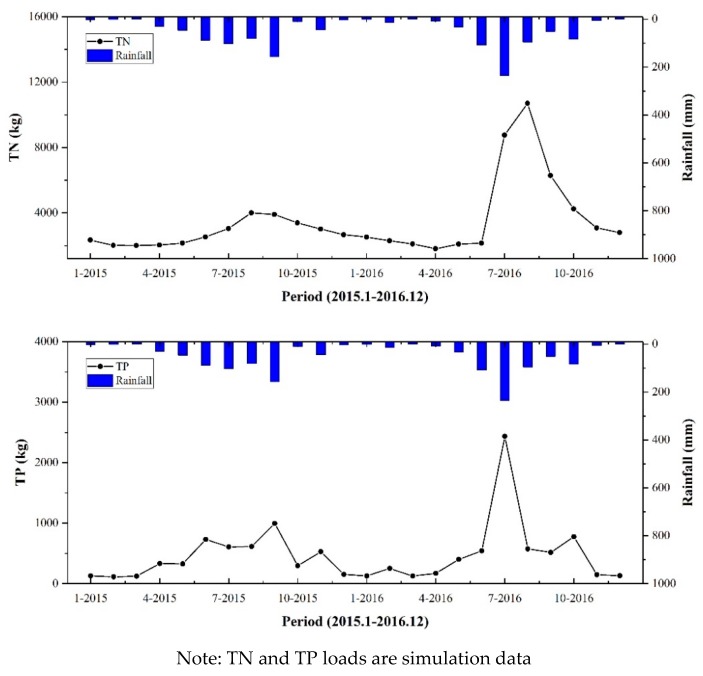
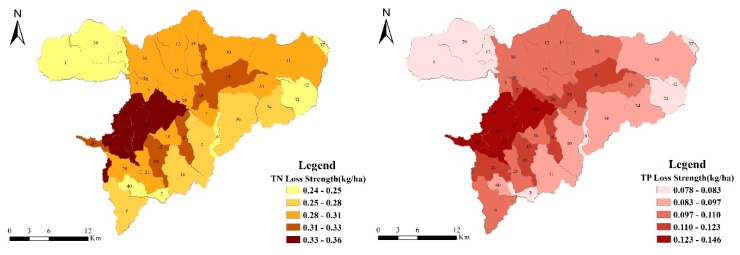
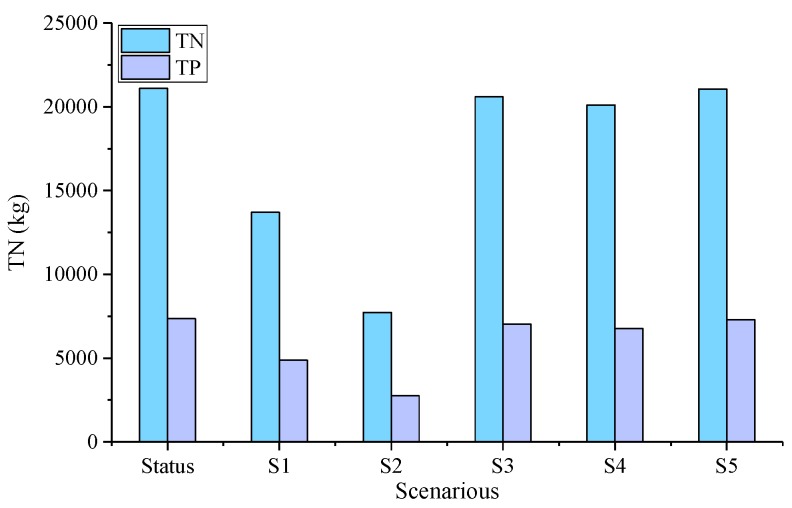
Non-point source (NPS) pollution simulation in control units can identify critical pollution source areas and make Best Management Practices (BMPs) more effective for the responsible parties. In this study, the control unit division method is introduced, and the spatial and temporal distribution characteristics of NPS pollution in the Guishui River Basin of Northern China are analyzed using the Soil Water Assessment Tool (SWAT) model. In addition, five BMP scenarios were designed for environmental and cost-benefit analyses. The results show that the loss of total nitrogen (TN) and total phosphorus (TP) is concentrated in the rainy season, and the loss of TN and TP is mainly distributed in the middle and lower reaches of the main stream of the Guishui River. This area accounts for 22.34% of the basin area. The vegetated filter strips (VFS) scenario had the best environmental benefits with average TN and TP reduction efficiencies of 63.4% and 62.6%, respectively. The Grassed Waterway was the most cost-effective scenario measure, cost-benefit (CE) values of TN and TP were 1798.13 g/€ and 601.56 g/€. Generally, research on NPS pollution using control units can more clearly identify the critical source areas of pollution than other methods, and provides technical support for watershed management decision makers.
非点源(NPS)污染在控制单元中的模拟可以确定关键的污染源区域,并使最佳管理实践(BMP)对责任方更有效。本研究介绍了控制单元划分方法,利用土壤水评估工具(SWAT)模型分析了中国北方贵水河流域 NPS 污染的时空分布特征。此外,还设计了五个 BMP 情景进行环境和成本效益分析。结果表明,总氮(TN)和总磷(TP)的流失主要集中在雨季,TN 和 TP 的流失主要分布在贵水河流域干流中下游,占流域面积的 22.34%。植被过滤带(VFS)方案具有最佳的环境效益,TN 和 TP 的平均去除效率分别为 63.4%和 62.6%。草沟是最具成本效益的情景措施,TN 和 TP 的成本效益(CE)值分别为 1798.13 g/€和 601.56 g/€。总的来说,使用控制单元研究 NPS 污染可以比其他方法更清楚地识别污染的关键源区,为流域管理决策者提供技术支持。