Cluster of Excellence Hearing4all, Hannover, Germany.
Department of Otolaryngology and Institute of Audioneurotechnology (VIANNA), Hannover Medical School, Hannover, Germany.
Sci Rep. 2020 Feb 4;10(1):1797. doi: 10.1038/s41598-020-58512-7.
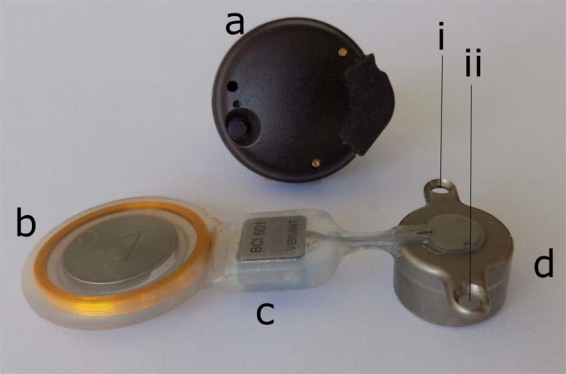
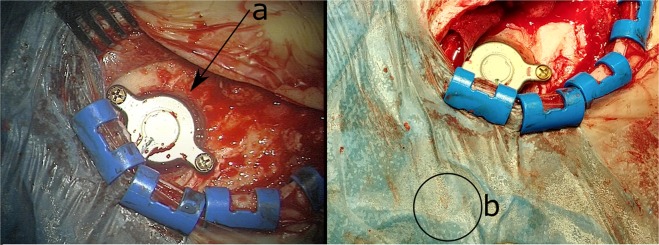
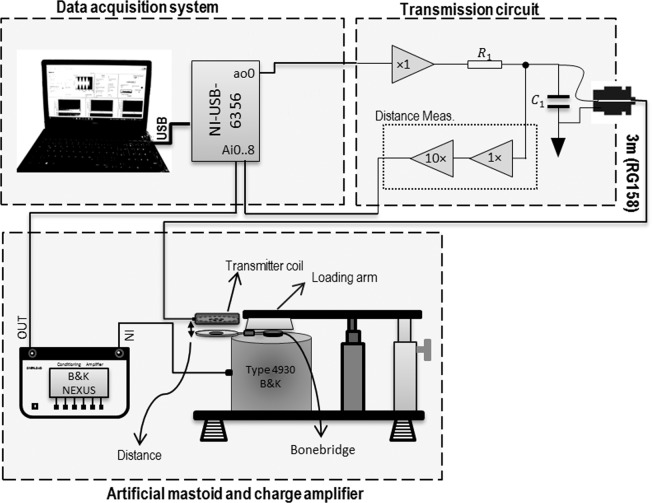
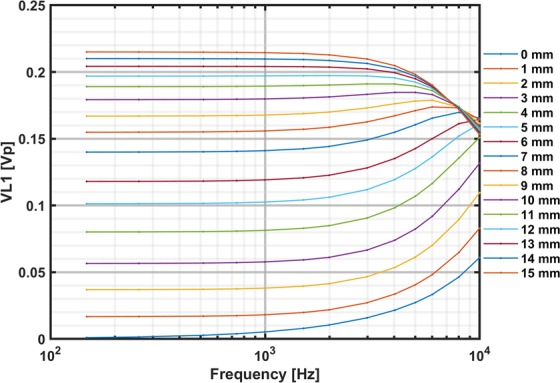
Semi-implantable bone conduction implants (BCI) and active middle ear implants (AMEI) for patients with sensorineural, conductive or mixed hearing loss commonly use an amplitude modulation technology to transmit power and sound signals from an external audio processor to the implant. In patients, the distance dependence of the signal amplitude is of minor importance as the skin thickness is constant and only varies between 3-7 mm. In this range, critical coupling transmission technique sufficiently reduces the variability in amplitude, but fails to provide well-defined amplitudes in many research and clinical applications such as intraoperative integrity tests where the distance range is exceeded by using sterile covers. Here we used the BCI Bonebridge (BB, Med-El, Austria) as an example to develop and demonstrate a system that synthesizes the transmission signal, determines the distance between the transmitter and the receiver implant coil and compensates transmission losses. When compared to an external audio processor (AP304) on an artificial mastoid, our system mainly decreased amplitude variability from over 11 dB to less than 3 dB for audio frequencies (0.1-10 kHz) at distances up to 15 mm, making it adequate for intraoperative and audiometric tests.
用于患有感音神经性、传导性或混合性听力损失的患者的半植入式骨传导植入物 (BCI) 和主动中耳植入物 (AMEI) 通常使用调幅技术将来自外部音频处理器的功率和声音信号传输到植入物。在患者中,由于皮肤厚度保持恒定且仅在 3-7mm 之间变化,因此信号幅度的距离依赖性并不重要。在该范围内,关键耦合传输技术足以降低幅度的可变性,但在许多研究和临床应用中,例如超出距离范围的术中完整性测试中,无法提供明确的幅度,例如使用无菌盖。在这里,我们以 BCI Bonebridge (BB,Med-El,奥地利) 为例,开发并展示了一种合成传输信号、确定发射器和接收器植入线圈之间距离以及补偿传输损耗的系统。与人工乳突上的外部音频处理器 (AP304) 相比,我们的系统主要将音频频率(0.1-10kHz)下 15mm 内的幅度变化从超过 11dB 降低到小于 3dB,足以满足术中测试和听力测试的要求。