Department of Biochemistry, Purdue University, West Lafayette, IN 47907, USA.
Purdue University Center for Cancer Research, Purdue University, West Lafayette, IN 47907, USA.
Cell Rep. 2020 Feb 4;30(5):1478-1490.e6. doi: 10.1016/j.celrep.2019.11.040.
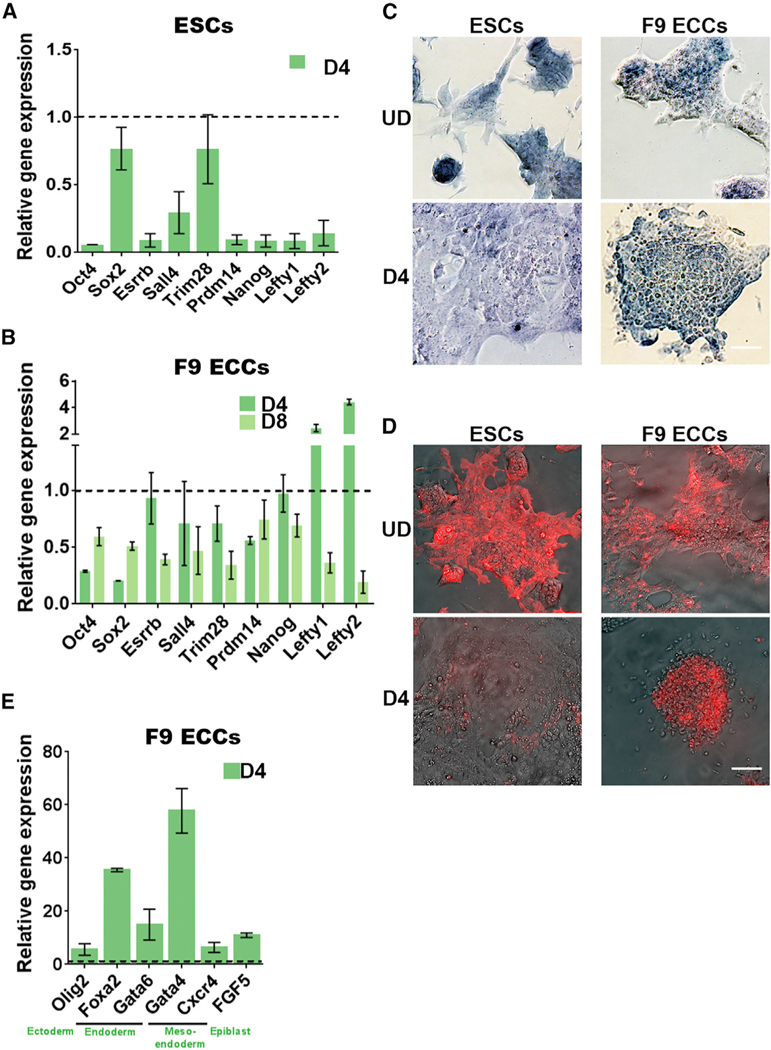
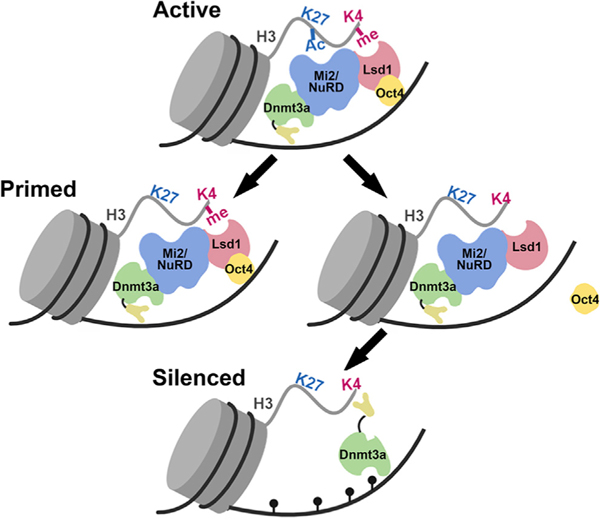
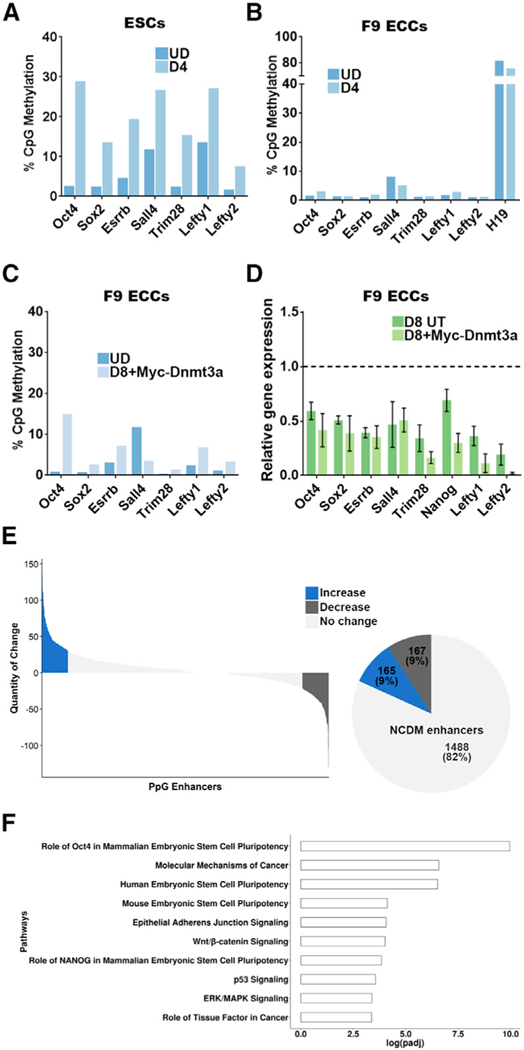
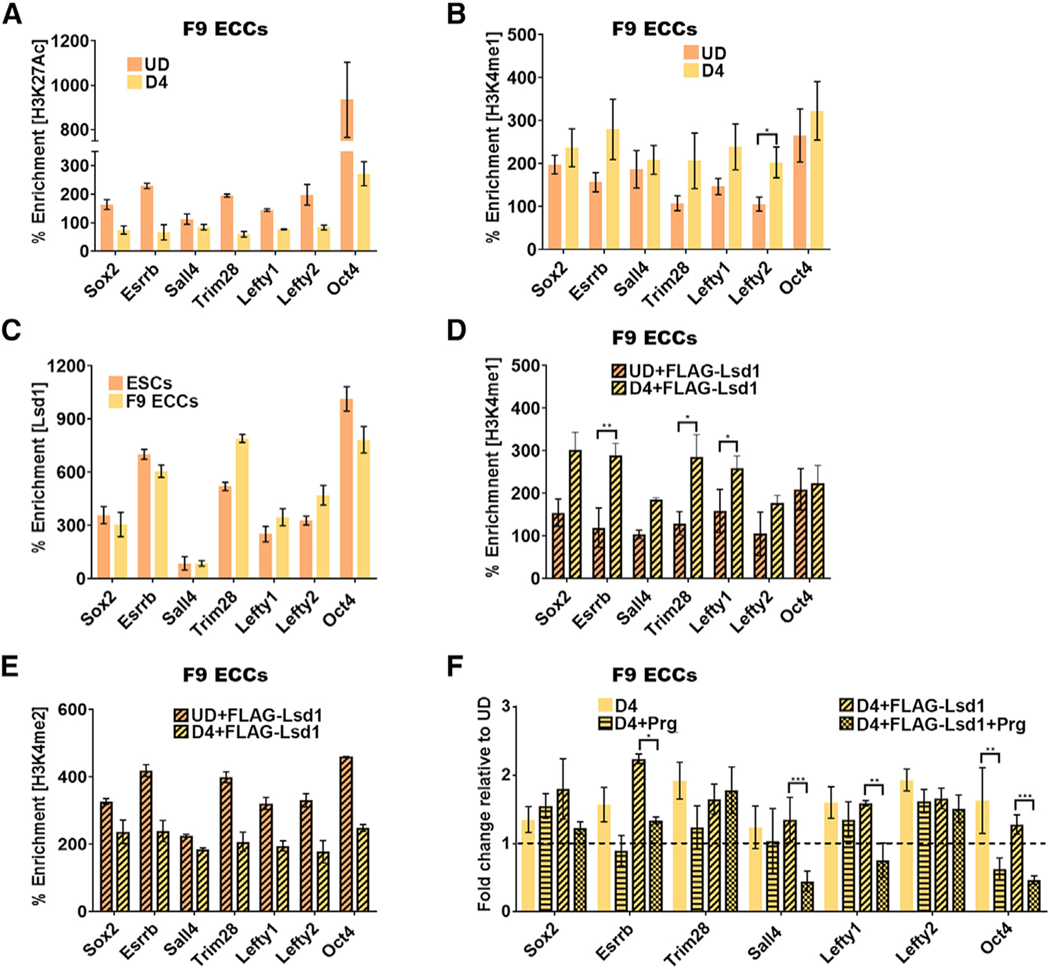
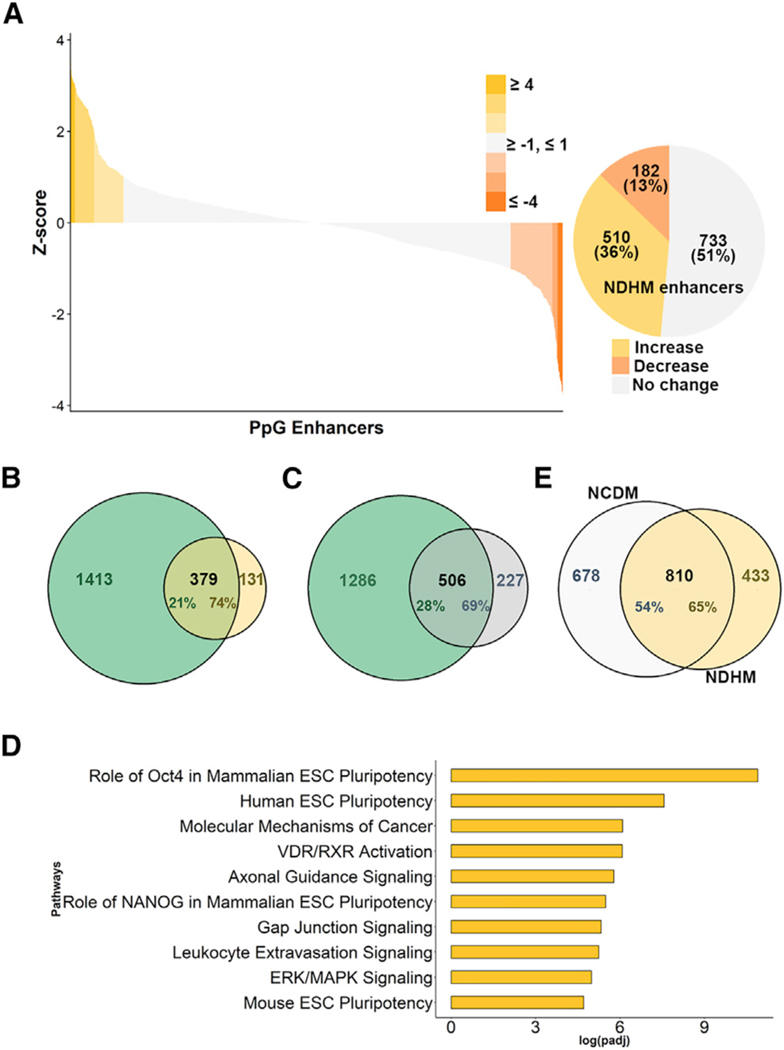
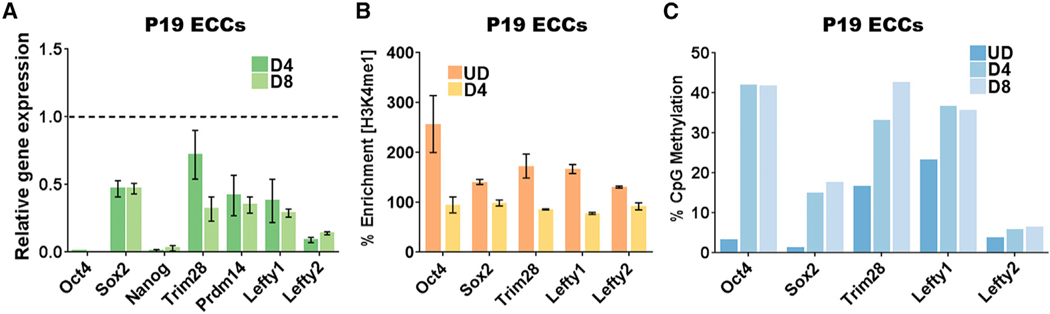
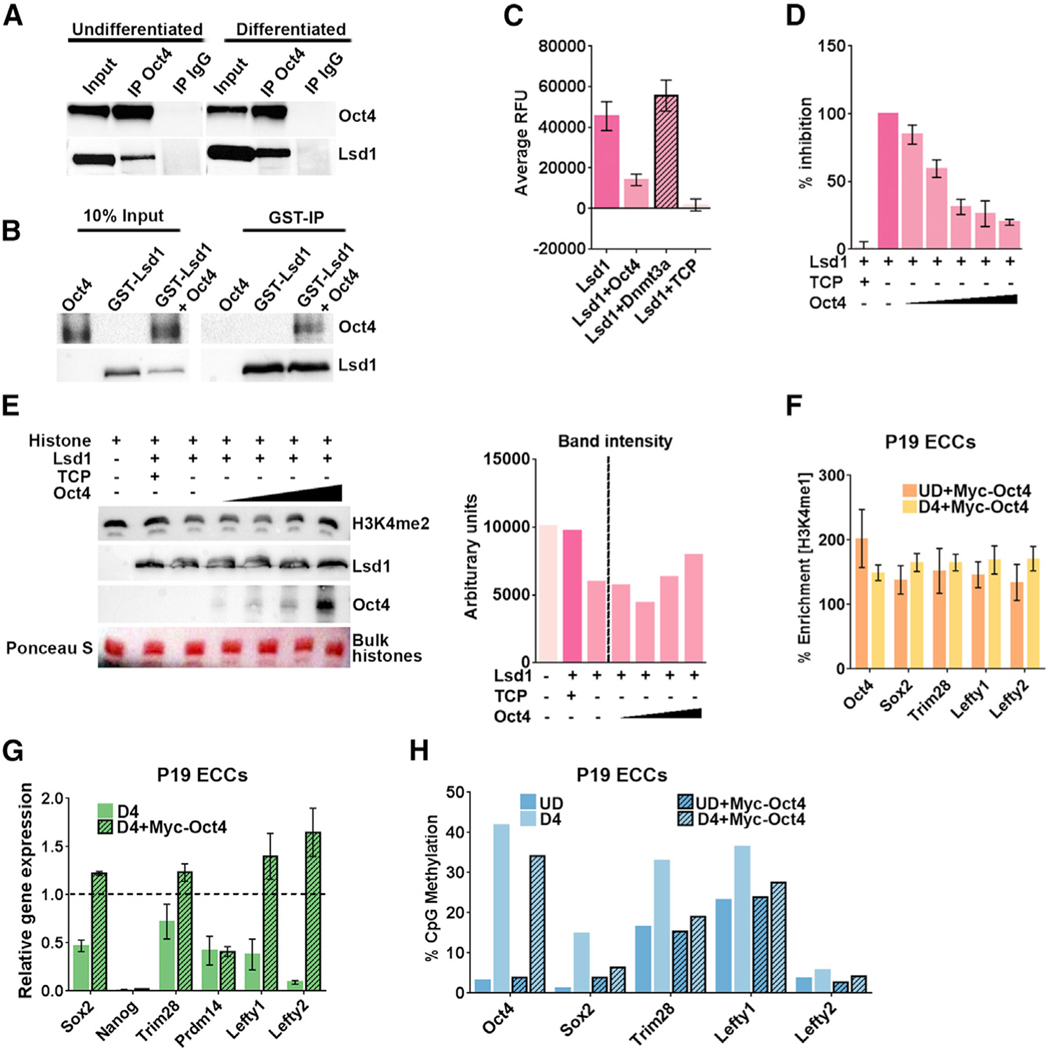
An aberrant increase in pluripotency gene (PpG) expression due to enhancer reactivation could induce stemness and enhance the tumorigenicity of cancer stem cells. Silencing of PpG enhancers (PpGe) during embryonic stem cell differentiation involves Lsd1-mediated H3K4me1 demethylation and DNA methylation. Here, we observed retention of H3K4me1 and DNA hypomethylation at PpGe associated with a partial repression of PpGs in F9 embryonal carcinoma cells (ECCs) post-differentiation. H3K4me1 demethylation in F9 ECCs could not be rescued by Lsd1 overexpression. Given our observation that H3K4me1 demethylation is accompanied by strong Oct4 repression in P19 ECCs, we tested if Oct4 interaction with Lsd1 affects its catalytic activity. Our data show a dose-dependent inhibition of Lsd1 activity by Oct4 and retention of H3K4me1 at PpGe in Oct4-overexpressing P19 ECCs. These data suggest that Lsd1-Oct4 interaction in cancer stem cells could establish a "primed" enhancer state that is susceptible to reactivation, leading to aberrant PpG expression.
由于增强子重新激活导致多能性基因 (PpG) 表达异常增加,可能会诱导干细胞特性并增强癌症干细胞的致瘤性。胚胎干细胞分化过程中 PpG 增强子 (PpGe) 的沉默涉及 LSD1 介导的 H3K4me1 去甲基化和 DNA 甲基化。在这里,我们观察到分化后的 F9 胚胎癌细胞 (ECC) 中 PpGe 处的 H3K4me1 和 DNA 低甲基化保持不变,伴随着 PpGs 的部分抑制。Lsd1 过表达不能挽救 F9 ECC 中的 H3K4me1 去甲基化。鉴于我们观察到 H3K4me1 去甲基化伴随着 P19 ECC 中 Oct4 的强烈抑制,我们测试了 Oct4 与 LSD1 的相互作用是否影响其催化活性。我们的数据显示 Oct4 以剂量依赖的方式抑制 LSD1 的活性,并且在过表达 Oct4 的 P19 ECC 中 PpGe 处保留 H3K4me1。这些数据表明,癌症干细胞中的 LSD1-Oct4 相互作用可能建立一种“启动”的增强子状态,容易被重新激活,导致异常的 PpG 表达。