Department of Chemistry, Duke University, 124 Science Drive, Durham, NC 27708-0346, USA.
Department of Molecular Genetics and Microbiology, Duke University Medical Center, 213 Research Drive, Durham, NC 27710, USA.
Molecules. 2020 Jan 31;25(3):625. doi: 10.3390/molecules25030625.
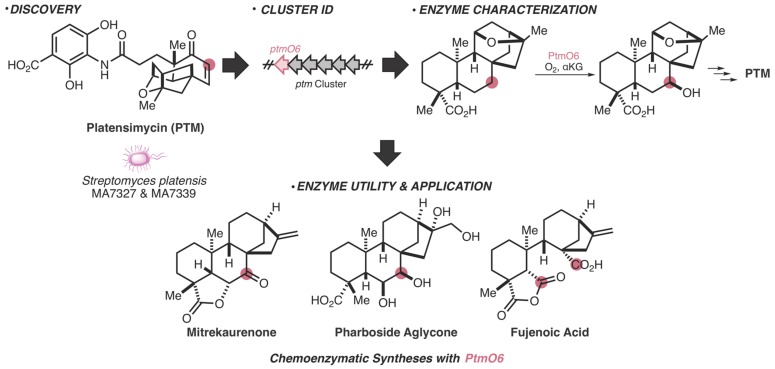
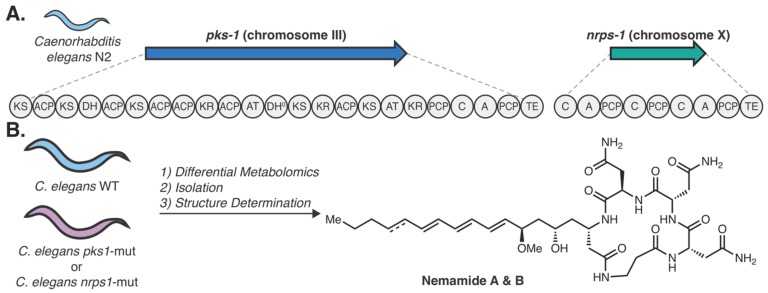
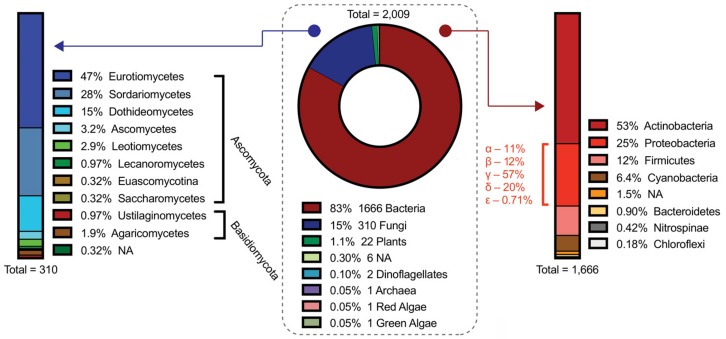
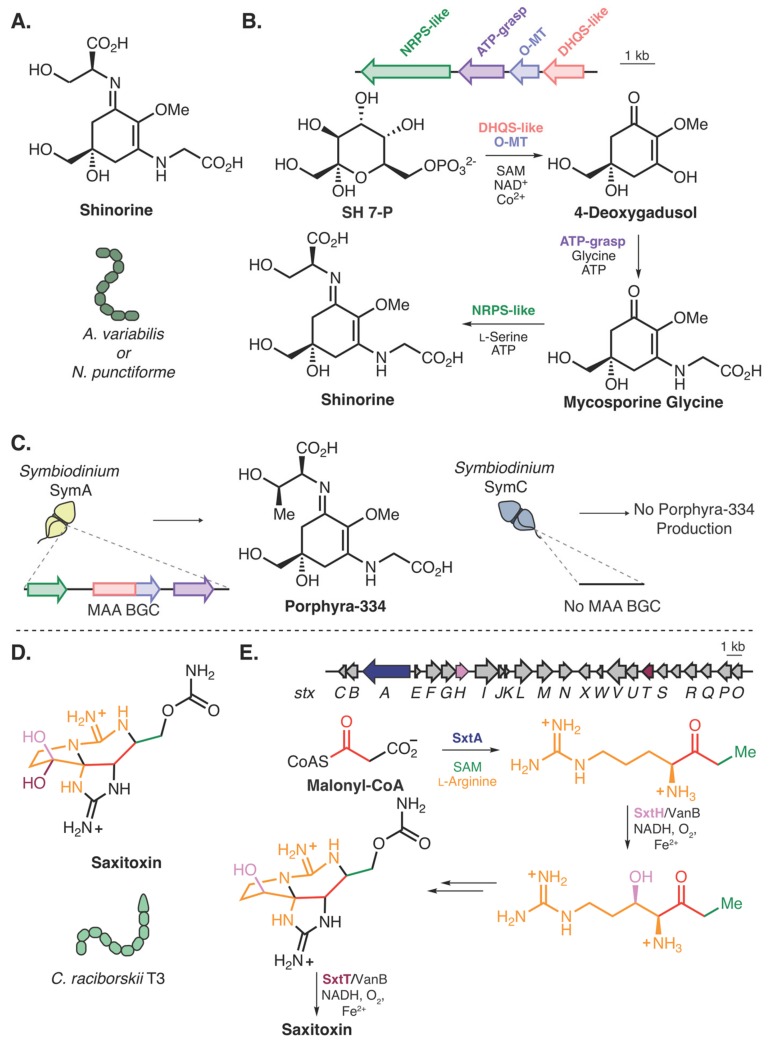
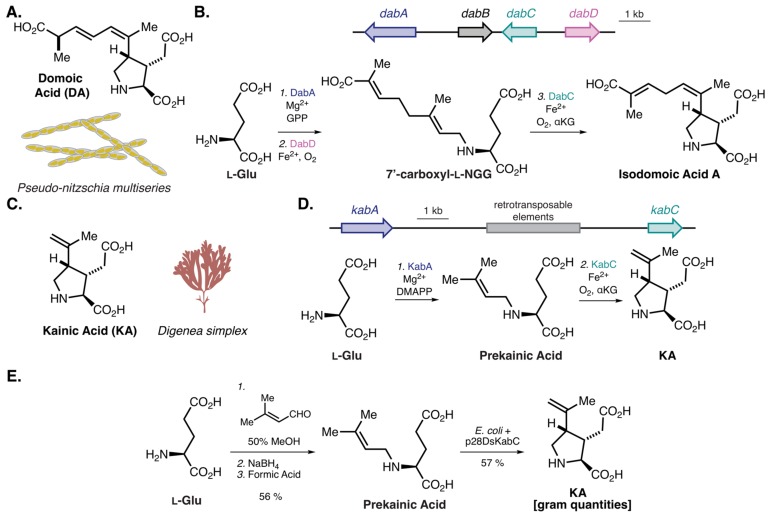
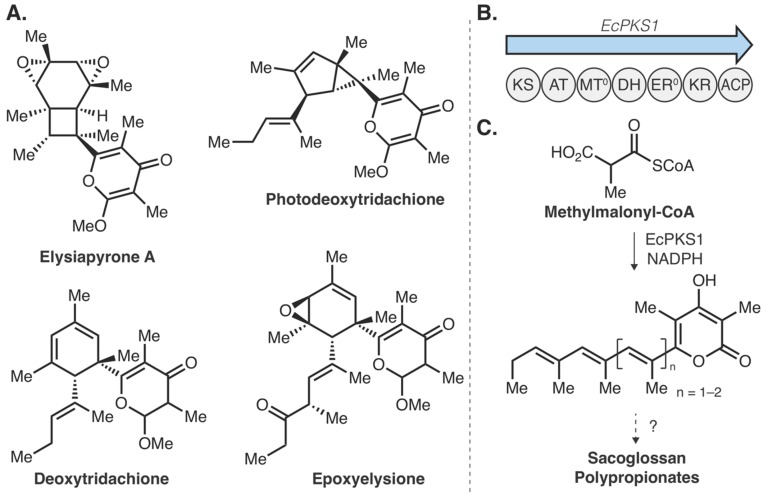
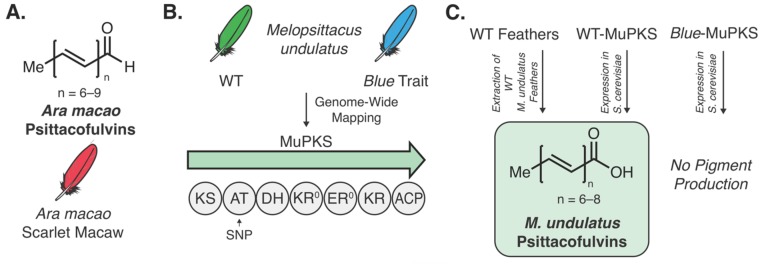
The discovery of natural products continues to interest chemists and biologists for their utility in medicine as well as facilitating our understanding of signaling, pathogenesis, and evolution. Despite an attenuation in the discovery rate of new molecules, the current genomics and transcriptomics revolution has illuminated the untapped biosynthetic potential of many diverse organisms. Today, natural product discovery can be driven by biosynthetic gene cluster (BGC) analysis, which is capable of predicting enzymes that catalyze novel reactions and organisms that synthesize new chemical structures. This approach has been particularly effective in mining bacterial and fungal genomes where it has facilitated the discovery of new molecules, increased the understanding of metabolite assembly, and in some instances uncovered enzymes with intriguing synthetic utility. While relatively less is known about the biosynthetic potential of non-fungal eukaryotes, there is compelling evidence to suggest many encode biosynthetic enzymes that produce molecules with unique bioactivities. In this review, we highlight how the advances in genomics and transcriptomics have aided natural product discovery in sources from eukaryotic lineages. We summarize work that has successfully connected genes to previously identified molecules and how advancing these techniques can lead to genetics-guided discovery of novel chemical structures and reactions distributed throughout the tree of life. Ultimately, we discuss the advantage of increasing the known biosynthetic space to ease access to complex natural and non-natural small molecules.
天然产物的发现一直以来都令化学家与生物学家十分感兴趣,因为它们不仅在医学上具有应用价值,还有助于我们加深对信号转导、发病机制和进化的理解。尽管新分子的发现率有所下降,但当前的基因组学和转录组学革命揭示了许多不同生物体中尚未开发的生物合成潜力。如今,天然产物的发现可以通过生物合成基因簇 (BGC) 分析来驱动,这种方法能够预测催化新反应的酶和合成新化学结构的生物体。这种方法在挖掘细菌和真菌基因组方面特别有效,它促进了新分子的发现,增进了对代谢物组装的理解,并在某些情况下揭示了具有有趣合成用途的酶。虽然人们对非真菌真核生物的生物合成潜力了解相对较少,但有强有力的证据表明,许多生物编码具有独特生物活性的生物合成酶。在这篇综述中,我们强调了基因组学和转录组学的进展如何帮助从真核生物谱系中发现天然产物。我们总结了将基因与先前鉴定的分子联系起来的工作,以及如何推进这些技术可以导致在整个生命之树上发现具有新颖化学结构和反应的遗传学指导的发现。最终,我们讨论了增加已知生物合成空间以方便获取复杂天然和非天然小分子的优势。