Park Sowon, Kang Yunkoo, Koh Hong, Kim Seung
Division of Gastroenterology, Hepatology and Nutrition, Department of Pediatrics, Severance Pediatric IBD Research Group, Severance Children's Hospital, Yonsei University College of Medicine, Seoul, Korea.
Division of Gastroenterology, Hepatology and Nutrition, Department of Pediatrics, Wonju Severance Christian Hospital, Wonju College of Medicine, Yonsei University, Wonju, Korea.
Clin Exp Pediatr. 2020 Sep;63(9):337-344. doi: 10.3345/cep.2019.00500. Epub 2019 Dec 6.
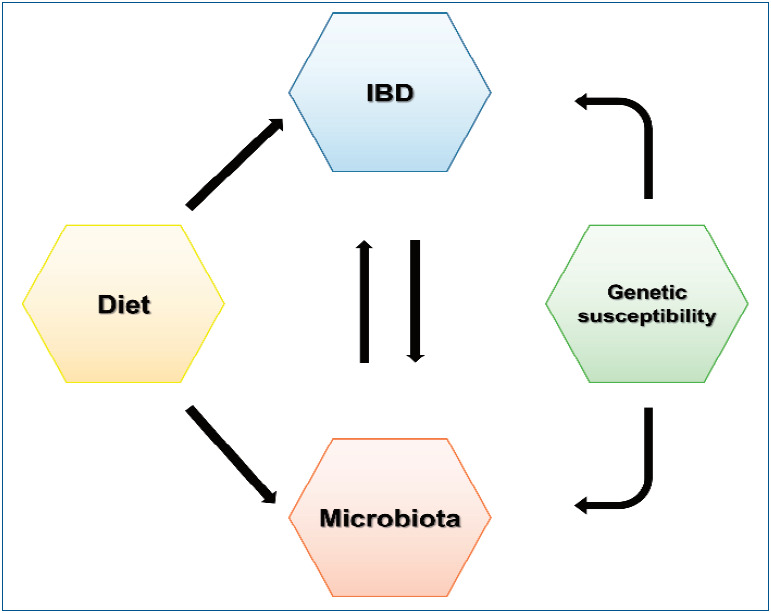
Inflammatory bowel disease (IBD) is a chronic relapsing immune-mediated disease of the intestinal tract. Although its prevalence is reportedly lower in Asia than in Western countries, the rapid increase in the incidence of IBD has drawn attention to its etiology, including genetic susceptibility and environmental factors. Specifically, recent studies concerning dietary treatments and intestinal microbiota suggest that these factors may interact with the immune system, and the imbalance of this relationship may lead to immune dysregulation in IBD. Changes in diet or alterations in the composition of the intestinal microbiota may be associated with the increasing incidence of IBD in Asia. Here, we aim to review recent studies on the role of diet and intestinal microbiota in IBD pathogenesis and the results of the investigations performed to modulate these factors.
炎症性肠病(IBD)是一种慢性复发性肠道免疫介导疾病。尽管据报道其在亚洲的患病率低于西方国家,但IBD发病率的迅速上升已使其病因受到关注,包括遗传易感性和环境因素。具体而言,最近关于饮食治疗和肠道微生物群的研究表明,这些因素可能与免疫系统相互作用,这种关系的失衡可能导致IBD中的免疫失调。饮食变化或肠道微生物群组成的改变可能与亚洲IBD发病率的上升有关。在此,我们旨在综述近期关于饮食和肠道微生物群在IBD发病机制中的作用的研究,以及为调节这些因素而进行的调查结果。